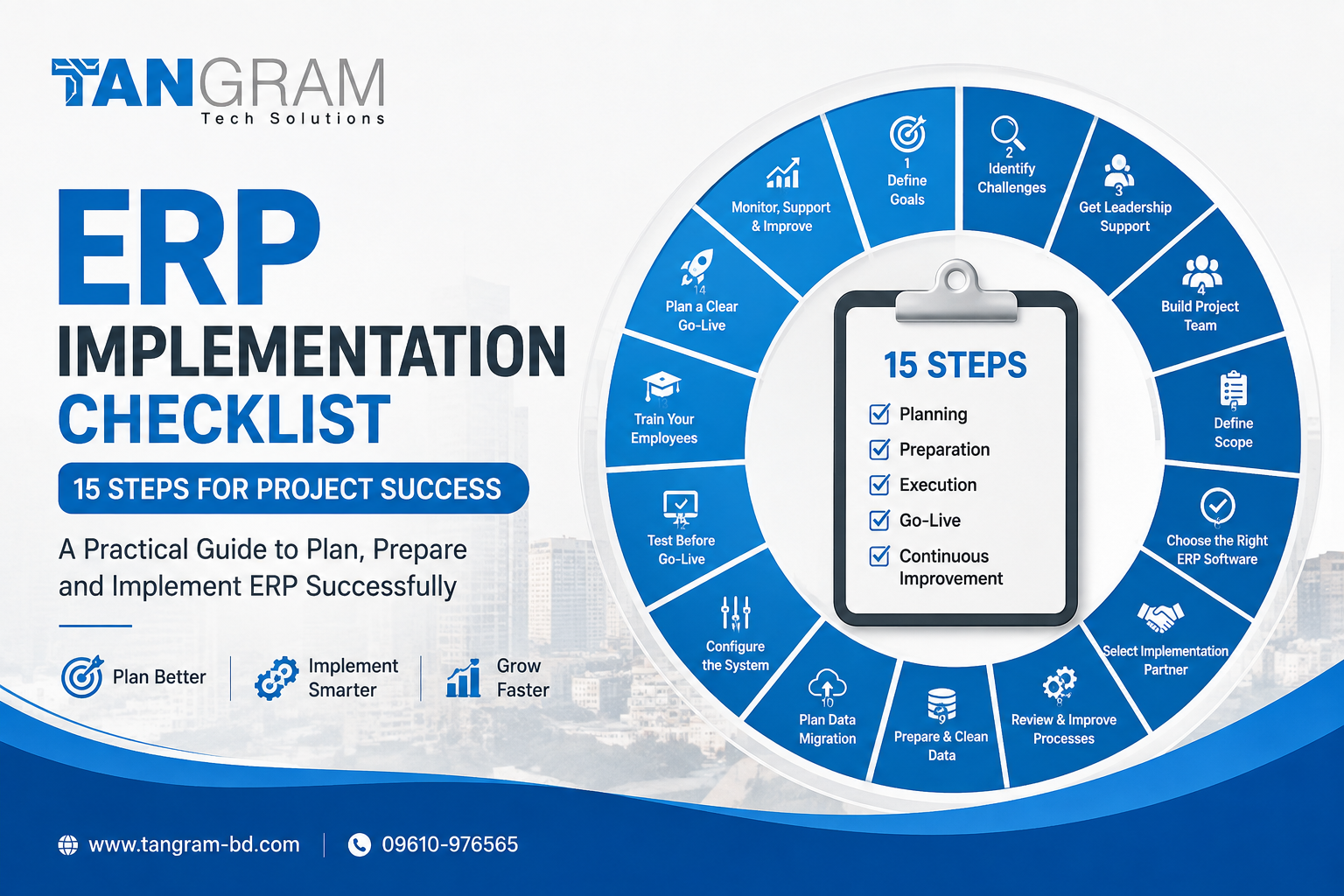
ERP Implementation Checklist: 15 Steps for a Successful ERP Project
Implementing an ERP system is a major step for any growing business. It can bring finance, sales, inventory, procurement, and other important operations into one connected system. However, choosing the right ERP software is only part of the process. The real success of an ERP project depends on how well it is planned and managed from the beginning.
Whether your business is considering NetSuite ERP in Bangladesh or another ERP solution, proper preparation can help avoid unnecessary delays, unexpected costs, data issues, and employee resistance.
Before starting your project, use this practical ERP implementation checklist to make sure the important areas are covered.
1. Define Your Business Goals
Start with a simple question: Why does your business need an ERP system?
Your goal might be to improve financial reporting, manage inventory more effectively, reduce manual work, or give management better access to real-time business information.
Having clear goals from the beginning gives the project direction and makes it easier to measure success later.
2. Identify Your Current Business Challenges
Take a close look at how your business operates today. Where are the biggest problems?
You may be dealing with disconnected spreadsheets, duplicate data, slow reporting, inventory mistakes, or departments working with different information.
Understanding these challenges will help you choose an ERP solution that solves real business problems rather than simply adding another piece of software.
3. Get Support from Leadership
ERP implementation affects more than just the IT team. It often changes the way finance, sales, operations, inventory, and management work on a daily basis.
For that reason, leadership involvement is important. Management should support the project, help make key decisions, and ensure that different departments are working toward the same goals.
4. Build the Right Implementation Team
Create a team that includes people from the key areas of your business. Finance, operations, sales, inventory, IT, and management should all have a voice where relevant.
The people who deal with daily processes often understand the practical challenges better than anyone. Their input can help ensure that the ERP system is configured around real business needs.
5. Clearly Define the Project Scope
One common mistake is trying to do everything at once.
Decide what should be included in the first phase of the implementation and what can be added later. A clearly defined scope helps keep the project focused and makes it easier to manage the budget, timeline, and expectations.
Starting with the most important requirements is often a smarter approach than trying to transform the entire business overnight.
6. Choose the Right ERP Software
The ERP system you choose should support your business today while also giving you room to grow.
Consider the areas that matter most to your organization, such as finance, inventory, sales, procurement, reporting, security, scalability, and cloud access.
For growing businesses, cloud-based solutions such as NetSuite ERP can provide a connected platform for managing multiple business functions from one system.
7. Select the Right ERP Implementation Partner
The software itself is important, but so is the team helping you implement it.
A good ERP implementation partner should understand both the technology and the way businesses operate. They should take the time to understand your requirements instead of applying the same approach to every company.
For businesses exploring NetSuite in Bangladesh, working with an experienced NetSuite business solution provider can help reduce implementation risks and make the transition easier.
8. Review Your Existing Business Processes
Implementing a new ERP system is a good opportunity to review the way your business currently works.
There is little value in moving an inefficient process into a modern system without improving it first. Look for unnecessary steps, repeated tasks, approval delays, and manual work that could be simplified or automated.
The goal should be to improve the process, not simply digitize the existing problems.
9. Prepare and Clean Your Data
Data is one of the most important parts of any ERP project.
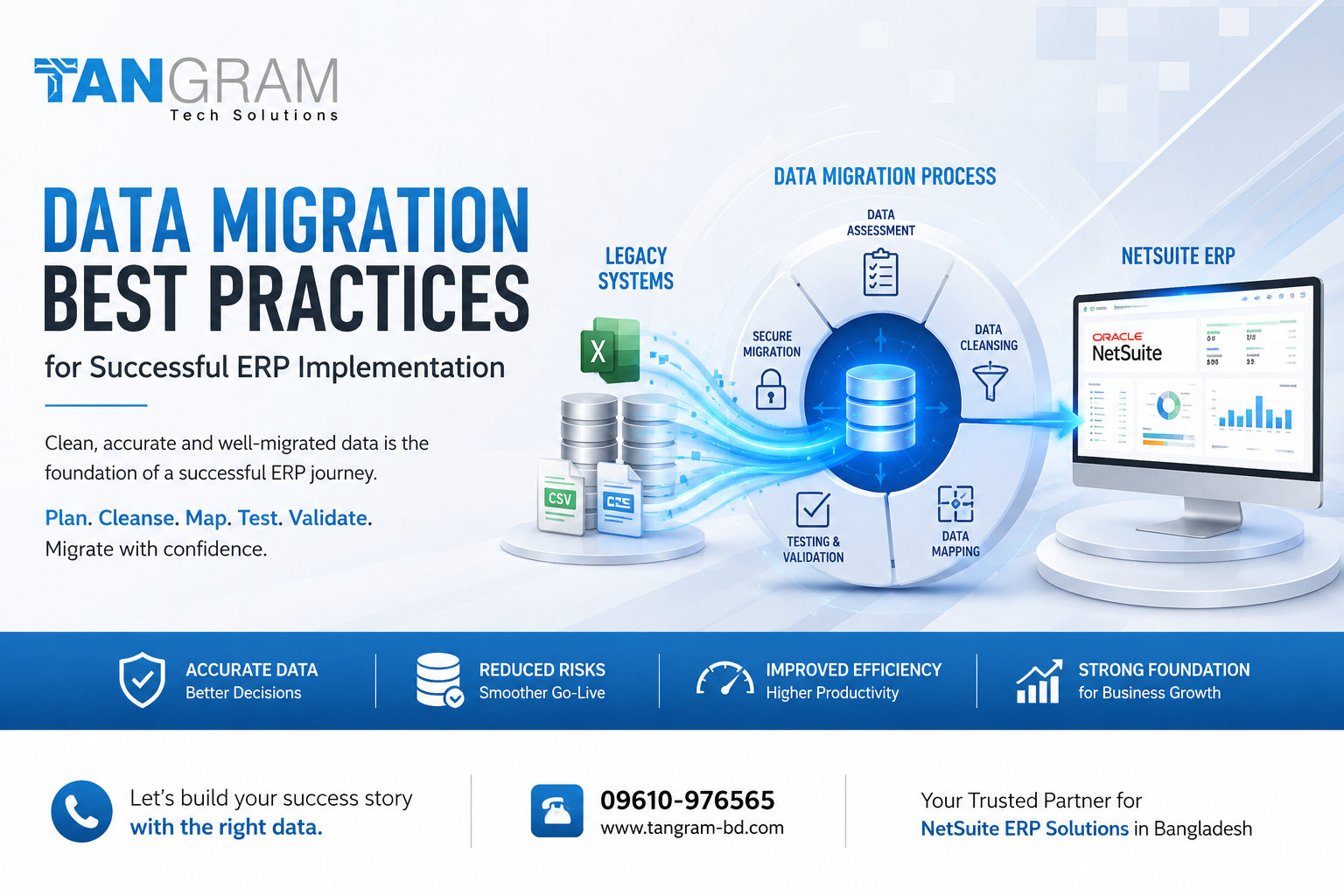
Before migration begins, review your customer records, supplier information, product lists, financial data, and inventory records. Remove duplicate, outdated, or incorrect information wherever possible.
Starting with clean data will make the new system more reliable and reduce problems after implementation.
10. Plan Your Data Migration Carefully
Not every piece of historical information needs to be transferred into the new ERP system.
Decide what data is necessary for daily operations, reporting, compliance, and future analysis. The migration process should also be tested before the final move.
Accurate data is essential. Even a well-configured ERP system can create problems if the information inside it is incomplete or incorrect.
11. Configure the System Around Your Business Needs
Once the requirements are clear, the ERP system can be configured to support your business processes.
This may include financial structures, approval workflows, user permissions, dashboards, reports, tax settings, and other operational requirements.
Customization should be considered carefully. If the standard functionality already meets the business requirement, unnecessary customization can increase complexity and future maintenance costs.
12. Test Everything Before Going Live
Testing is not a step to rush.
Use realistic business scenarios and involve people from different departments. Test workflows, reports, integrations, user permissions, and data accuracy.
Finding and fixing issues before go-live is usually much easier than trying to solve them when the entire business is already using the new system.
13. Train Your Employees Properly
An ERP system is only useful when employees know how to use it confidently.
Training should be practical and relevant to each person’s role. A finance employee does not necessarily need the same training as someone working in sales or inventory.
When employees understand how the system will make their work easier, they are generally more comfortable with the change.
14. Prepare a Clear Go-Live Plan
The go-live stage should be carefully planned rather than treated as a single event.
Set a clear timeline and define responsibilities. Make sure everyone knows where to get support if an issue arises. It is also useful to have backup procedures and a communication plan in place.
A well-prepared go-live plan can reduce confusion and help the business transition smoothly to the new ERP system.
15. Continue to Monitor and Improve
ERP implementation does not end when the system goes live.
After implementation, monitor how the system is performing and listen to feedback from employees. Some processes may need adjustment, and new requirements may appear as the business grows.
The best approach is to treat ERP as an ongoing business improvement tool rather than a one-time technology project.
Final Thoughts
A successful ERP project starts long before the go-live date. Businesses that spend time understanding their goals, reviewing their processes, preparing clean data, and involving the right people are more likely to achieve a smooth implementation.
If your organization is exploring NetSuite ERP Bangladesh or looking for the right ERP software in Bangladesh, following a structured implementation process can help reduce risk and make the transition easier.
At Tangram Tech Solutions, we help businesses evaluate, plan, and implement ERP solutions based on their operational requirements and future growth plans. If you are considering NetSuite ERP or another ERP solution for your business, our team can help you take the right steps from planning through implementation.
Contact Tangram Tech Solutions: 09610-976565
Website: www.tangram-bd.com