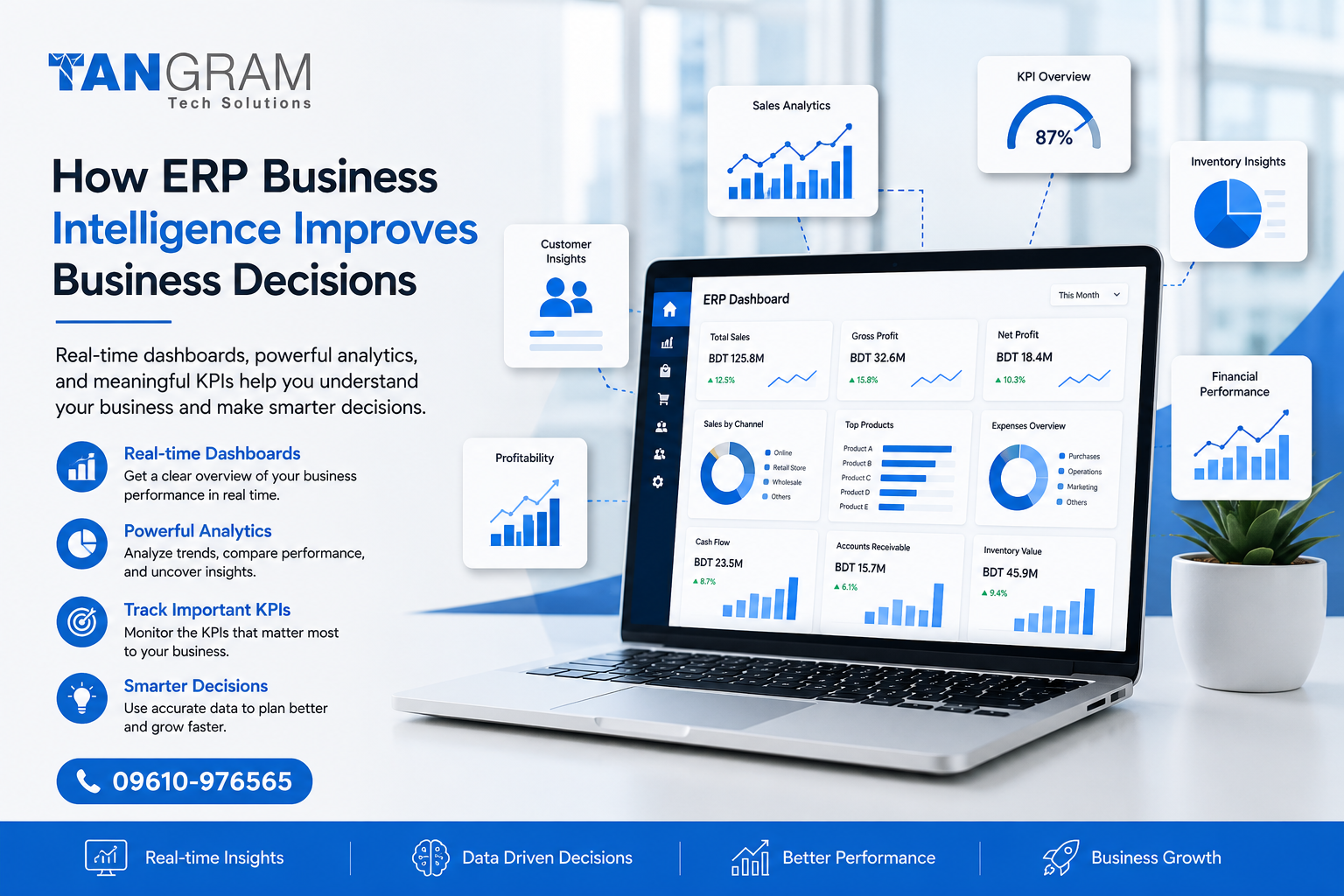
How ERP Business Intelligence Improves Data-Driven Decisions
Every business generates a huge amount of data every day. Sales teams deal with customers and revenue. Finance tracks expenses and cash flow. Inventory teams monitor stock, while purchasing and operations handle suppliers, orders, and daily activities.
The problem is rarely a lack of data. The real challenge is making sense of it.
Many businesses still depend on spreadsheets and manually prepared reports. By the time a report reaches management, some of the information may already be outdated. Different departments may also be working with different numbers, making it difficult to get a clear picture of what is really happening.
This is where ERP Business Intelligence can make a meaningful difference.
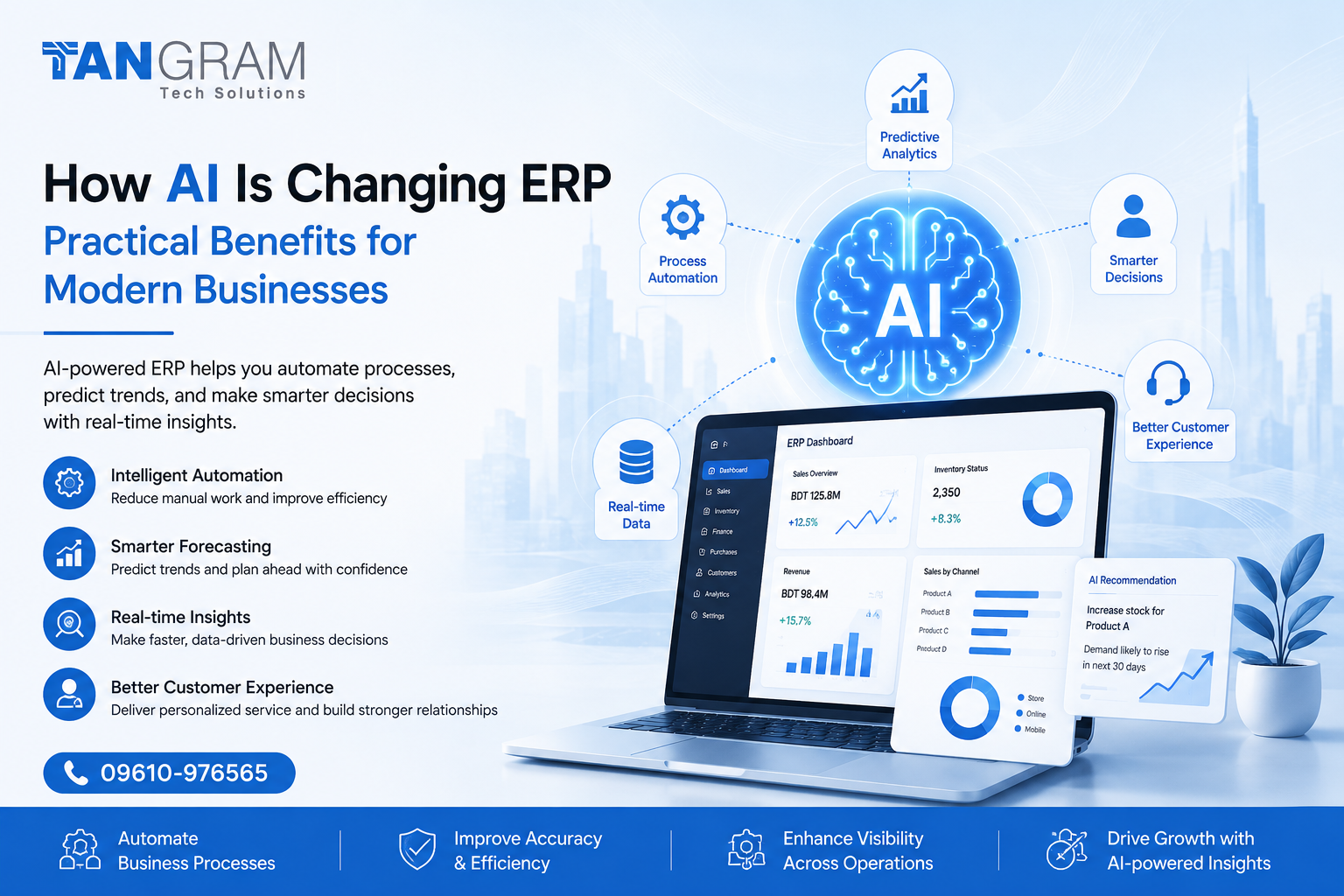
An ERP system brings important business data together, while business intelligence tools turn that data into useful dashboards, reports, KPIs, and insights that support better decision-making.
One Clear View of the Business
In many organizations, each department has its own way of managing information. Sales may use one system, finance another, and inventory may be tracked separately.
This often creates unnecessary work. Before making an important decision, management may need to collect reports from different departments and spend time checking whether the numbers match.
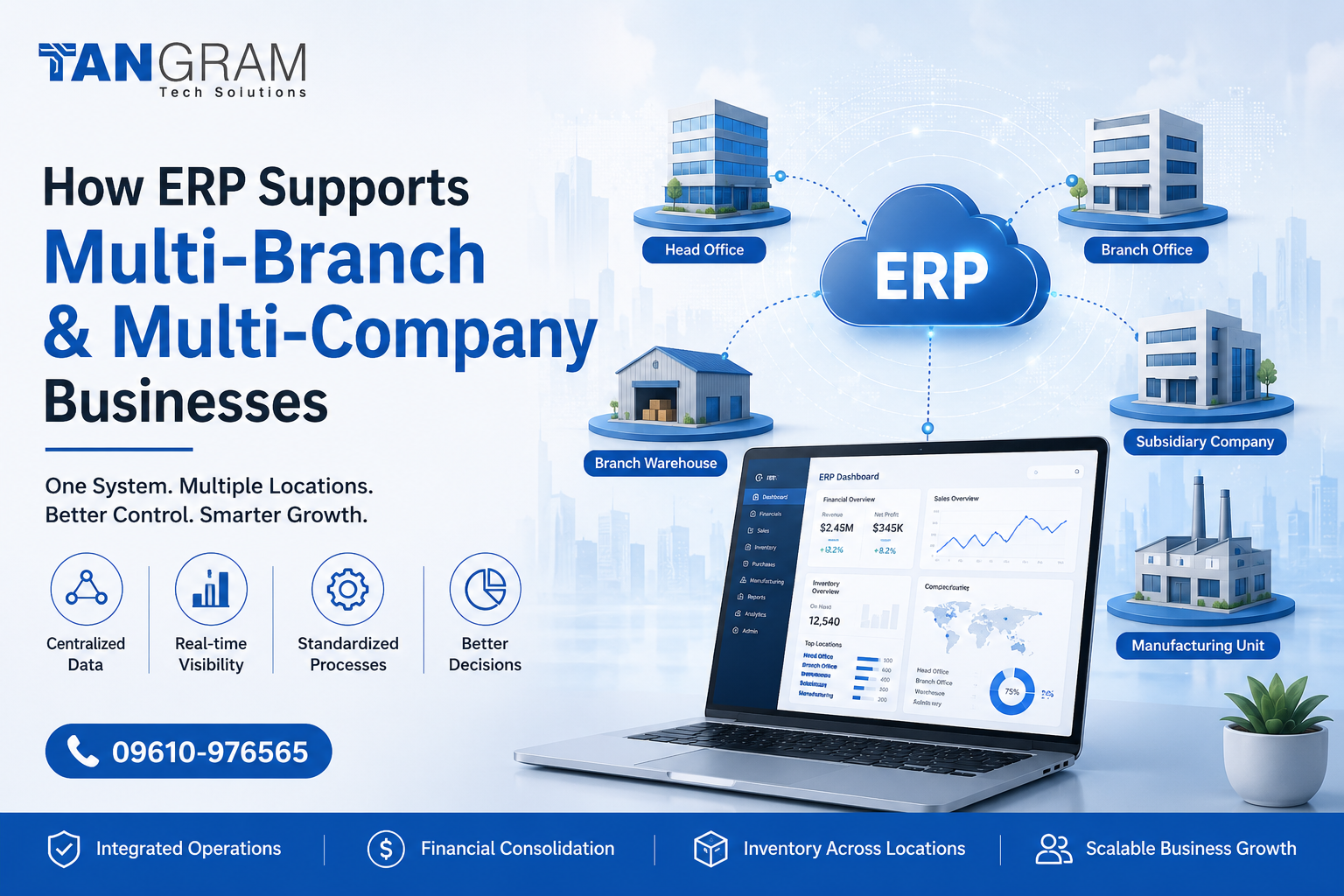
ERP helps bring these processes into one connected system.
When business intelligence tools work with centralized ERP data, management can see a clearer picture of the business. Instead of spending hours combining spreadsheets, decision-makers can focus more on understanding what the information is telling them.
Real-Time Dashboards Make Data Easier to Understand
Business leaders do not always need long reports filled with hundreds of numbers. What they really need is a quick and clear understanding of business performance.
ERP dashboards can bring important information together in one place. Depending on the business, management may monitor sales, revenue, expenses, inventory, outstanding payments, or other important metrics.
For example, a sudden drop in sales or an unexpected increase in inventory costs may become visible much sooner than it would through a traditional monthly report.
When a problem becomes visible earlier, management has more time to understand the reason and take action.
Better KPI Tracking
Key Performance Indicators help businesses understand whether they are moving in the right direction.
However, manually tracking KPIs can become difficult when information comes from different systems or spreadsheets.
With ERP analytics, businesses can monitor important KPIs using connected financial and operational data.
Depending on the organization, these may include:
Sales growth and revenue performance
Inventory turnover and stock availability
Operating costs and profitability
Cash flow and outstanding receivables
Customer performance and purchasing trends
Supplier and purchasing activity
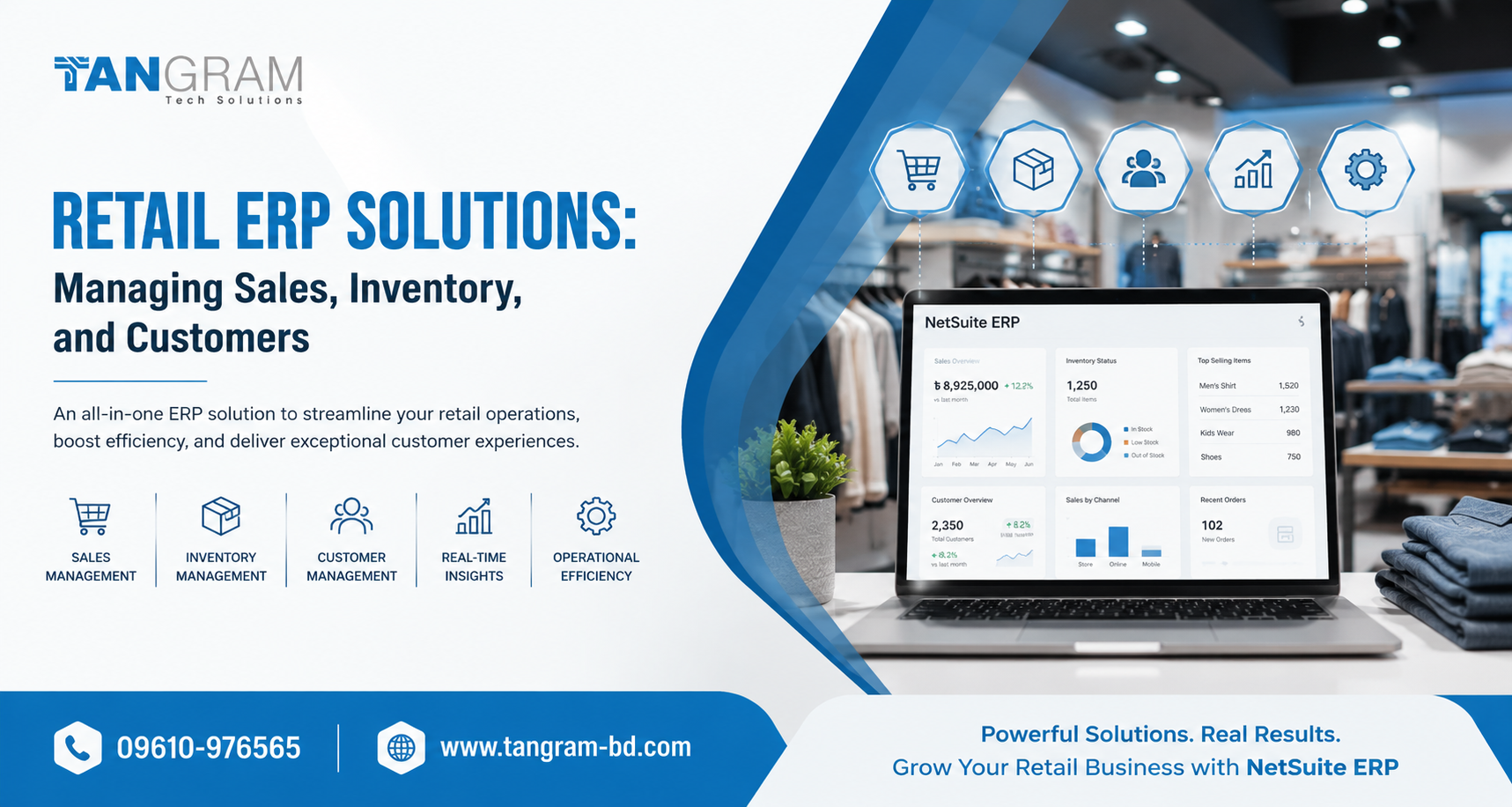
The right KPIs will depend on the business. A retailer may focus more on sales and stock movement, while a manufacturer may pay closer attention to production costs and operational performance.
The benefit of ERP Business Intelligence is that businesses can focus on the numbers that actually matter to their goals.
Turning Business Data into Better Decisions
Having access to information does not automatically lead to better decisions. The real value comes from understanding the data and using it at the right time.
ERP analytics can help management identify trends, compare performance, and find areas that need attention.
For instance, a product may generate strong sales but deliver a lower profit margin than expected. A business may also discover that one branch is carrying more inventory than customer demand requires.
Without connected data, these issues can remain hidden for weeks or even months.
With better visibility, management can make decisions based on actual business performance rather than assumptions or outdated reports.
Why ERP Business Intelligence Matters in Bangladesh
Businesses in Bangladesh are growing, expanding, and becoming more dependent on accurate information.
Manufacturers, distributors, retailers, and service companies all need faster access to reliable business data. As operations become more complex, managing everything through spreadsheets and disconnected software becomes increasingly difficult.
For businesses searching for ERP in Bangladesh, ERP software in Bangladesh, or NetSuite in Bangladesh, reporting and analytics should be an important part of choosing the right solution.
A good ERP system should do more than record transactions. It should help management understand what those transactions mean and what actions may be needed next.
How NetSuite Supports Business Intelligence
Oracle NetSuite brings important business functions into one cloud-based platform, including financial management, inventory, sales, customer information, and reporting.
Because this information is connected, businesses can build dashboards and reports around their actual operations.
Management teams can spend less time requesting data from different departments and more time reviewing business performance.
Of course, technology alone is not enough. A dashboard is only useful when it shows the right information. Reports and KPIs should be designed around the real needs of the business, not simply because a system can generate them.
The Right Information at the Right Time
Business intelligence is not about producing more reports.
It is about making the right information available when people need it.
A useful ERP dashboard can help management answer practical questions such as:
Are sales growing as expected?
Which products or services are performing best?
Where are operational costs increasing?
Is inventory moving efficiently?
Which branches are performing better?
Are there any financial or operational issues that need attention?
When these questions can be answered quickly, management can respond with greater confidence.
Conclusion
ERP and Business Intelligence work well together because good decisions depend on reliable information.
By connecting business data with dashboards, analytics, KPIs, and real-time reporting, ERP can give organizations a clearer understanding of their overall performance.
For businesses exploring NetSuite ERP Bangladesh, business intelligence can play an important role in building a more data-driven organization.
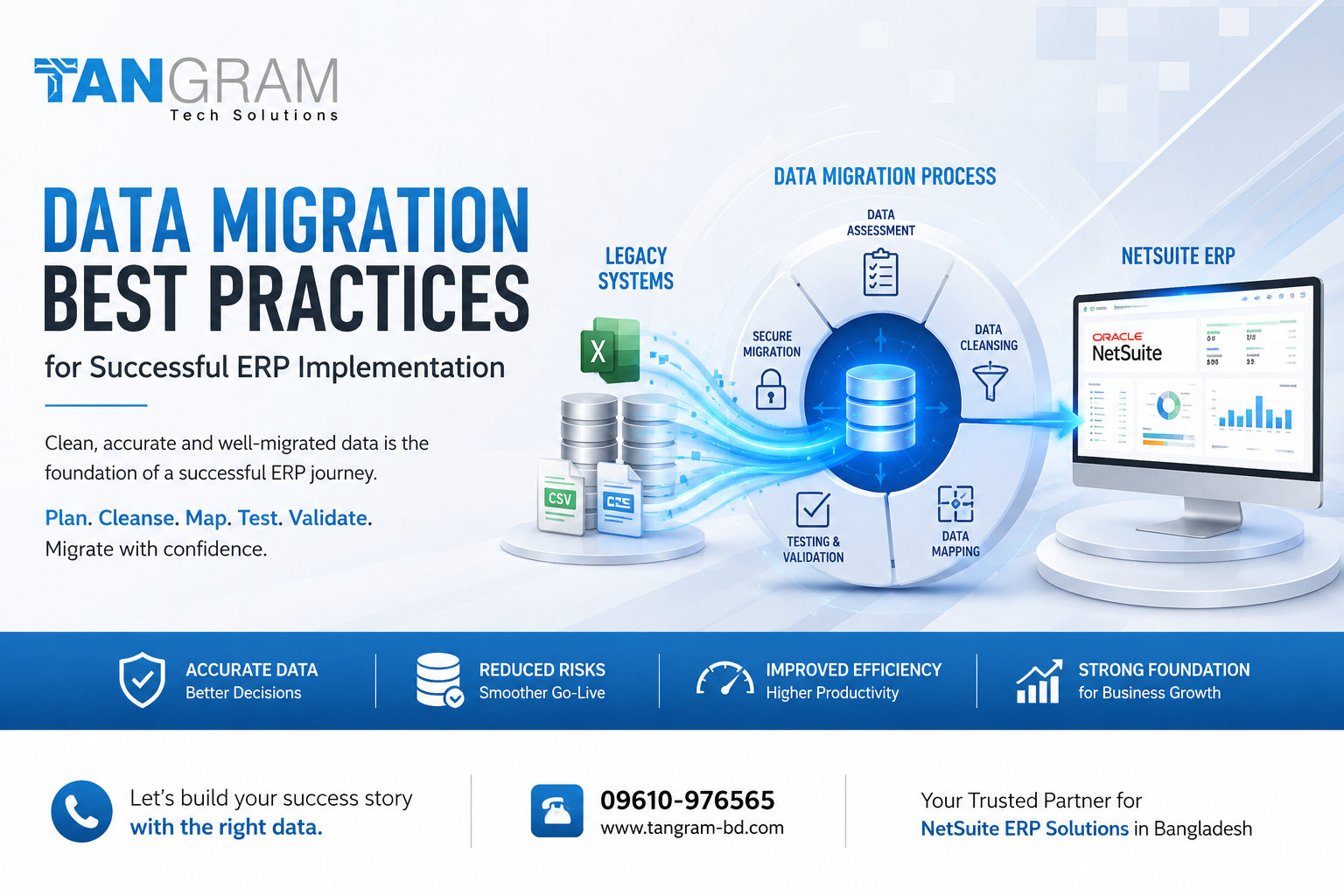
Tangram Tech Solutions Ltd. helps businesses implement and optimize Oracle NetSuite ERP through implementation, customization, integration, data migration, training, reporting, and ongoing support.
A well-implemented ERP system does more than manage daily business processes. It gives management a clearer view of the business, helping them identify opportunities, respond to challenges, and make better decisions with confidence.