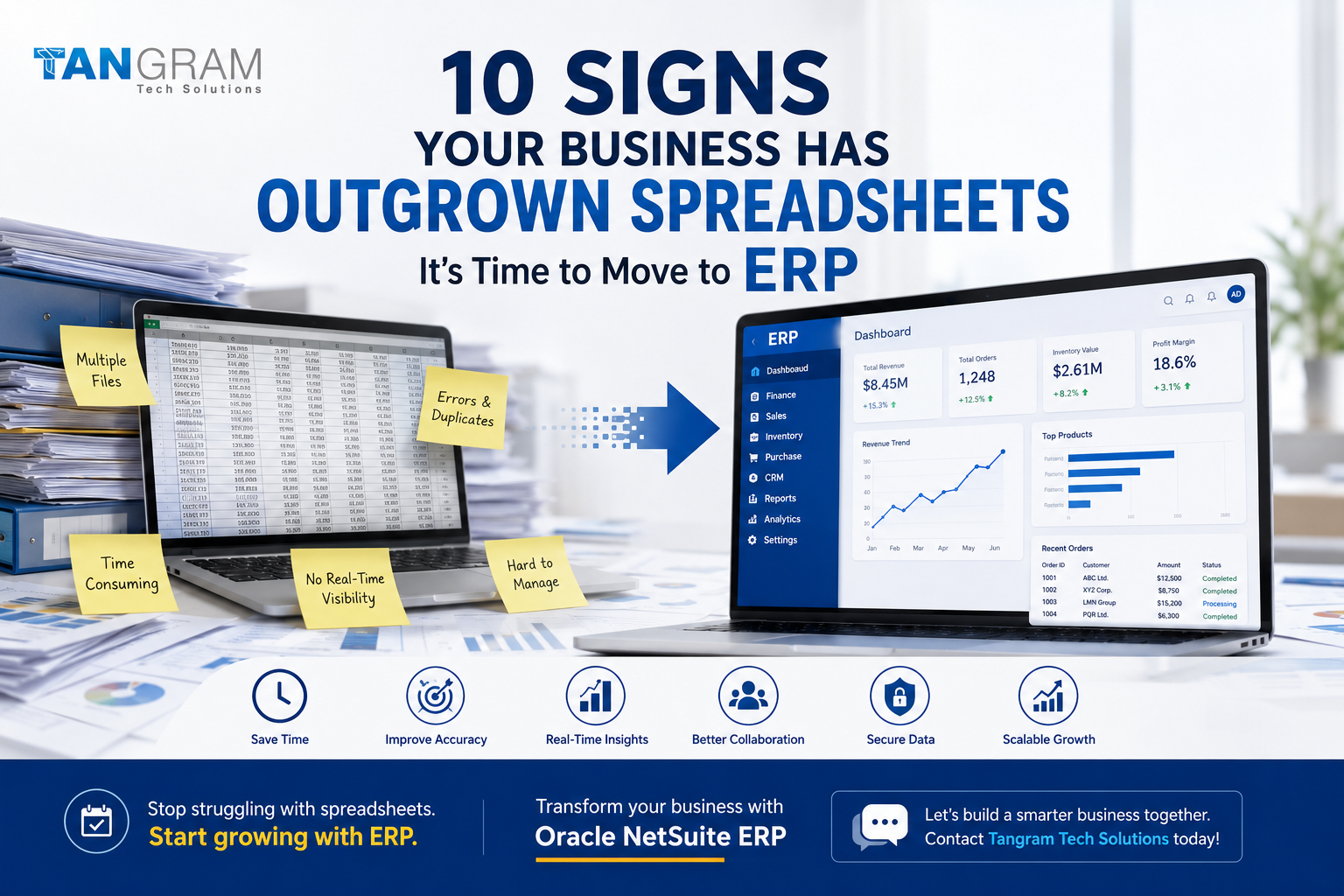
10 Signs Your Business Has Outgrown Spreadsheets: When to Move to ERP
For many businesses, spreadsheets are the first tool they use to manage daily operations. They are simple, familiar, affordable, and easy to update. Finance teams use them for accounts, sales teams track customers, and inventory teams use them to monitor stock.
For a small business, this can work very well.
But as the business grows, things can become more complicated.
There are more customers, more products, more transactions, more employees, and more information to manage. Suddenly, the spreadsheets that once made life easier start taking more time and creating more problems.
The issue is not that spreadsheets are bad. They are useful tools. The real issue is that a growing business may eventually need a system that can connect different parts of the business in a more organized way.
1. Your Business Depends on Too Many Spreadsheets
If your team has separate spreadsheets for finance, inventory, sales, purchasing, customers, and reporting, it can become difficult to keep everything consistent.
One person may update a file while another employee is still working with an older version. Over time, small differences between files can create much bigger problems.
2. You Keep Finding Data Errors
Manual data entry creates opportunities for mistakes.
A wrong number, missing transaction, duplicate entry, or outdated record can affect financial reports, inventory levels, customer information, and other important business data.
If your team is constantly checking and correcting spreadsheets, it may be time to consider a more connected system.
3. Preparing Reports Takes Too Long
Business owners and managers need information quickly.
If your team has to collect data from several spreadsheets, check the numbers, combine the information, and prepare a report manually, valuable time is being lost.
An ERP system can bring information together and make reporting much easier.
4. You Do Not Have a Clear View of Inventory
Inventory becomes harder to manage as a business grows.
You may have products coming in, going out, being returned, transferred between locations, or sitting in different warehouses. Tracking everything manually can make it difficult to know exactly what is available.
With ERP software, inventory information can be connected with sales, purchasing, and financial operations.
5. Employees Enter the Same Information More Than Once
Duplicate data entry is one of the biggest signs that your current system may be holding your business back.
For example, a sales transaction may need to be entered into a sales spreadsheet, inventory file, and accounting system separately.
A connected ERP solution can reduce this repeated work by allowing information to flow between relevant business processes.
6. Departments Are Working With Different Information
Sales may have one customer figure. Finance may have another. Inventory may be using a completely different file.
When departments cannot easily access the same information, communication becomes harder and decision making slows down.
An ERP system creates a more connected environment where teams can work with consistent business information.
7. Your Business Is Growing Into Multiple Locations
Managing one location through spreadsheets may be manageable. Managing several branches, warehouses, or business units is a different story.
As operations expand, businesses often need better control over financials, inventory, purchasing, sales, and reporting across different locations.
This is where a scalable ERP solution can provide significant value.
8. Your Team Spends More Time Managing Data Than Using It
Think about how much time your employees spend updating spreadsheets, checking formulas, searching for information, and preparing reports.
If too much of their working day is spent managing data instead of serving customers or improving the business, it is worth looking at a better solution.
9. Business Decisions Depend on Outdated Information
Good decisions require reliable information.
If you cannot quickly answer questions such as how much inventory you have, which products are selling, how much customers owe, or how the business is performing financially, your current system may not be giving you the visibility you need.
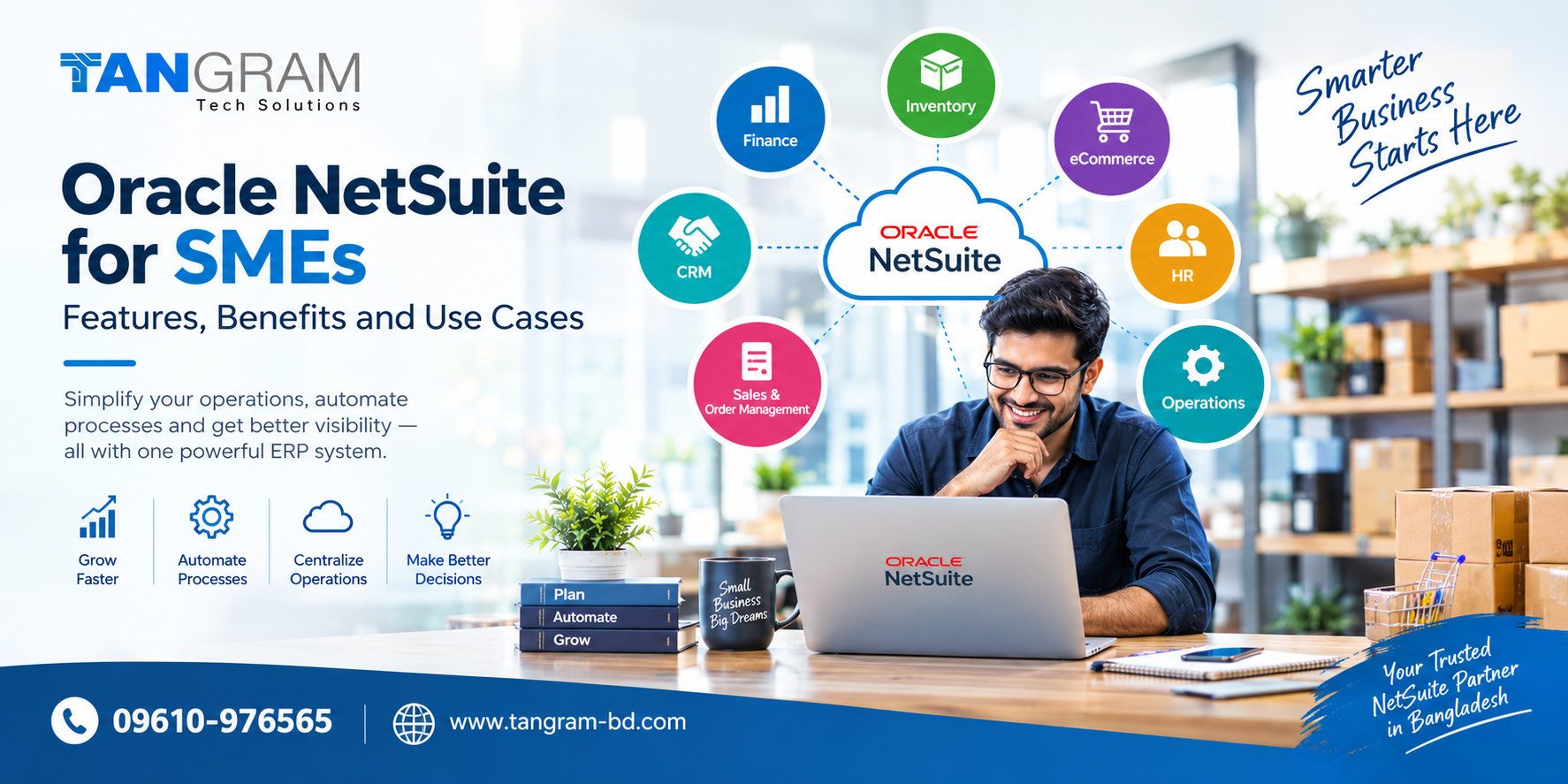
Solutions such as Oracle NetSuite can help businesses access connected information and improve visibility across important operations.
10. Your Business Needs to Scale
Perhaps the biggest sign is simple: your business is growing faster than your current systems can handle.
When processes become more complicated and spreadsheets start creating bottlenecks, it may be time to think beyond them.
For businesses exploring ERP in Bangladesh, moving to an ERP system does not mean abandoning every spreadsheet immediately. The better approach is to identify the areas causing the most problems and find a solution that addresses those needs.
When Is the Right Time to Move to ERP?
There is no single moment when every business should move from spreadsheets to ERP.
However, if your team is dealing with repeated data entry, reporting delays, inventory problems, inconsistent information, or growing operational complexity, it may be worth evaluating an ERP solution.
The goal is not simply to stop using spreadsheets. The goal is to create a business system that can support your team today and continue to grow with you tomorrow.
For companies in Bangladesh considering NetSuite ERP Bangladesh, NetSuite in Bangladesh, or other ERP solutions, the right implementation starts by understanding your actual business requirements.
If your spreadsheets are becoming harder to manage than the business itself, it may be time for a change.
Contact Tangram: 09610 976565
Website: Tangram Tech Solutions Ltd.