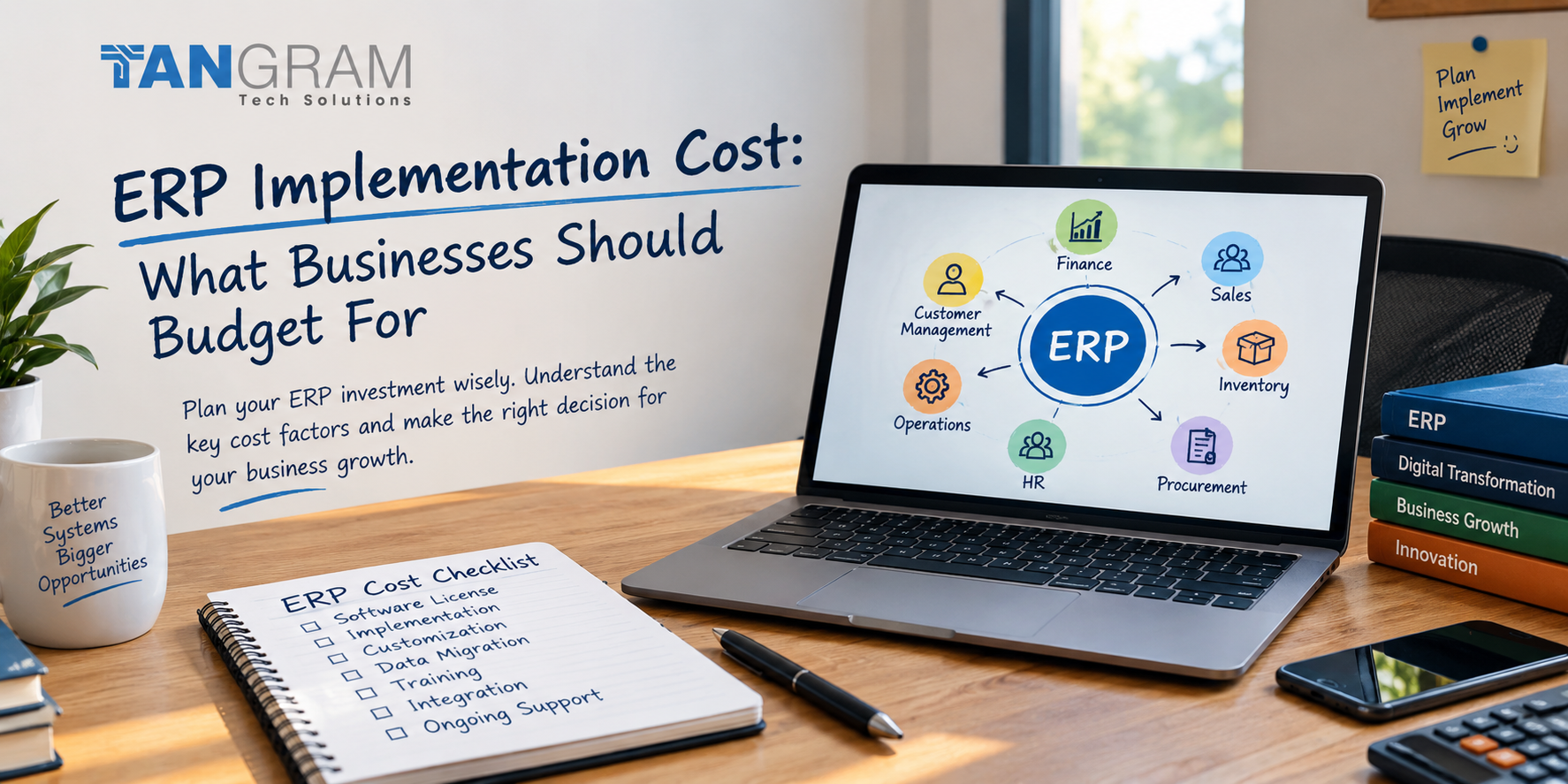
ERP Implementation Cost: What Businesses Should Budget For
When a business starts looking for an ERP system, one of the first questions that usually comes up is cost. How much will the software cost? What will the implementation involve? Are there extra costs for customization, data migration, employee training, or ongoing support?
There is no fixed ERP implementation cost that works for every business. The total investment depends on several factors, including the size of the company, number of users, business processes, required modules, integrations, existing data, and the level of customization needed.
For businesses in Bangladesh considering ERP software, NetSuite, or NetSuite ERP Bangladesh, understanding these costs early can make the budgeting process much easier.
What Does ERP Implementation Cost Include?
ERP costs are not limited to the software subscription or license. A complete ERP project can involve several different expenses, and businesses should consider them before starting the implementation.
1. ERP Software Licensing
The first cost to consider is the ERP software itself. Depending on the solution, businesses may pay based on the number of users, selected modules, features, or subscription plans.
For example, one company may only need finance and accounting, while another may also require inventory management, procurement, CRM, manufacturing, project management, or other business functions.
The number of users and the features required can therefore have a direct impact on the overall software cost.
2. ERP Implementation Services
Once an ERP system has been selected, it needs to be configured around the company’s actual business processes.
Implementation can include business process analysis, system configuration, user roles, workflows, reporting, testing, and preparation for go live.
For a NetSuite implementation, this may also involve account setup, security, user permissions, integrations, data migration, and customization.
This is why implementation services should be included as a separate part of the ERP budget rather than looking only at the software price.
3. Customization
Not every business works in exactly the same way. Some companies can rely mainly on standard ERP features, while others may need specific workflows, fields, forms, reports, or additional functionality.
NetSuite offers customization options that allow businesses to adapt different parts of the system to their requirements.
However, extensive customization can increase both the initial implementation effort and future maintenance requirements. Before developing a custom feature, businesses should first check whether the standard ERP functionality can already meet the requirement.
4. Data Migration
Moving existing business data into a new ERP system is another important part of the project.
This may include customer information, supplier records, products, inventory, financial data, open transactions, and historical records.
The condition and volume of existing data can have a major impact on the migration process. Data that is clean and well organized is generally easier to move than information spread across multiple spreadsheets and different systems.
NetSuite supports several approaches for importing and integrating data, including CSV imports, web services, and REST based options.
5. Training and User Adoption
An ERP system is only useful when employees know how to use it properly.
Different teams may require different types of training. Finance, sales, inventory, procurement, HR, and management teams may all use different parts of the system.
Training requirements will depend on the number of users and the processes they are responsible for.
Businesses should therefore include training and user adoption in the ERP budget from the beginning instead of treating them as an additional task after implementation.
6. Integration With Other Systems
Most growing businesses already use several software systems. These may include CRM platforms, eCommerce websites, payment systems, banking solutions, HR software, or other business applications.
If these systems need to share information with the ERP, integration work may add to the overall project cost.
The cost and complexity can vary depending on the systems involved, the amount of information being exchanged, and whether custom development is required.
7. Ongoing Support and Maintenance
ERP expenses do not necessarily stop once the system goes live.
Businesses may continue to need technical support, system administration, user assistance, reporting changes, additional configuration, updates, and future customization.
For this reason, decision makers should consider both the initial implementation cost and the expected ongoing cost of operating and supporting the ERP system.
How Much Should a Business Budget for ERP?
Rather than looking only at the software price, businesses should consider the total cost of ownership.
A practical ERP budget should include:
Software licensing or subscription
Implementation and configuration
Customization
Data migration
System integration
Employee training
Testing and go live support
Ongoing support and maintenance
The actual cost will vary from business to business.
A small implementation using mostly standard features can require a very different budget from a larger project involving multiple locations, complex integrations, extensive customization, and large amounts of existing data.
ERP Implementation Cost in Bangladesh
For businesses searching for ERP in Bangladesh, ERP software in Bangladesh, NetSuite in Bangladesh, or NetSuite ERP Bangladesh, cost should always be considered together with the company’s actual business requirements.
A lower initial price does not always mean a lower overall cost. If the system later requires extensive customization, additional integrations, or significant support, the total investment can increase over time.
Before selecting an ERP system, companies should clearly understand their requirements, expected number of users, required modules, existing software systems, data migration needs, reporting requirements, and future growth plans.
Choosing the Right ERP Implementation Partner
The implementation partner can have a significant impact on how smoothly an ERP project progresses.
A reliable partner should understand the company’s requirements, explain the project scope clearly, identify potential additional costs, and provide a realistic implementation plan.
For businesses considering NetSuite Business Solution Provider services in Bangladesh, it is important to discuss implementation, customization, integration, data migration, training, and post go live support before the project begins.
Tangram Tech Solutions Ltd. provides NetSuite implementation, customization, integration, data migration, training, and post go live support for businesses in Bangladesh.
Conclusion
ERP implementation is an investment that goes beyond the software subscription.
Software licensing, implementation, customization, data migration, training, integration, and ongoing support can all contribute to the final project cost.
The best approach is to understand the business requirements first and then create a budget around the complete ERP project instead of focusing only on the software price.
With proper planning and the right implementation approach, businesses can get a clearer picture of their ERP investment and avoid unexpected costs during implementation.
Website: https://www.tangram-bd.com/
Phone: 09610-976565