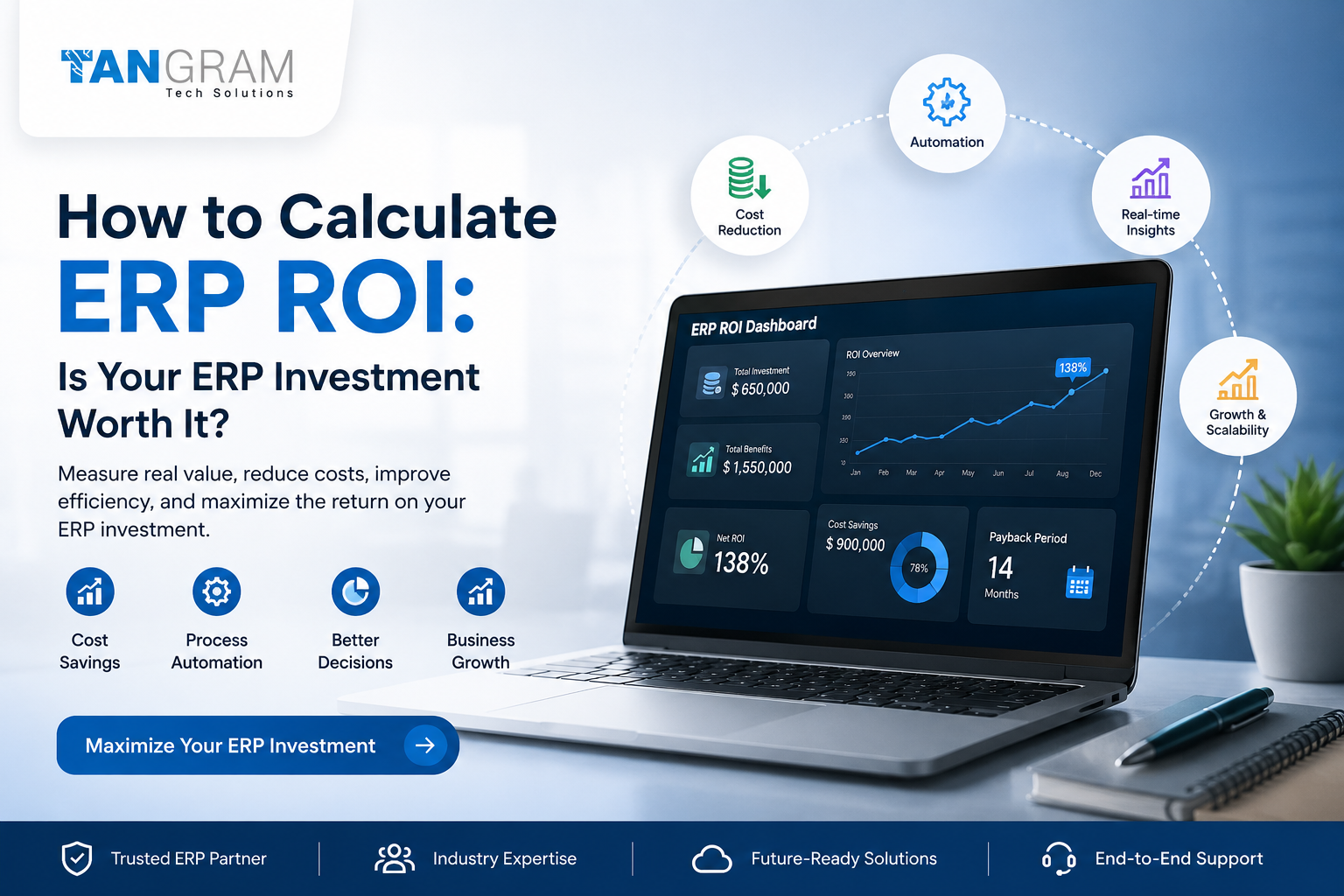
How to Calculate ERP ROI: Is Your ERP Investment Worth It?
Investing in an Enterprise Resource Planning (ERP) system is a major decision for any growing business. Companies usually turn to ERP to improve efficiency, automate repetitive work, get better control over their operations, and make faster business decisions. But before making that investment, there is one question every business owner should ask: Will the ERP actually deliver enough value to justify the cost?
This is where ERP Return on Investment (ROI) becomes important.
ERP ROI helps a business compare the value it gains from an ERP system with the total cost of implementing and running it. Instead of looking only at the software price, a proper ROI calculation considers the wider financial impact, including savings from automation, improved productivity, fewer errors, better inventory management, faster reporting, and more efficient business processes.
What Is ERP ROI?
ERP ROI is a way of measuring whether an ERP investment is generating enough financial value for the business.
A simple way to calculate it is:
ERP ROI = (Total Benefits from ERP − Total ERP Costs) ÷ Total ERP Costs × 100
For example, if a company spends $100,000 on an ERP implementation and generates $150,000 in measurable benefits, the ROI would be 50%.
However, calculating ERP ROI is not always as simple as comparing the purchase price with the expected savings. ERP can affect many areas of a business, and some of its benefits become more visible over time.
What Should Be Included in ERP Costs?
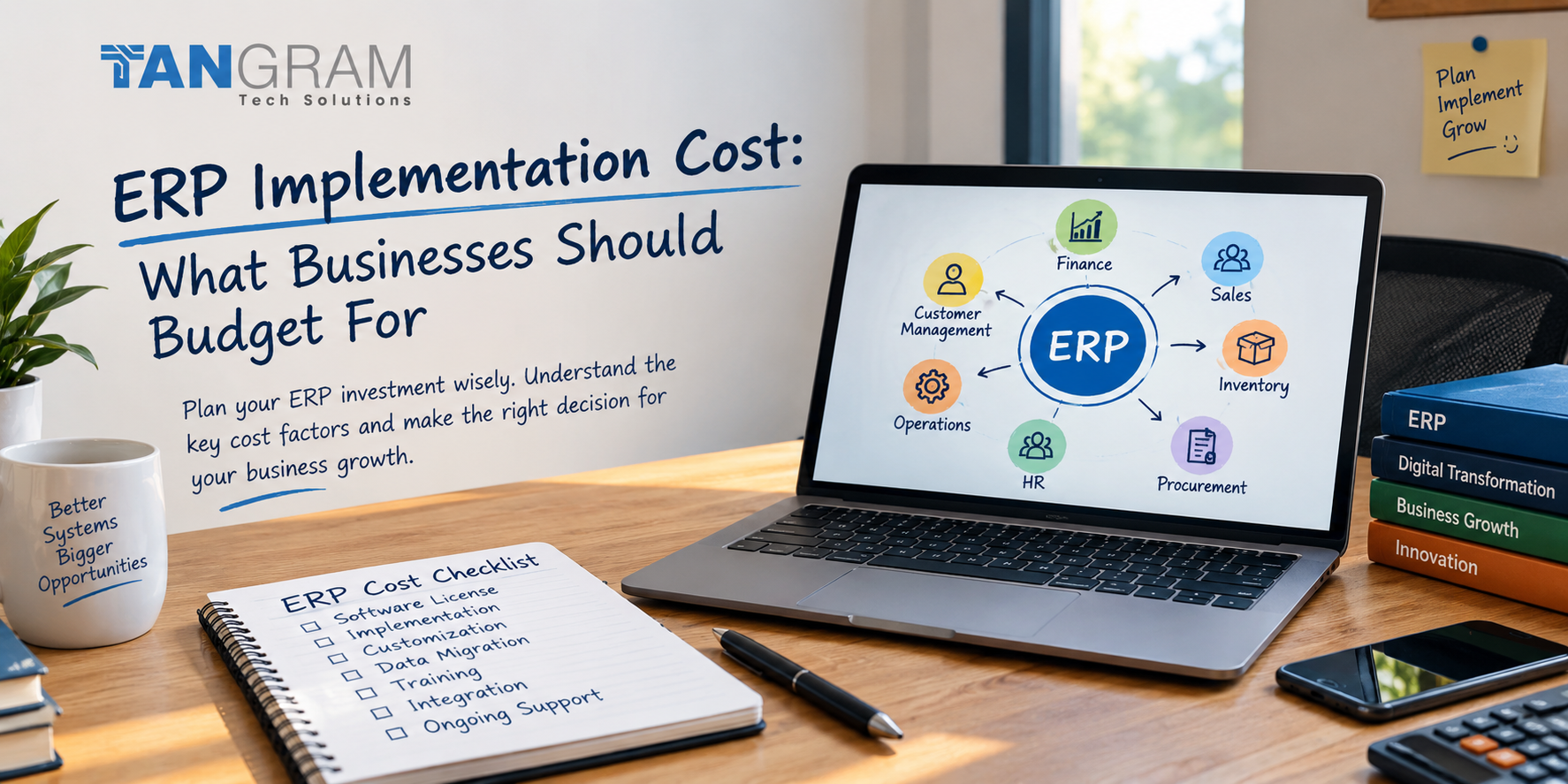
To calculate realistic ROI, businesses should consider the full cost of the ERP project rather than focusing only on the initial software fee.
These costs may include software subscriptions or licensing, implementation services, data migration, system configuration, employee training, integrations, customization, support, and ongoing maintenance.
There can also be temporary costs during the transition. Employees may need time to learn the new system, and some processes may slow down while the organization moves from its old system to the new one.
Understanding the total cost of ownership gives businesses a much clearer picture of the investment.
How to Measure the Benefits of ERP
The next step is identifying the financial benefits the ERP is expected to generate. This is where businesses need to look closely at their current processes.
1. Reduced Manual Work
Employees often spend hours entering data, preparing spreadsheets, checking information, creating reports, and moving data between different systems.
ERP automation can reduce much of this repetitive work. The time saved can then be used for more valuable activities, helping the business get more productivity from its existing workforce.
2. Lower Operational Costs
An ERP system can help identify unnecessary expenses and improve the way resources are used.
Automated workflows, better purchasing controls, improved inventory management, and fewer administrative tasks can all contribute to lower operating costs.
3. Better Inventory Management
Inventory errors can be expensive. Overstocking ties up cash, while stock shortages can lead to missed sales and unhappy customers.
With centralized and up-to-date inventory information, businesses can make better purchasing decisions, reduce excess stock, and improve order fulfillment.
4. Faster Financial Reporting
Preparing financial reports manually can take days, especially when information is spread across different systems and spreadsheets.
An integrated ERP gives finance teams access to current financial information in one place. This can make reporting faster and give management a clearer understanding of the company’s financial position.
5. Fewer Errors
Manual data entry increases the risk of mistakes. A small error in inventory, pricing, purchasing, or financial data can sometimes lead to much larger problems.
By automating processes and keeping information in a centralized system, ERP can reduce unnecessary data entry and improve data accuracy.
6. Better Business Decisions
One of the biggest advantages of ERP is having access to reliable business information when it is needed.
Instead of waiting for different departments to prepare reports, management can use real-time data and dashboards to monitor sales, finances, inventory, customers, and other important areas of the business.
Better information can lead to better decisions.
Why Cloud ERP Can Improve ROI
Cloud ERP has changed the way businesses approach ERP investments. Traditional systems often require significant spending on servers, infrastructure, upgrades, and IT maintenance.
With a cloud-based ERP platform, much of this infrastructure is managed by the service provider. This can reduce the need for large upfront IT investments and make costs easier to manage.
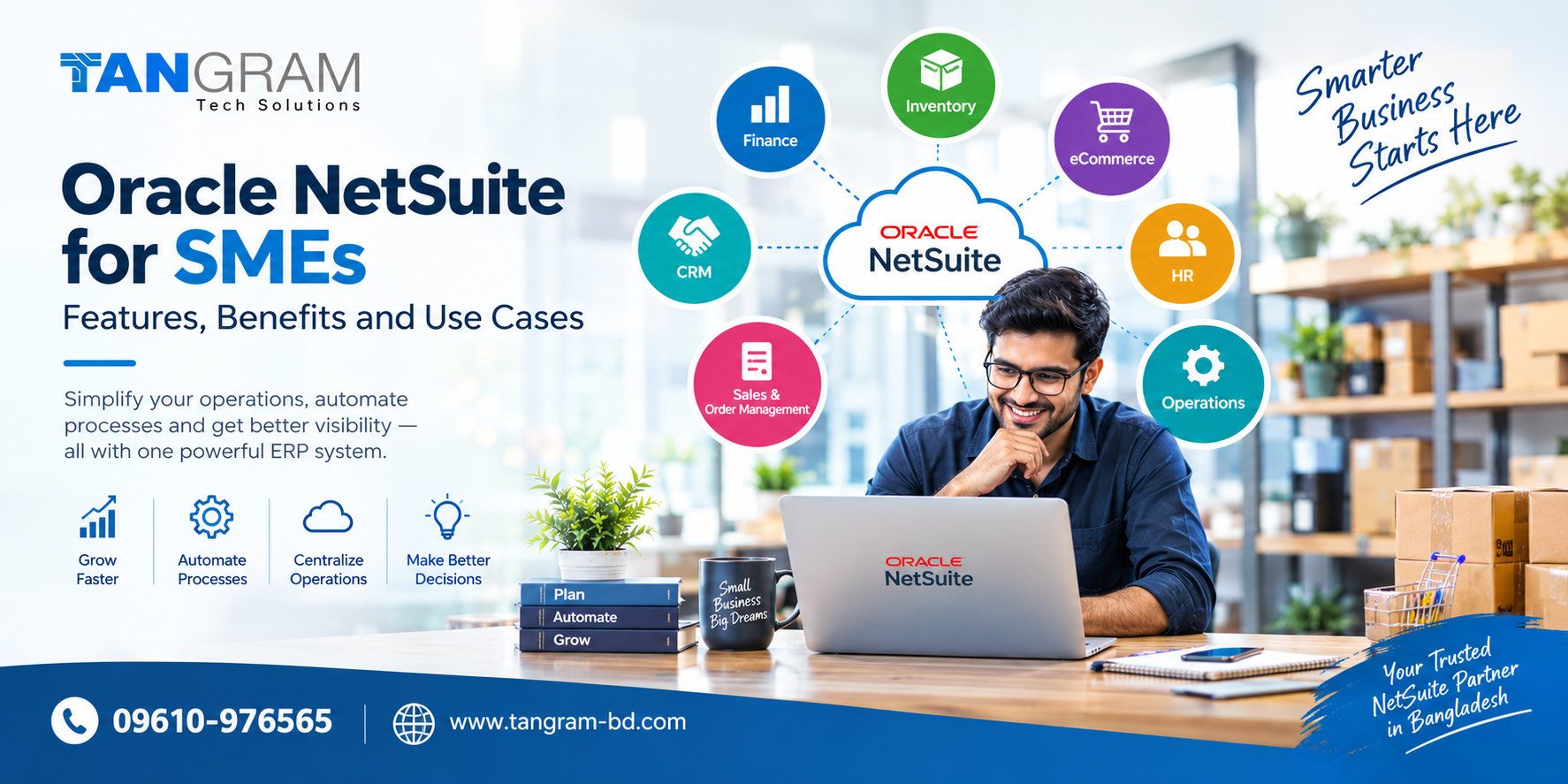
Platforms such as Oracle NetSuite also provide businesses with the flexibility to add users, processes, and capabilities as the organization grows. For companies planning long-term expansion, this scalability can be an important part of the overall ROI.
How Long Does It Take to See ERP ROI?
There is no single answer because every business is different.
The time required to recover an ERP investment depends on factors such as company size, implementation cost, operational complexity, number of users, current inefficiencies, and how effectively the new system is adopted.
Some businesses may begin seeing measurable savings within the first year, while others may require several years before the full financial benefits become clear.
That is why businesses should evaluate ERP ROI over multiple years rather than judging the project only by its first few months.
How Businesses in Bangladesh Can Maximize ERP ROI
For businesses in Bangladesh, getting the most value from an ERP investment starts with choosing the right system and implementation approach.
Before implementation, clearly identify the problems the ERP needs to solve. Set measurable goals for areas such as inventory accuracy, reporting time, order processing, employee productivity, and operating costs.
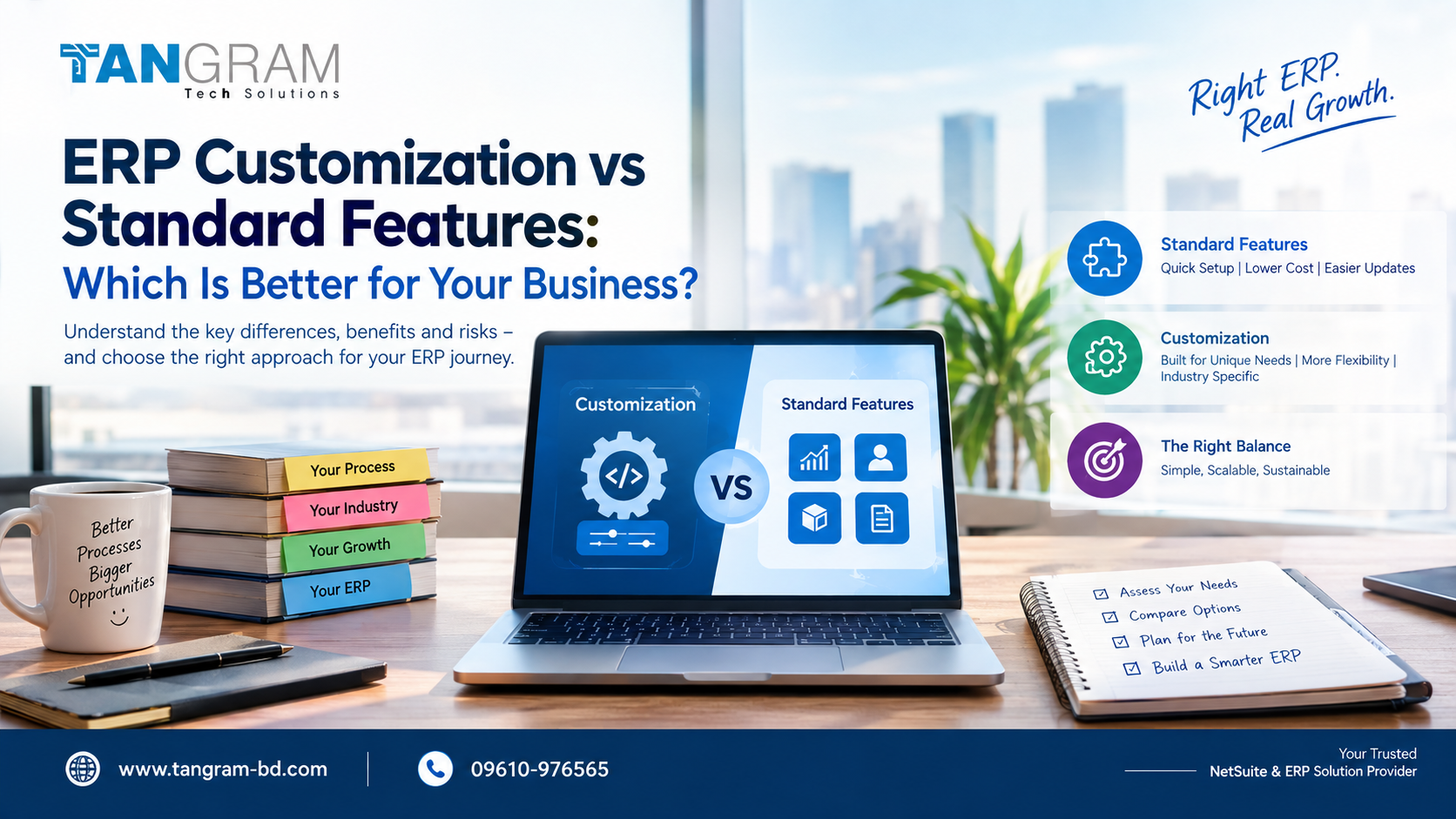
It is also important to avoid unnecessary customization. Adapting business processes to proven ERP workflows where practical can reduce implementation costs and make future upgrades easier.
Employee training is another important factor. Even a powerful ERP system will not deliver its expected value if employees do not understand how to use it properly.
Finally, continue measuring performance after implementation. Compare actual results with the targets established before the project and look for additional opportunities to automate and improve processes.
Is an ERP Investment Worth It?
For many growing businesses, the value of ERP goes far beyond software features.
A well-planned ERP implementation can reduce manual work, improve financial control, increase inventory accuracy, provide faster access to information, and help management make better decisions.
The key is to look at ERP as a business investment rather than simply a software purchase.
When the costs and expected benefits are clearly identified before implementation, businesses can make more informed decisions and create realistic expectations about the return they can achieve.
For companies in Bangladesh considering digital transformation, a detailed ERP ROI analysis can be an excellent starting point. It helps decision-makers understand where the investment will create value and how the organization can measure success after implementation.
Looking for the right ERP solution for your business?
Contact Tangram Tech Solutions Ltd. at 09610 976565 to discuss your ERP requirements and implementation goals.
Website: Tangram Tech Solutions Ltd.
If you want, I can also make this more SEO-focused for Tangram’s website, including the focus keyphrase, SEO title, meta description, URL slug, headings, internal-link suggestions, and image SEO fields.