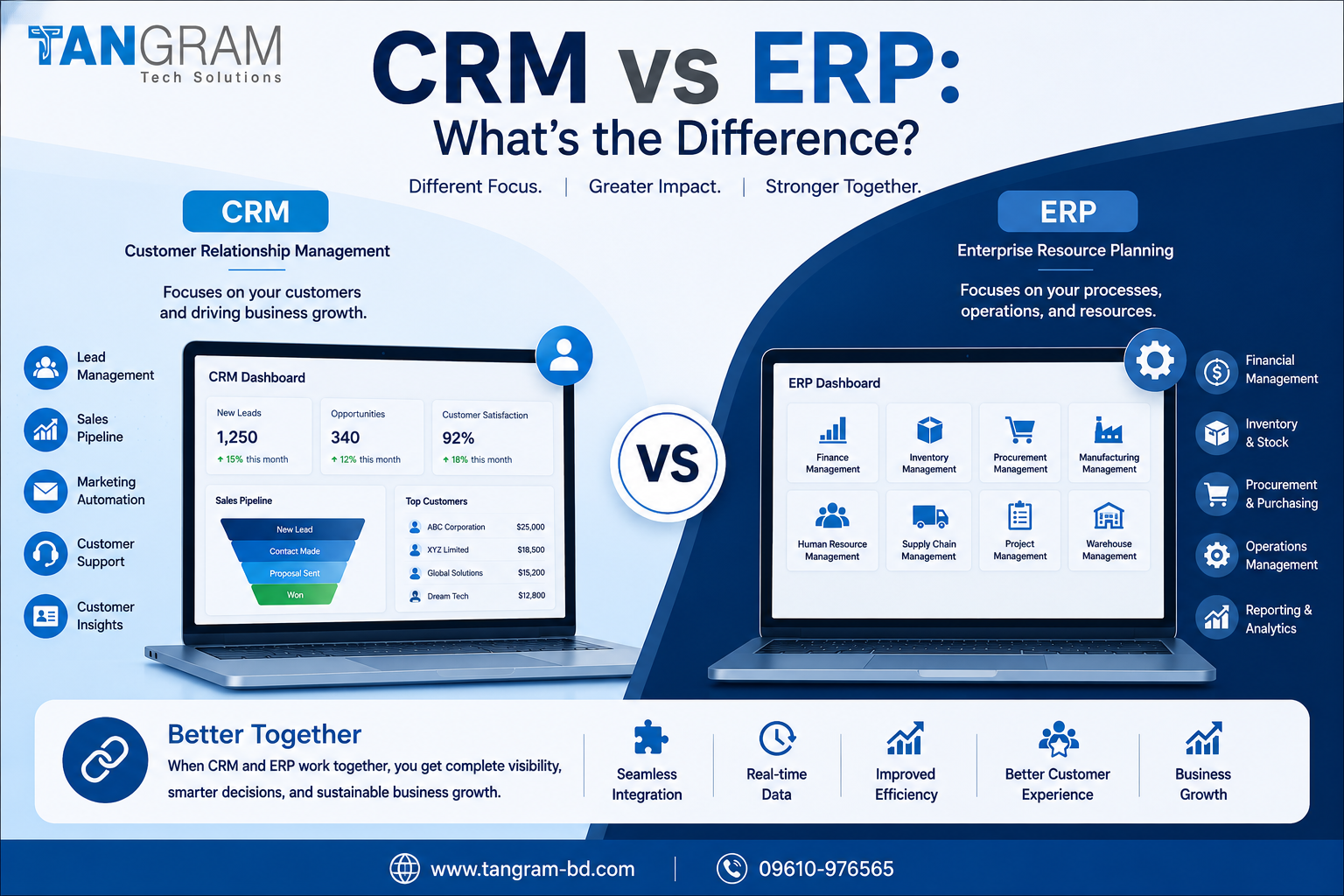
Although CRM and ERP are often mentioned together, they serve different purposes. A CRM system focuses on managing customer interactions, improving sales performance, and strengthening customer relationships. An ERP system, on the other hand, integrates core business processes such as finance, inventory, procurement, manufacturing, human resources, and operations into one centralized platform.
Many businesses initially believe they only need a CRM because their primary goal is to increase sales. However, as the organization expands, challenges such as inventory management, financial reporting, purchasing, and operational coordination become more difficult to manage. At that stage, an ERP system becomes essential for improving efficiency and supporting sustainable growth.
The good news is that CRM and ERP are not competing solutions—they complement each other. When integrated, they provide complete visibility across the customer journey and internal business operations. Sales teams gain access to accurate inventory and order information, while finance and operations teams receive real-time customer and sales data, enabling better collaboration and faster decision-making.
In this article, we’ll explain the key differences between CRM and ERP, compare their features and benefits, and help you determine when your business needs one or both systems.