How ERP Streamlines Procurement and Supplier Management
Procurement can seem straightforward when a business is small. A team needs a product, someone contacts a supplier, a purchase order is prepared, and the goods are delivered. As the business grows, however, the process becomes much harder to manage.
More suppliers, purchase orders, approval requests, changing prices, delivery schedules, invoices, and purchasing records all need to be handled properly. When this information is spread across spreadsheets, emails, and separate systems, keeping everything organized can become a daily challenge.
This is where ERP software can make procurement much easier to manage.
Keeping Supplier Information in One Place
One of the biggest benefits of an ERP system is that supplier information can be managed from a central location.
Instead of searching through different spreadsheets or old emails, procurement teams can access important supplier details from one system. This may include contact information, purchase history, payment terms, pricing, previous transactions, and other relevant records.
Having this information readily available makes it easier to understand supplier relationships and make better purchasing decisions.
For growing businesses, this can also save valuable time. Employees spend less time looking for information and more time focusing on actual procurement activities.
Making Purchasing Workflows More Efficient
Purchasing often involves several steps before an order can be placed. A department may submit a request, a manager may need to approve it, and the procurement team may then create the purchase order.
When these steps are handled manually, requests can easily get delayed or overlooked.
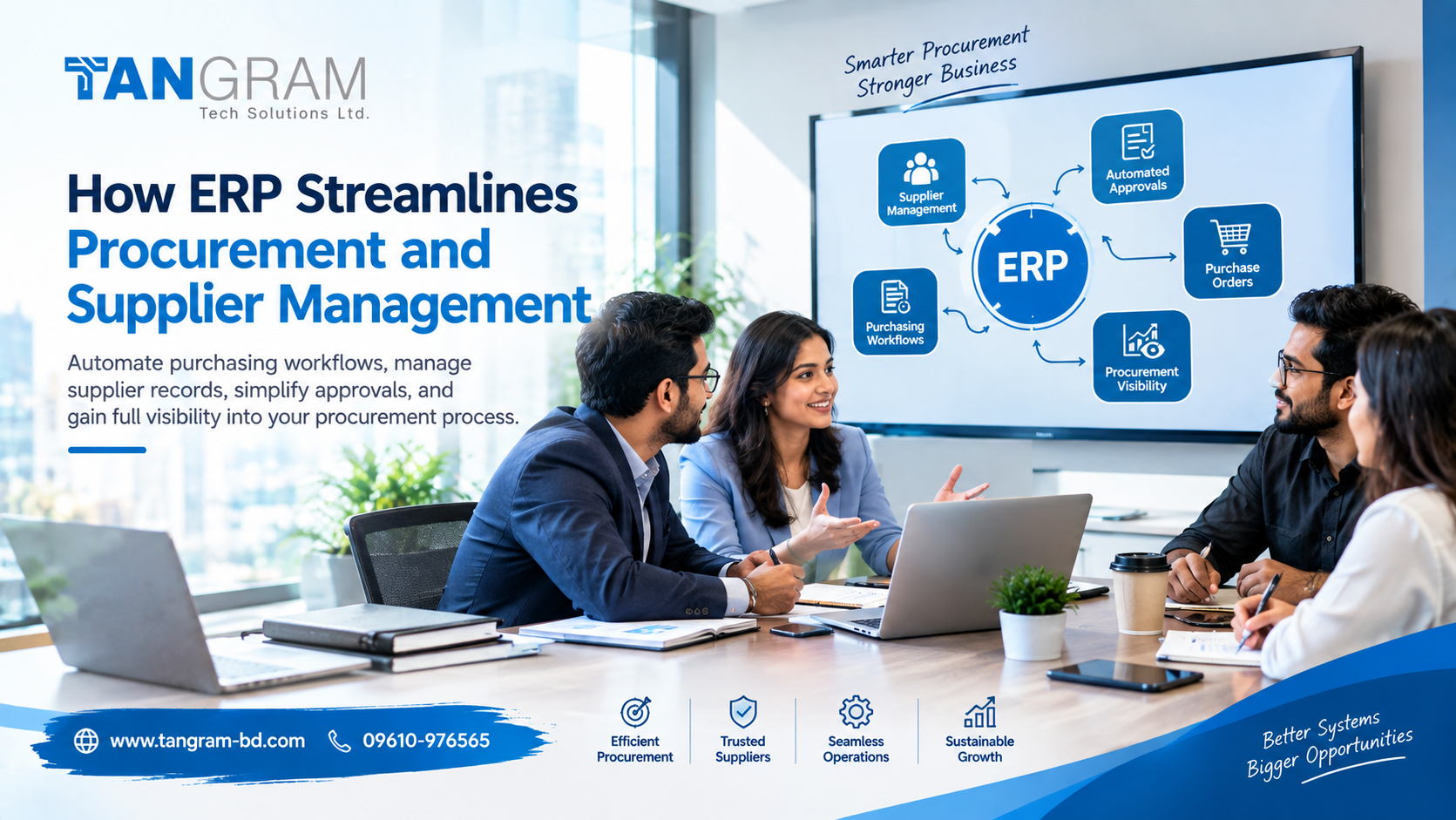
An ERP system can create a structured purchasing workflow where requests move through the appropriate approval process. This gives businesses better control over purchasing while reducing unnecessary emails and manual follow ups.
It also makes responsibilities clearer. Employees know where a request stands, while managers can review and approve purchases before the business commits to spending.
Managing Purchase Orders More Effectively
Purchase orders are an important part of procurement, but managing them manually can create problems.
Orders may be misplaced, duplicate purchases can happen, quantities can be entered incorrectly, or teams may not know whether an order has already been delivered.
With ERP, purchase orders can be created and tracked within the same system. Procurement teams can see which supplier received an order, what was ordered, how much it costs, and whether the goods have been delivered.
This provides a clearer picture of purchasing activity and helps reduce common administrative mistakes.
Getting Better Visibility Into Procurement
Good procurement decisions require accurate and timely information.
An ERP system can give managers a better view of purchasing activity, supplier performance, outstanding orders, spending patterns, and procurement requirements.
Instead of waiting for information to be collected from different departments, decision makers can access centralized business data and use it to understand what is happening.
This can help businesses identify unnecessary spending, compare suppliers, monitor purchasing trends, and plan future requirements with greater confidence.
Improving Supplier Management
Suppliers have an important role in keeping business operations running smoothly. A late delivery or unexpected price change can affect inventory, production, sales, and ultimately customer satisfaction.
ERP software helps businesses maintain a record of supplier transactions and purchasing activities. Over time, this information can help management understand which suppliers are performing well and where improvements may be needed.
For businesses using NetSuite, procurement information can also work alongside other areas such as finance, inventory, sales, and operations. Having connected information across these functions can make it easier to manage the business as a whole.
Why ERP Is Important for Growing Businesses
As businesses in Bangladesh continue to grow, managing procurement through disconnected spreadsheets and separate tools can become increasingly difficult.
A modern ERP solution can bring purchasing, supplier management, approvals, purchase orders, inventory, and financial information into one connected environment.
For businesses considering NetSuite ERP Bangladesh solutions, selecting the right implementation and solution provider is also important. The system should not only address current business requirements but also provide enough flexibility to support future growth.
ERP is not simply about replacing spreadsheets. The real value comes from creating a more organized and connected way to manage everyday business activities.
For companies looking for NetSuite in Bangladesh, ERP in Bangladesh, or a trusted NetSuite Business Solution Provider, the right ERP approach can help improve procurement efficiency, strengthen supplier management, and provide better visibility across the business.
Learn more about ERP and NetSuite solutions:
https://www.tangram-bd.com/
Contact Tangram Tech Solutions Ltd.: 09610-976565