ERP vs Accounting Software: What’s the Difference?
For a small business, accounting software can be enough to manage everyday financial tasks. It can help with invoices, expenses, payments, bookkeeping, and financial reports.
But as a business grows, managing everything becomes more difficult.
There are more customers, employees, products, suppliers, orders, inventory, and transactions to keep track of. At this point, many business owners start asking: Is accounting software still enough, or is it time to move to an ERP system?
The answer depends on the size of the business, its operations, and how much information needs to be connected across different departments.
What Is Accounting Software?
Accounting software is mainly built to manage a company’s financial activities.
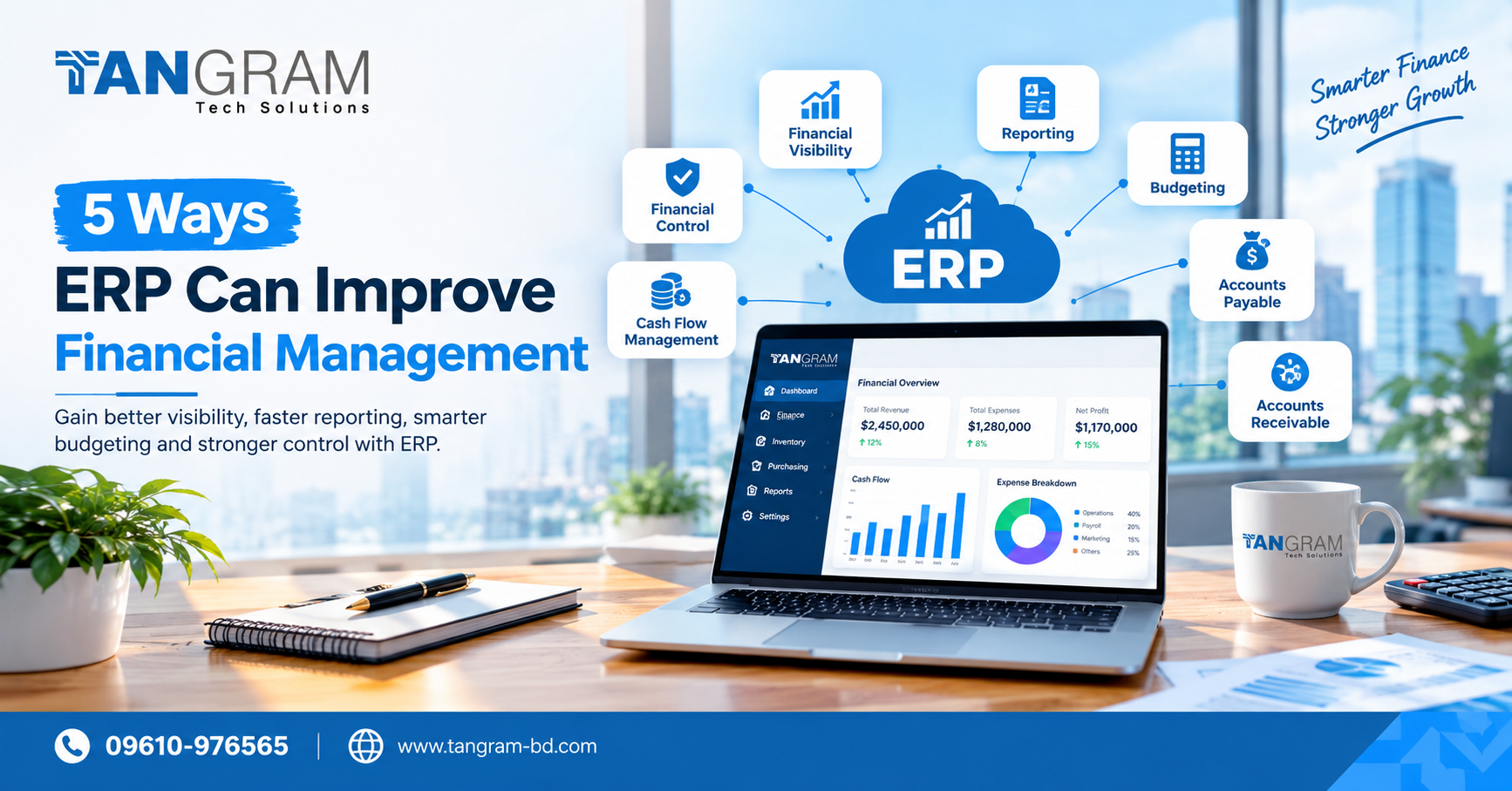
It can handle tasks such as income and expenses, invoices, accounts payable, accounts receivable, bank transactions, payroll, taxes, and financial reporting.
For a small business with simple operations, this may be all that is needed.
However, problems can appear when other parts of the business are managed separately. Sales might be tracked in one system, inventory in spreadsheets, customer information in another tool, and purchasing through emails or separate files.
The finance team may have the numbers, but management may still find it difficult to see the complete picture of the business.
What Is ERP Software?
ERP stands for Enterprise Resource Planning.
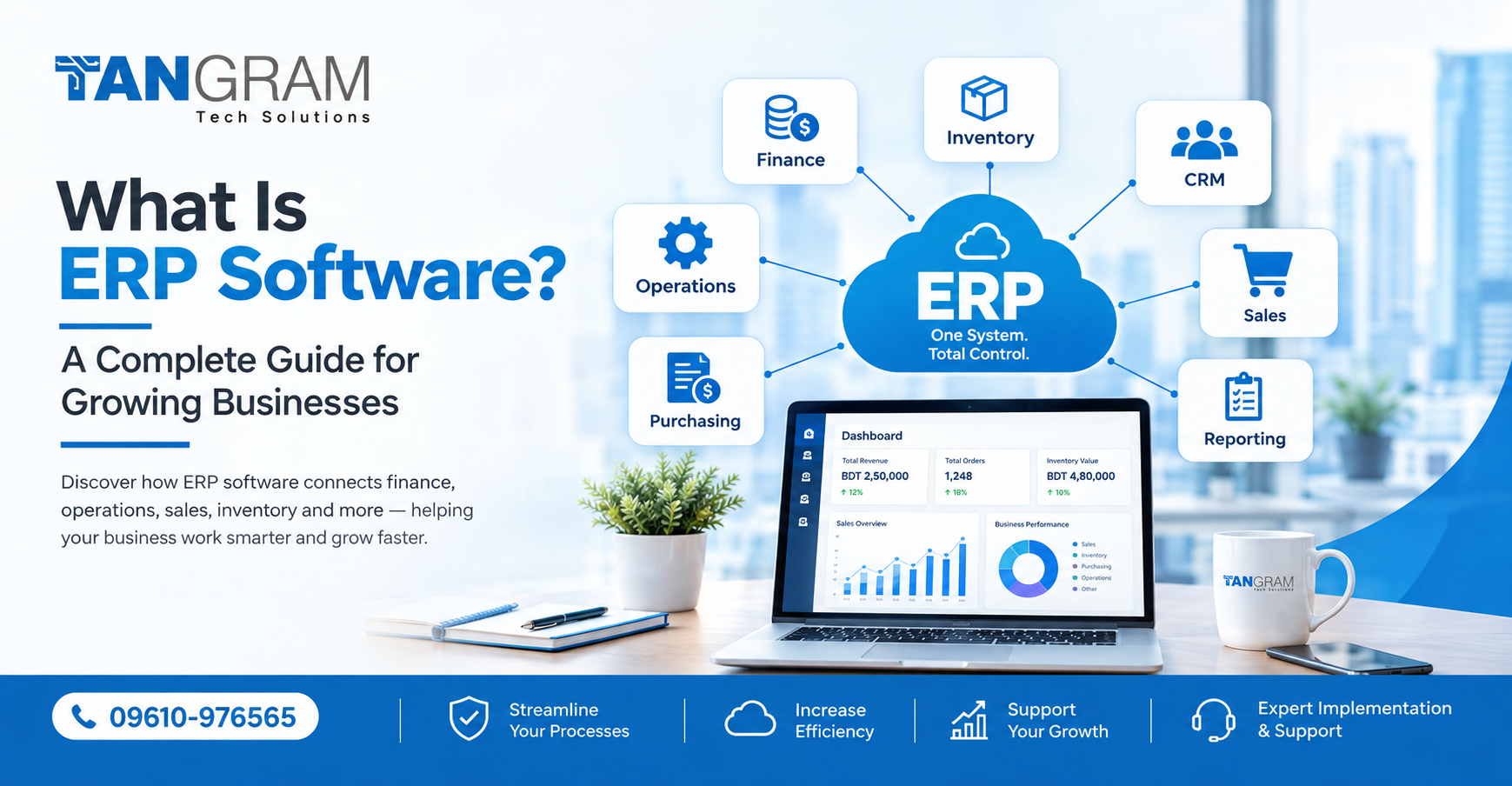
An ERP system goes beyond accounting by bringing different business functions together on one platform. Depending on the solution, it can connect finance, inventory, sales, purchasing, customer management, order processing, reporting, and other important operations.
The main advantage is that these areas can work together.
For example, when a customer places an order, the information can flow through sales, inventory, fulfillment, and financial processes without employees having to enter the same information into multiple systems.
Oracle NetSuite is designed as a unified business management platform that brings together ERP and financial management with areas such as CRM and ecommerce.
ERP vs Accounting Software: What’s the Difference?
The easiest way to understand the difference is to look at what each system is designed to manage.
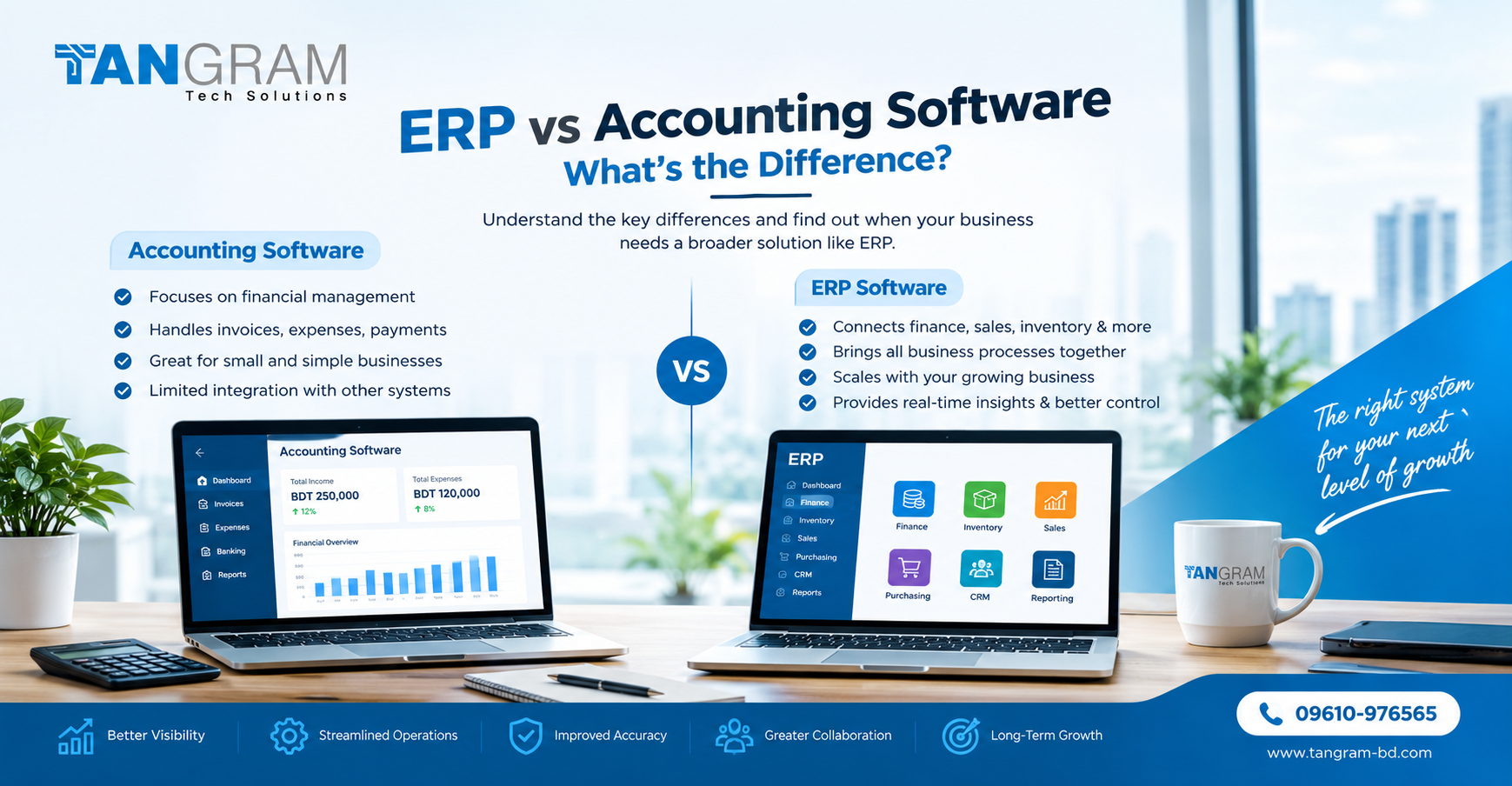
Accounting software focuses mainly on financial management.
ERP software connects financial and operational activities across the business.
Accounting software can help answer questions such as:
How much revenue did we generate?
What were our expenses?
Who still owes us money?
What are our financial results?
An ERP system can provide a wider view:
How much inventory do we have?
Which products are selling?
Which orders are still pending?
What needs to be purchased?
How are different branches performing?
How are sales, inventory, and financial results connected?
This wider visibility becomes more important as a company grows.
When Is Accounting Software Enough?
Accounting software can be a good choice when a business has relatively simple operations and does not need many departments or systems to work together.
For example, a small service business with a limited team, little or no inventory, and straightforward financial activities may not need a full ERP system.
There is no reason to implement a complex system simply because it is available. The technology should solve a genuine business need.
When Should a Business Consider ERP?
An ERP system becomes more useful when daily operations start becoming difficult to manage with separate tools.
Some common signs include:
Growing inventory and product lines
Multiple branches or locations
Increasing sales and customer transactions
Heavy dependence on spreadsheets
Duplicate or inconsistent information
Slow management reporting
Difficulty connecting sales, inventory, and finance
Too much manual work between departments
Limited visibility into business performance
When these problems start affecting daily operations, moving to an ERP system can make business processes easier to manage and information easier to access.
Why Growing Businesses Consider NetSuite
For growing companies, Oracle NetSuite offers a broader approach to business management by bringing financial and operational processes together.
Its ERP capabilities include areas such as accounting, inventory, order management, project management, and employee management.
This can be useful for businesses that have moved beyond basic bookkeeping and need better control over their overall operations.
For companies considering NetSuite in Bangladesh or NetSuite ERP Bangladesh, the focus should not only be on the number of features a software offers.
The more important question is whether the system fits the company’s current operations and future growth plans.
ERP in Bangladesh: Choosing the Right Solution
Businesses in Bangladesh are becoming more dependent on accurate and timely information as they expand. Manufacturers, distributors, retailers, ecommerce companies, service providers, and other growing businesses may eventually need more than basic accounting software.
However, moving to an ERP system requires proper planning.
Before choosing an ERP, businesses should review their existing processes, identify the main operational challenges, understand their reporting needs, prepare their data, and decide which features are actually required.
Working with an experienced NetSuite Business Solution Provider can also make implementation easier by providing support for customization, integration, data migration, training, and ongoing system management.
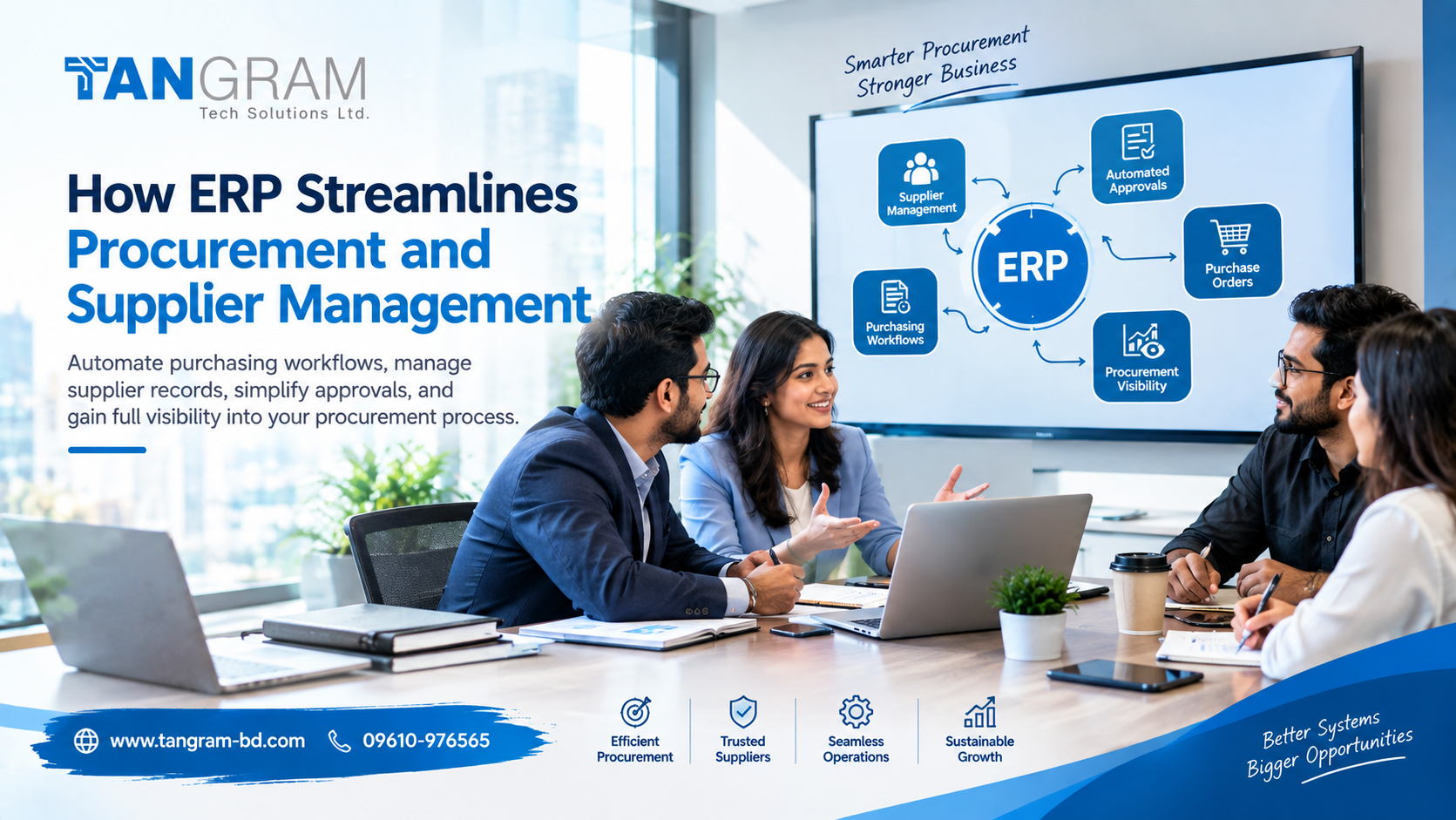
Tangram Tech Solutions provides Oracle NetSuite implementation, customization, integration, data migration, training, and ongoing support for businesses in Bangladesh.
Conclusion
Accounting software and ERP software are designed for different levels of business needs.
Accounting software mainly focuses on financial activities, while ERP connects finance with wider business operations.
For a small company with simple requirements, accounting software may be perfectly suitable. But as the business grows and begins dealing with more inventory, departments, branches, transactions, and complex processes, an ERP system can provide the visibility and control needed to manage that growth.
If you are comparing ERP vs accounting software, the best choice is the one that matches your actual business requirements and future plans.
For businesses exploring ERP in Bangladesh, ERP software, NetSuite in Bangladesh, or NetSuite ERP Bangladesh, understanding your current challenges is the right place to start.
Website: https://www.tangram-bd.com/
Phone: 09610-976565