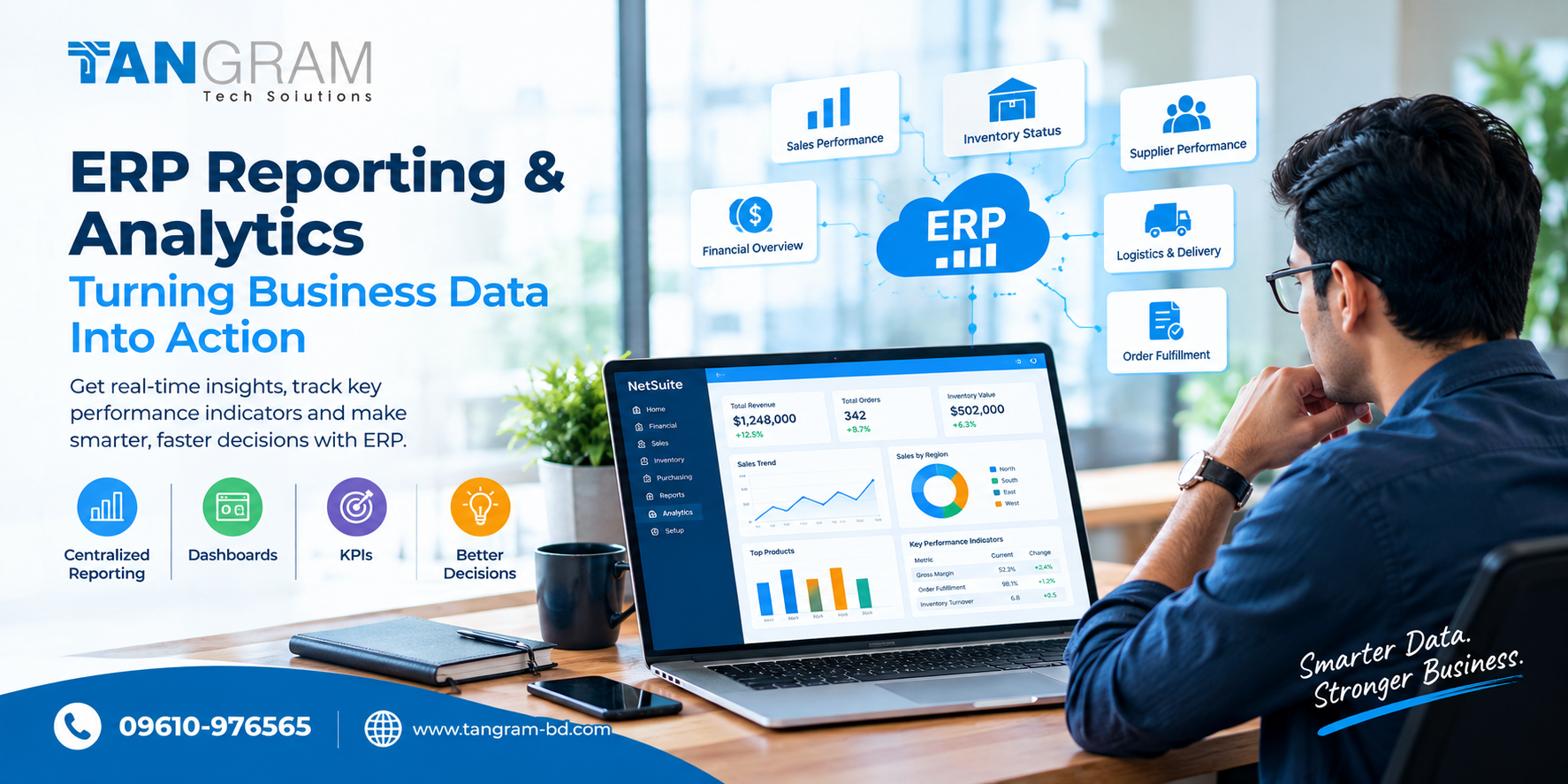
ERP Reporting and Analytics: How Dashboards and KPIs Improve Business Decisions
Businesses deal with a large amount of information every day. Sales teams manage orders and customers, finance teams track revenue and expenses, inventory teams monitor stock, and management needs to understand how the business is performing.
Having access to all this information is important, but the real challenge is making sense of it. When data is spread across spreadsheets and different systems, getting a clear picture of the business can take time and often requires manual work.
This is where ERP reporting and analytics can help. By bringing important business information into one connected system, an ERP solution makes it easier to access reports, monitor KPIs, view dashboards and understand business performance.
For businesses looking for ERP in Bangladesh, ERP software, NetSuite in Bangladesh or NetSuite ERP Bangladesh, reporting and analytics are important factors to consider when choosing an ERP system.
Why Centralized ERP Reporting Matters
When departments maintain information in separate systems, preparing a management report can become a time consuming process. Information may need to be collected from different sources, checked, compared and organized before management can use it.
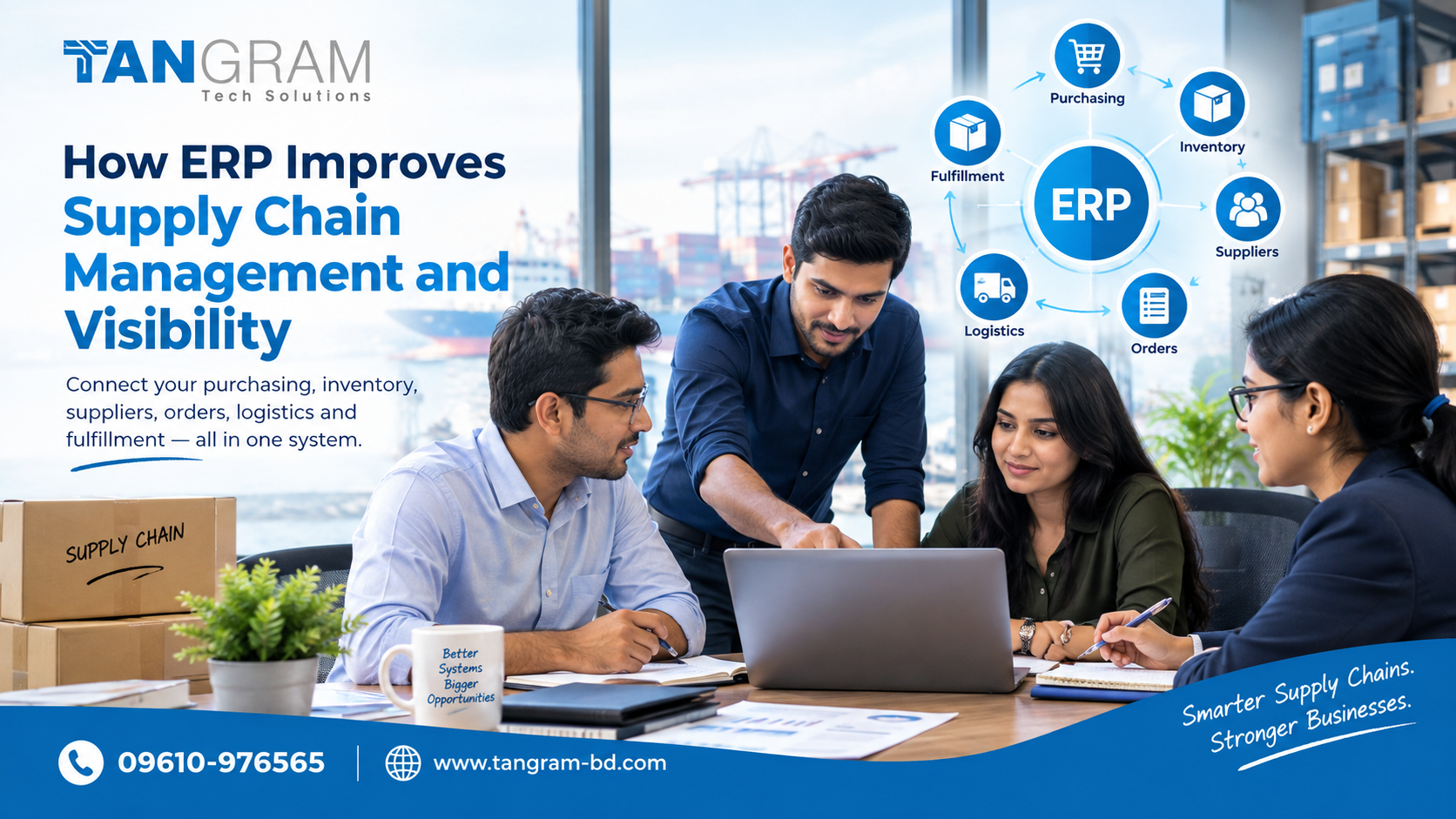
An ERP system brings information from different business activities into one place. Sales, finance, inventory, purchasing and other operations can be connected, giving users easier access to the information they need.
Instead of looking at each department separately, management can get a broader view of what is happening across the business.
Dashboards Make Business Information Easier to Understand
Managers do not always have time to go through lengthy reports or search through spreadsheets.
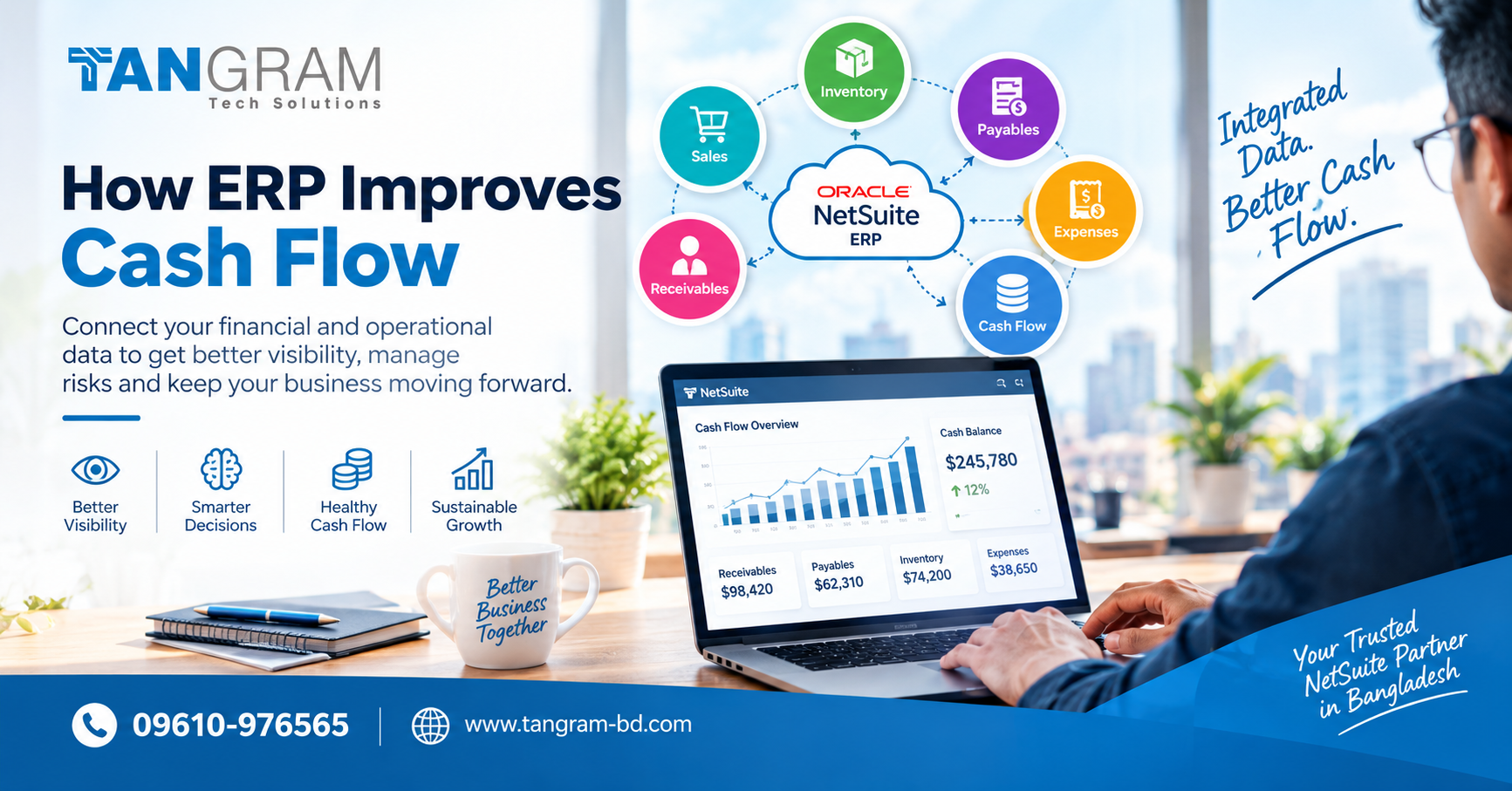
A well designed ERP dashboard can bring important information together in one place. Depending on the user’s role, a dashboard may show sales performance, revenue, expenses, inventory levels, outstanding payments, trends and other relevant information.
NetSuite dashboards can provide role based information and display KPIs, trend graphs, report snapshots and other business information.
This makes it easier for users to quickly see what is happening and identify areas that may need further attention.
KPIs Help Management Focus on What Matters
Not every number in an ERP system needs to be treated as a KPI.
Key Performance Indicators help businesses focus on measurements that are closely connected to their goals. Depending on the business, these may include revenue growth, sales orders, inventory levels, outstanding receivables, operating expenses or other important measurements.
NetSuite provides standard KPIs and also allows businesses to create custom KPIs using saved searches. These KPIs can be displayed on dashboards and used to explore more detailed information.
The key is choosing KPIs that are actually useful to the business. A dashboard with too many numbers can make it harder, rather than easier, to understand what requires attention.
Turning Reports Into Useful Business Insights
A report can show what happened, but deeper analysis can help users understand why it happened.
For example, if sales are lower than expected, management may want to look at product performance, customer activity, sales locations or order trends. If inventory levels are increasing, the business may need to review purchasing patterns and product movement.
NetSuite SuiteAnalytics provides tools for reporting, searches, dashboards and workbooks. SuiteAnalytics Workbook also allows users to work with datasets, tables, pivot tables and charts for more detailed analysis.
This gives businesses the opportunity to look beyond the final numbers and understand the information behind them.
How ERP Analytics Supports Faster Decisions
Effective reporting is not about creating more reports. It is about making useful information available when it is needed.
With centralized ERP data, management can review performance, identify changes and investigate areas that need attention without depending entirely on manually prepared spreadsheets.
A manager may need to know whether sales are growing as expected, which products are performing well, where costs are increasing, whether inventory is moving properly or whether a particular branch needs attention.
When this information is easier to access, management can spend less time collecting and organizing data and more time understanding the situation and deciding what to do next.
ERP Reporting and Analytics in Bangladesh
For businesses considering NetSuite in Bangladesh, NetSuite ERP Bangladesh or a NetSuite Business Solution Provider, reporting and analytics should be considered from the early stages of an ERP project.
Reports and dashboards should be designed around the actual requirements of the business. The finance team may need financial reports, sales teams may need sales performance information, inventory teams may need stock related reports, while senior management may need a broader view of overall business performance.
Tangram Tech Solutions provides NetSuite services including implementation, customization, integration, data migration, reporting, saved searches, dashboards and analytics.
Reporting requirements can also change as a business grows. New users, departments, branches and business processes may create new reporting needs. For this reason, the ERP environment should be flexible enough to support the company’s future requirements.
Conclusion
ERP reporting and analytics are about more than simply displaying business numbers.
Centralized reporting gives management a clearer view of business operations. Dashboards make important information easier to access, while KPIs help teams focus on the measurements that matter. Analytics can then help users explore the information behind business results.
For companies considering ERP software or NetSuite ERP in Bangladesh, reporting and analytics should be an important part of the overall ERP strategy.
When business data is properly organized and presented in a useful way, management can spend less time collecting information and more time using it to understand the business, identify opportunities and plan the next step.
Website: www.tangram-bd.com
Phone: 09610-976565