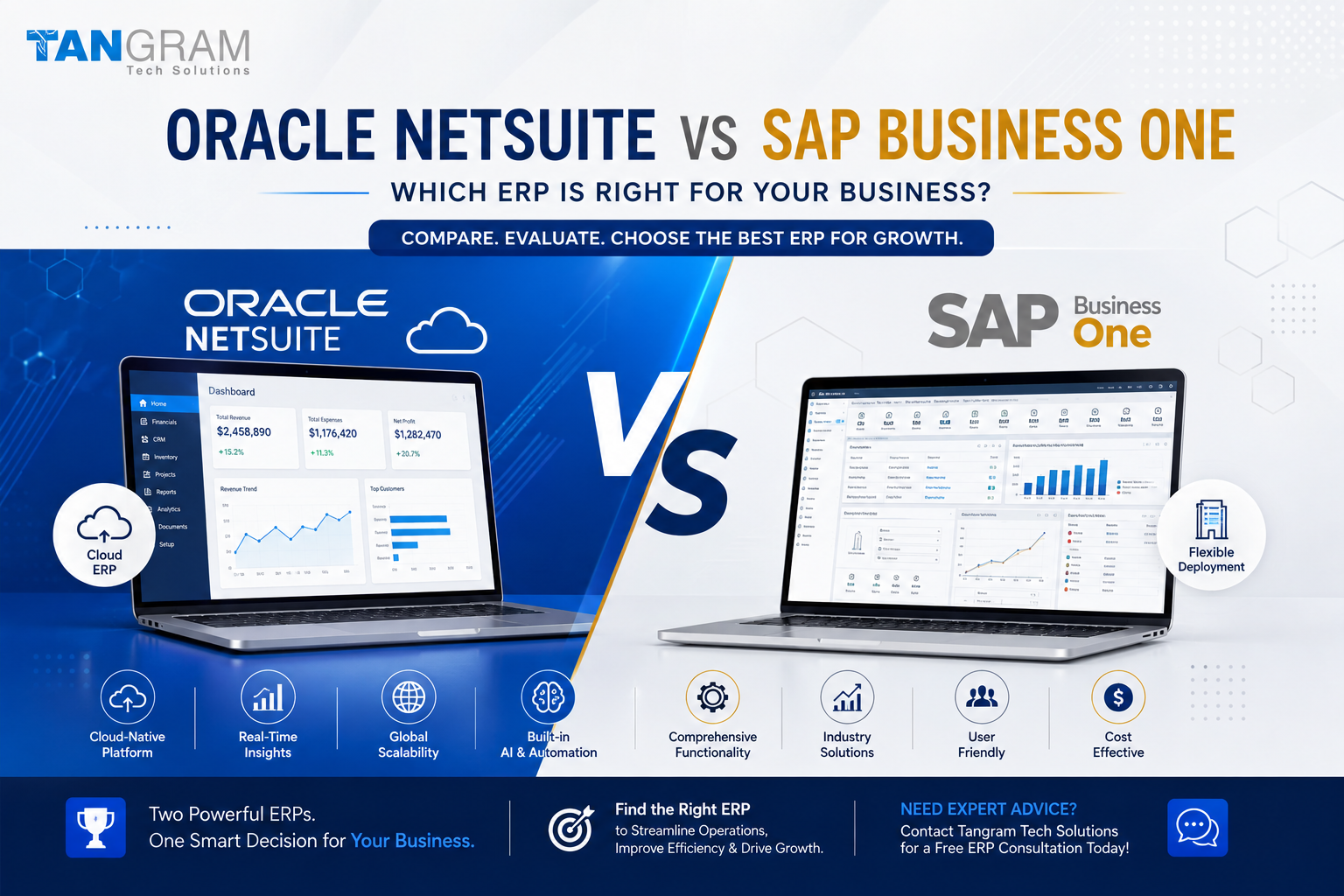
Oracle NetSuite vs SAP Business One: Which ERP Is Right for Your Business?
Choosing an ERP system is an important decision for a growing business. It is not only about accounting or financial reporting. A good ERP can bring finance, sales, purchasing, inventory, customer information, operations, and reporting together so different teams can work with the same information.
As a company grows, managing these activities through spreadsheets and separate applications can become difficult. Employees may have to enter the same information more than once, search through different systems for reports, or wait for another department before completing a task.
This is why businesses often compare Oracle NetSuite and SAP Business One when looking for an ERP solution.
Both are established ERP platforms for small and medium sized businesses, but they have different approaches to areas such as deployment, scalability, integrations, customization, and business management.
The right choice depends on how the business operates today and what it expects to look like in the future.
Oracle NetSuite Overview
Oracle NetSuite is a cloud based ERP platform that brings financial and operational activities together in one system.
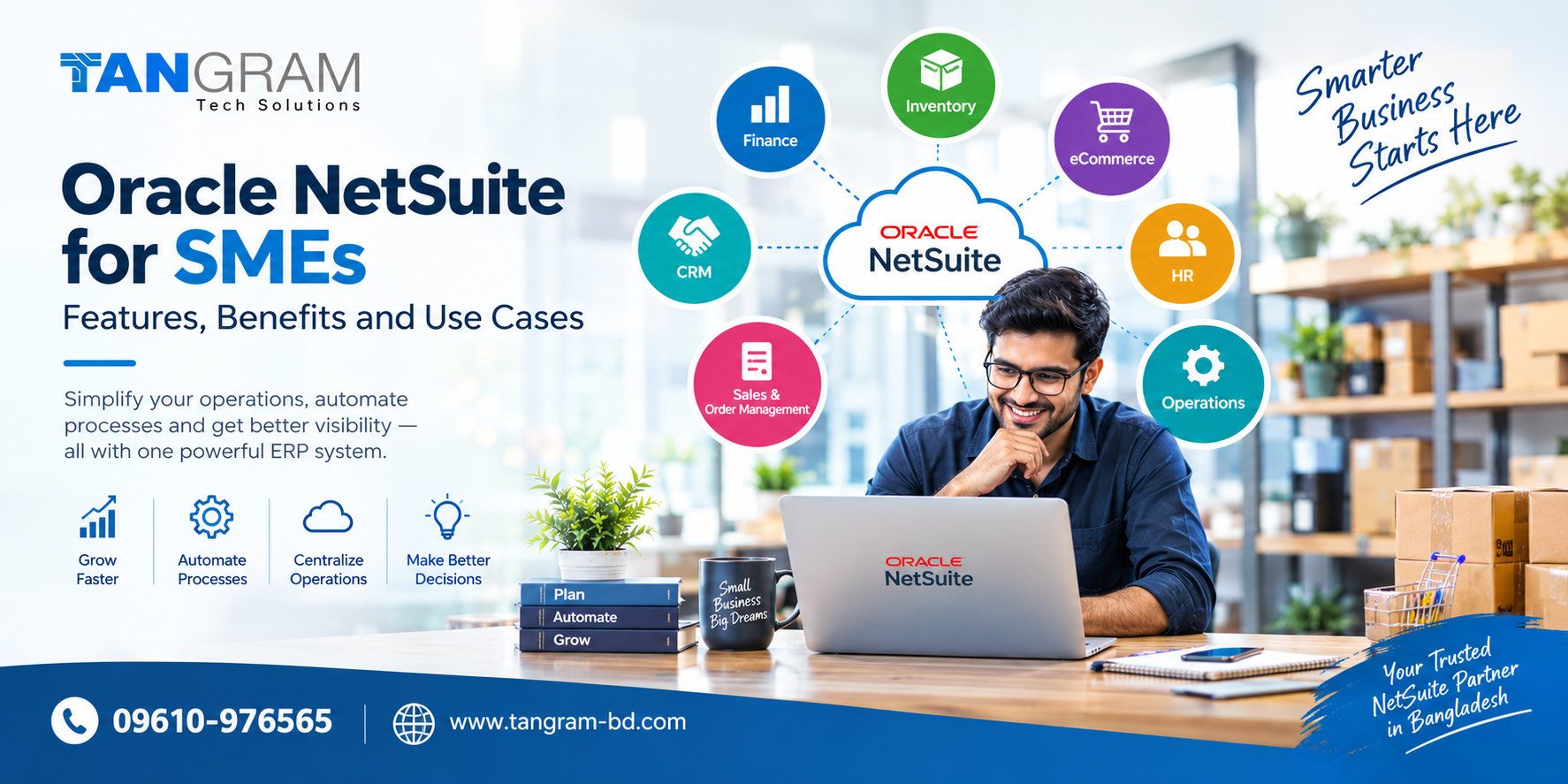
Businesses can use NetSuite for areas such as financial management, CRM, inventory, order management, purchasing, eCommerce, project management, and reporting.
One of the main things to consider about NetSuite is its cloud based structure. Employees can access the system through the internet without relying on a traditional on premise ERP infrastructure.
This can be useful for companies with multiple offices, remote teams, different locations, or operations across several countries.
Another important point is scalability. As a business grows, it can expand its use of the platform and add functionality based on changing requirements.
SAP Business One Overview
SAP Business One is designed specifically for small and medium sized businesses.
It covers many of the core areas a growing company needs, including financial management, sales, purchasing, inventory, customer management, production, and reporting.
SAP Business One also provides different deployment options, including cloud and on premise environments.
This can be relevant for businesses that have specific IT requirements or prefer to maintain greater control over their infrastructure.
The platform also has a wide partner ecosystem, allowing businesses to extend its capabilities through additional solutions and integrations.
Oracle NetSuite vs SAP Business One: Key Differences
Both systems cover many of the same business functions, so the difference is not simply about which platform has more features.
The more useful question is how each system fits the company’s actual requirements.
Financial Management
Both platforms provide accounting, accounts payable, accounts receivable, financial reporting, and other financial management functions.
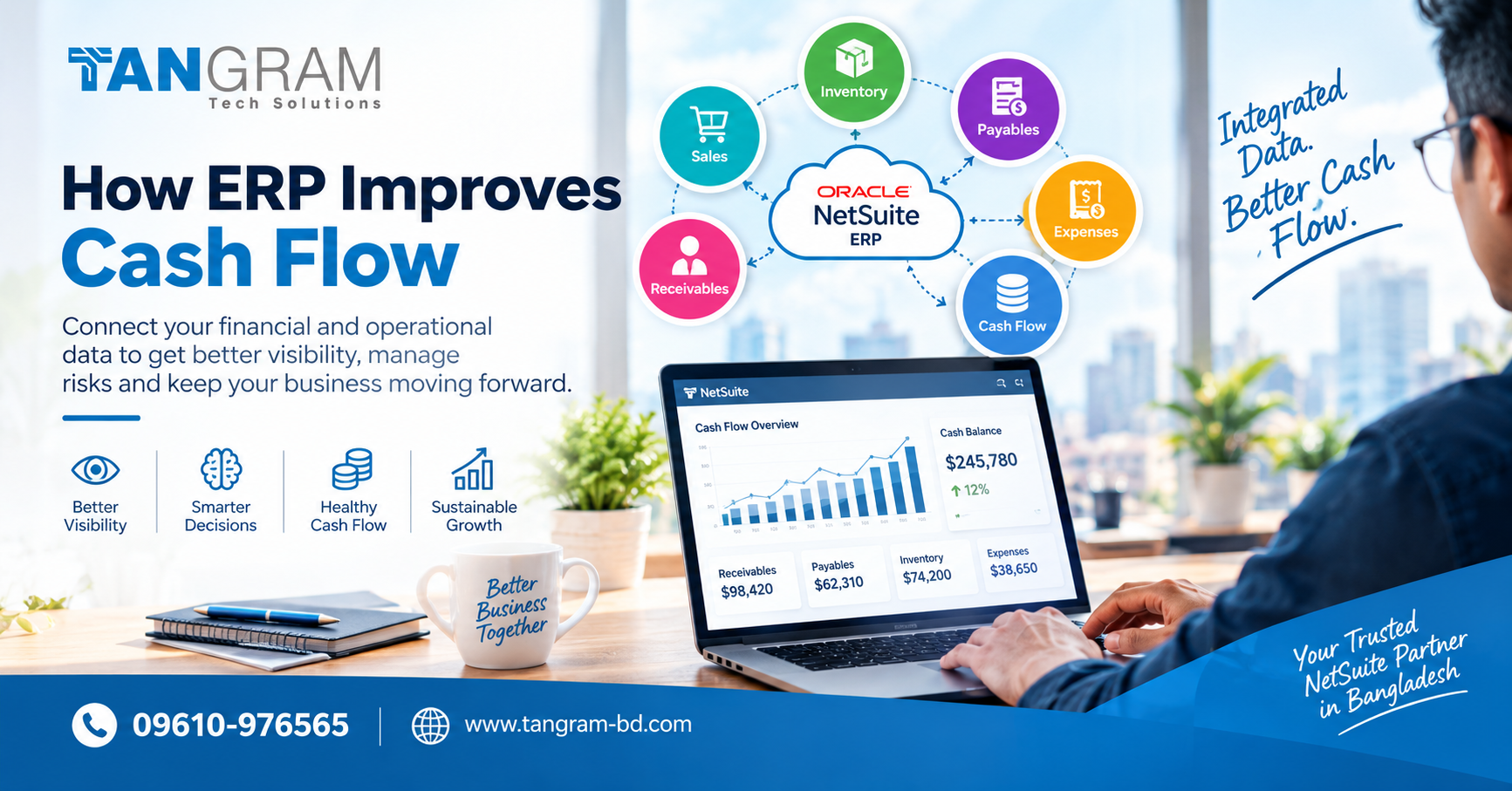
NetSuite connects financial activities with areas such as sales, purchasing, inventory, and customer management. This can help businesses maintain financial information within one connected environment.
SAP Business One also provides comprehensive financial management for SMEs and supports core accounting and financial processes.
For businesses with multiple subsidiaries, currencies, or international operations, it is important to examine how each platform handles those specific requirements.
Inventory Management
Inventory becomes more complicated when a company starts handling more products, warehouses, suppliers, and sales channels.
NetSuite provides inventory and order management capabilities that allow businesses to manage stock, locations, purchasing, and order related activities.
SAP Business One also provides inventory management for products, warehouses, purchasing, sales orders, and stock movements.
The important consideration is the complexity of the company’s inventory operation and how it expects that operation to develop.
CRM and Customer Management
Customer information is another important part of modern business management.
NetSuite includes CRM capabilities that can connect customer information with sales, marketing, service, and financial activities.
SAP Business One also provides customer management and sales functionality, including leads, opportunities, customer information, and sales activities.
Businesses should consider how closely they need their CRM activities connected with finance, eCommerce, sales, and other operational processes.
Reporting and Business Intelligence
Business owners need more than basic financial statements. They often want to know what is happening with sales, inventory, customers, expenses, and other parts of the business.
NetSuite provides dashboards, reports, key performance indicators, and analytics that can help users access information relevant to their roles.
SAP Business One also provides reporting and analytical tools for monitoring financial and operational activities.
For businesses managing several entities, locations, or complex processes, it is worth looking closely at the reporting capabilities of both platforms before making a decision.
Scalability and Business Growth
Scalability becomes important when an ERP system is expected to remain in use for many years.
A company may start with a small team and a limited number of products. Later, it may add new employees, customers, locations, subsidiaries, or markets.
NetSuite is designed as a cloud ERP platform that can support businesses as their operations expand.
SAP Business One is also built to support growing SMEs and can accommodate changing business requirements.
The important thing is to consider where the business is heading rather than looking only at its current size.
A company planning international expansion may have very different ERP requirements from a business operating from one location with relatively simple processes.
Cloud and On Premise Deployment
Deployment is another area where the two platforms differ.
Oracle NetSuite is a cloud based ERP platform. Businesses can access the system online without maintaining the same type of traditional ERP infrastructure associated with an on premise system.
SAP Business One can be deployed through cloud or on premise environments, depending on the business requirements.
For companies that prefer cloud access and want to reduce responsibility for traditional ERP infrastructure, NetSuite’s cloud approach may be relevant.
For businesses that have specific infrastructure requirements, the deployment flexibility of SAP Business One may also be an important consideration.
Customization and Flexibility
No two businesses operate exactly the same way.
Different companies may have different approval processes, reporting requirements, workflows, customer processes, inventory structures, and integrations.
NetSuite provides configuration and customization options for workflows, dashboards, fields, reports, and other business processes.
SAP Business One can also be customized and extended through additional solutions and partner applications.
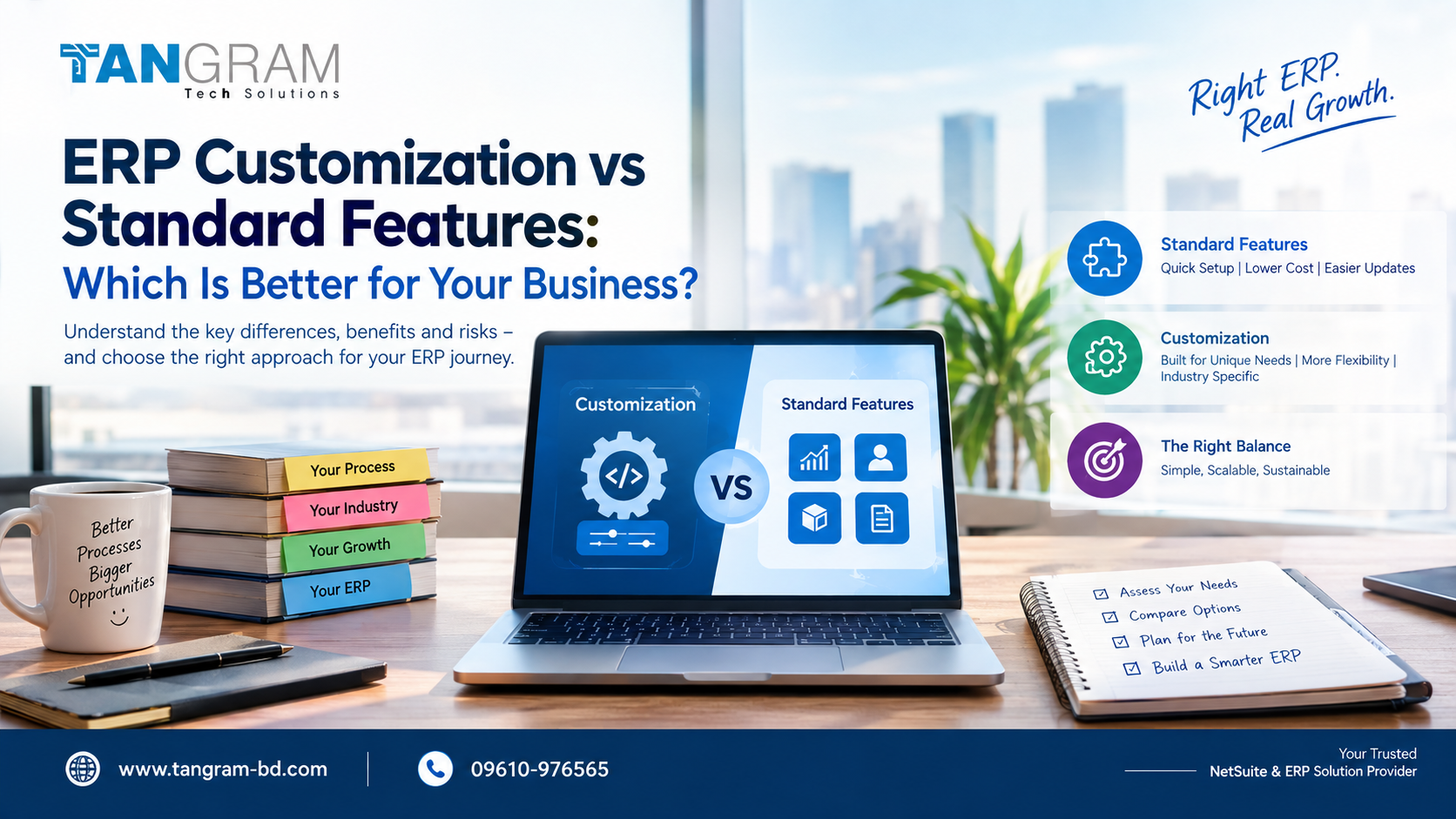
Before selecting either platform, businesses should identify which processes need customization and which can work with standard functionality.
Integration With Other Business Systems
Most growing businesses use more than one software application.
They may have an eCommerce platform, payment system, CRM application, payroll solution, logistics software, or other specialized tools.
Both NetSuite and SAP Business One can connect with external applications through available integration tools and partner solutions.
Instead of asking only whether an ERP can integrate with existing software, businesses should consider how the integration will work in practice.
Important questions include how much data needs to move between systems, how frequently information needs to be updated, how the integration will be maintained, and what the total cost will be.
ERP Implementation
Buying ERP software is only the beginning.
A successful implementation requires careful planning. Businesses need to review their existing processes, prepare and migrate data, configure the system, test workflows, train employees, and manage the transition.
NetSuite can support a wide range of business requirements, so implementation needs to be planned around the company’s actual operations.
SAP Business One also requires proper planning, particularly when customization or third party integrations are involved.
In both cases, implementation quality matters.
Even a capable ERP system can create problems if the configuration does not match the business or employees do not receive proper training.
Understanding the Total Cost
ERP cost is not limited to the software price.
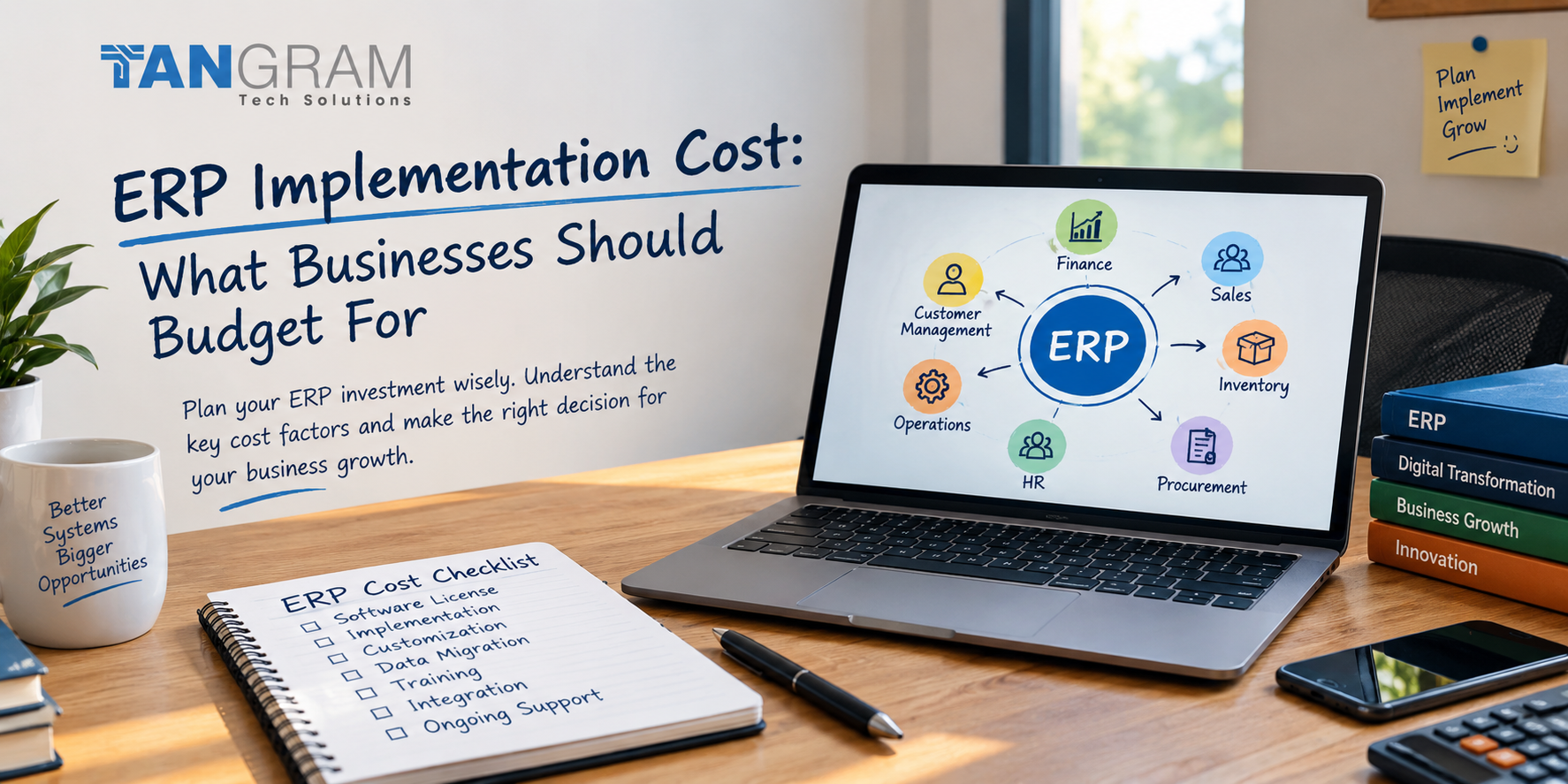
Businesses should also consider implementation, subscriptions or licenses, customization, integrations, training, support, maintenance, infrastructure, upgrades, and future expansion.
The cost structure can also differ depending on how the ERP is deployed and how much customization the business requires.
For this reason, comparing only the initial price may not provide a complete picture.
Businesses should look at the expected cost over several years and consider how the system fits their operational requirements.
When NetSuite May Make Sense
Oracle NetSuite may be worth considering for businesses that need a cloud based ERP environment and expect their operations to become more complex.
It can be relevant for companies managing multiple locations or subsidiaries, international operations, connected finance and CRM processes, eCommerce, inventory, and advanced reporting requirements.
Businesses should still evaluate their specific needs before making a decision.
When SAP Business One May Make Sense
SAP Business One is designed around the needs of small and medium sized businesses and provides core functionality across finance, sales, purchasing, inventory, customer management, production, and reporting.
Its cloud and on premise deployment options may also be relevant for companies with particular IT or infrastructure requirements.
As with any ERP decision, the final evaluation should be based on the company’s processes, goals, budget, integrations, and future plans.
Oracle NetSuite vs SAP Business One: What Should You Consider?
There is no single ERP system that will suit every business.
Before choosing between Oracle NetSuite and SAP Business One, businesses should look at their current operations and ask a few practical questions.
How many locations does the business have?
Does it operate across multiple countries or subsidiaries?
How complicated are its finance and inventory processes?
Which systems need to be integrated?
How much customization will be required?
What reporting does management need?
How quickly is the business expected to grow?
What implementation and support will be required?
Answering these questions can make the ERP selection process much clearer.
Final Thoughts
Choosing an ERP is a long term business decision, so it is worth looking beyond software features alone.
Oracle NetSuite and SAP Business One both provide tools for managing important business operations, but their deployment models, capabilities, and areas of focus can differ.
The most suitable option depends on the company’s size, industry, existing processes, IT requirements, budget, integration needs, and future plans.
For businesses in Bangladesh researching NetSuite ERP Bangladesh, NetSuite in Bangladesh, or other ERP software in Bangladesh, understanding these requirements before starting an implementation can save time and help create a more practical ERP strategy.
A good ERP should not simply manage today’s transactions. It should support the way the business works and provide room for the company to grow.
Website: www.tangram-bd.com
Contact: 09610 976565