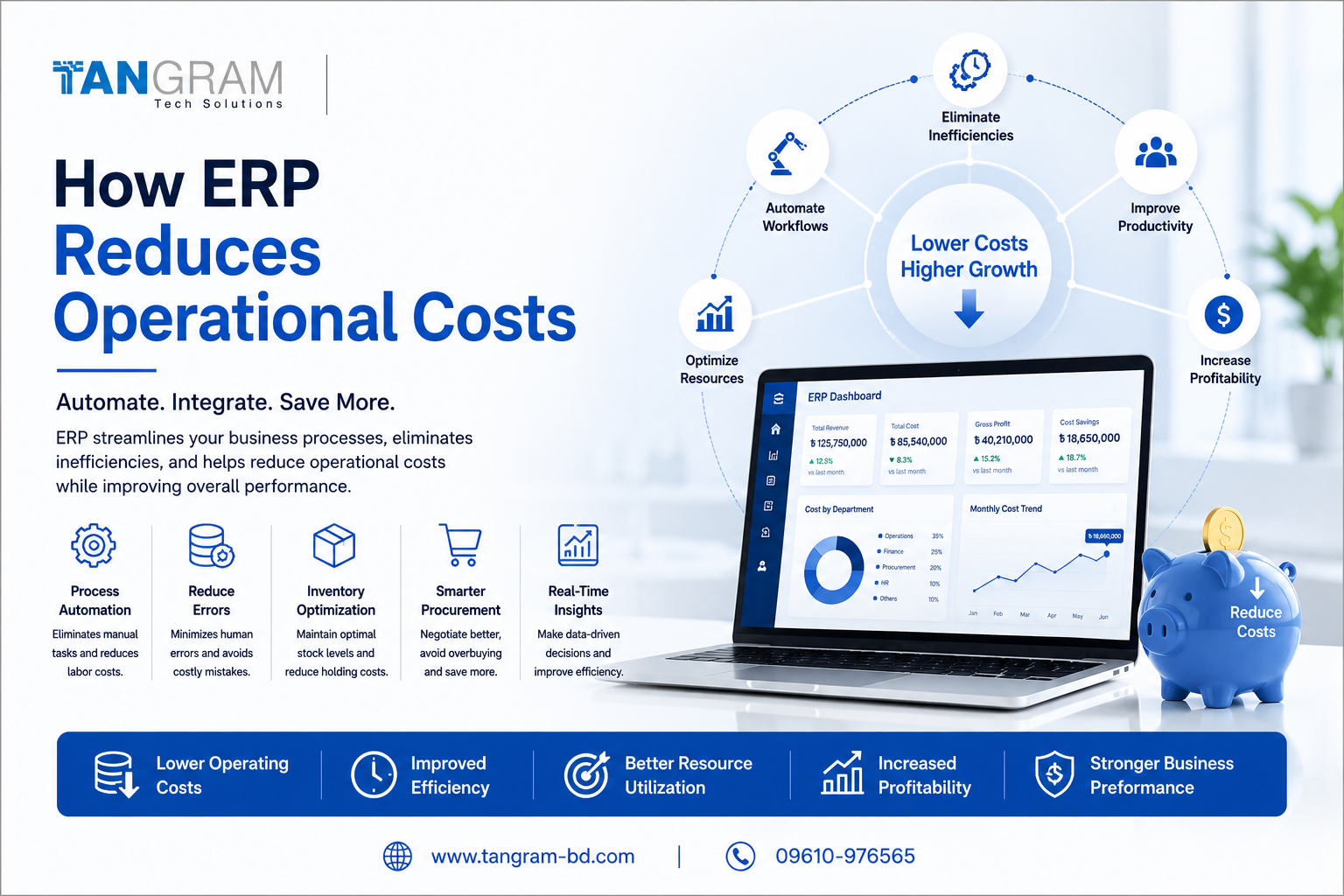
Every business aims to increase profitability, but achieving sustainable growth requires more than simply increasing sales. Companies must also control operational costs while maintaining productivity, product quality, and customer satisfaction. As businesses expand, managing finance, procurement, inventory, sales, human resources, customer relationships, and daily operations becomes increasingly complex. Without integrated systems, organizations often rely on spreadsheets, paper-based workflows, or multiple disconnected software applications. These outdated methods create duplicate work, manual errors, reporting delays, and inefficient communication between departments, all of which increase operating expenses.
Operational costs extend beyond salaries and rent. They include inventory carrying costs, procurement inefficiencies, production delays, administrative overhead, inaccurate financial reporting, unnecessary overtime, IT maintenance, and the hidden costs associated with manual processes. Even small inefficiencies can accumulate over time, reducing profitability and limiting a company’s ability to grow. In today’s competitive market, businesses need smarter ways to streamline operations, eliminate waste, and make informed decisions based on real-time data.
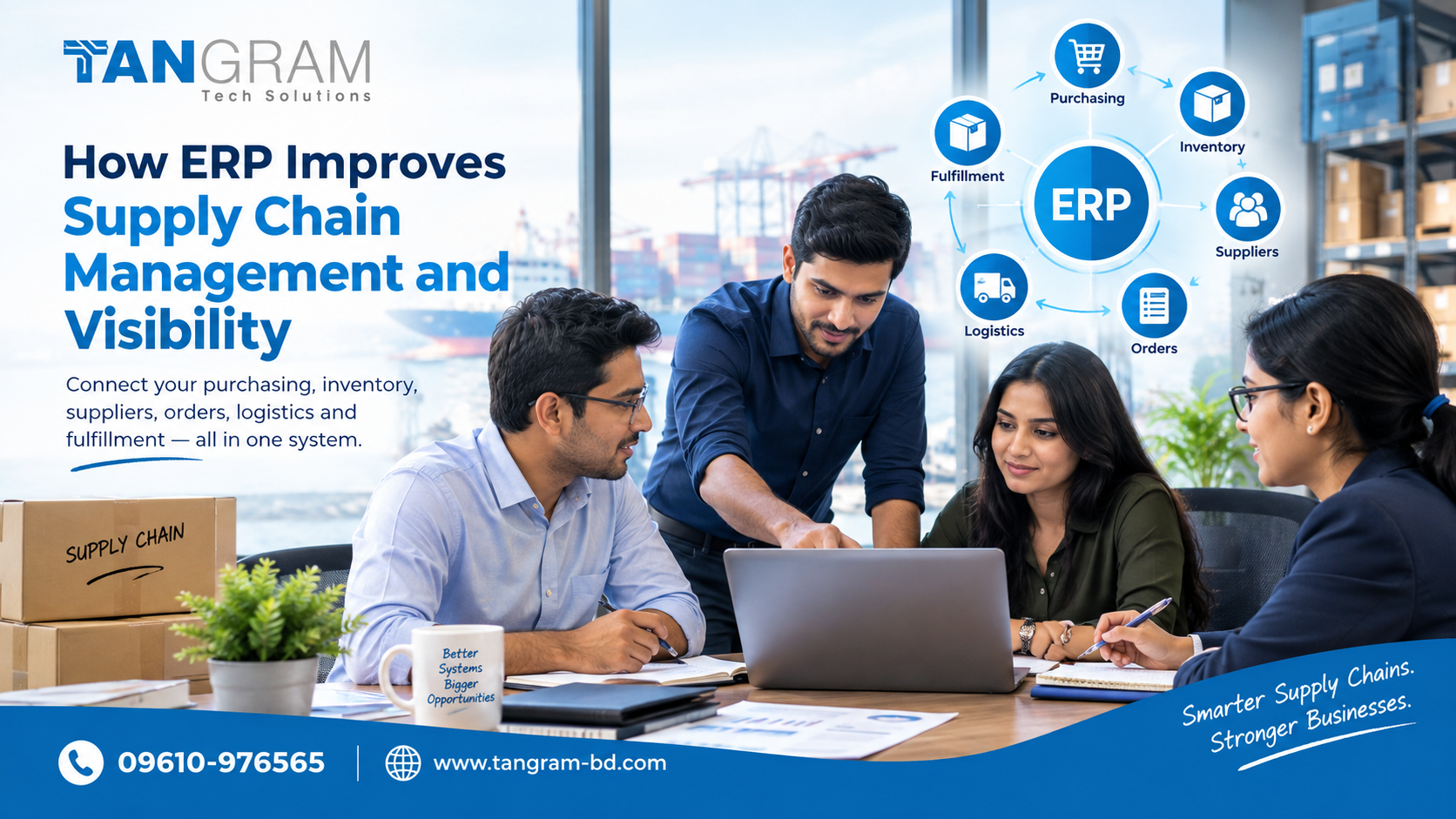
Enterprise Resource Planning (ERP) systems provide a powerful solution by integrating finance, inventory, procurement, sales, customer relationship management (CRM), supply chain, manufacturing, and human resources into a single centralized platform. Instead of managing separate systems for each department, businesses gain one source of truth that automates repetitive tasks, improves collaboration, and provides complete visibility across the organization.
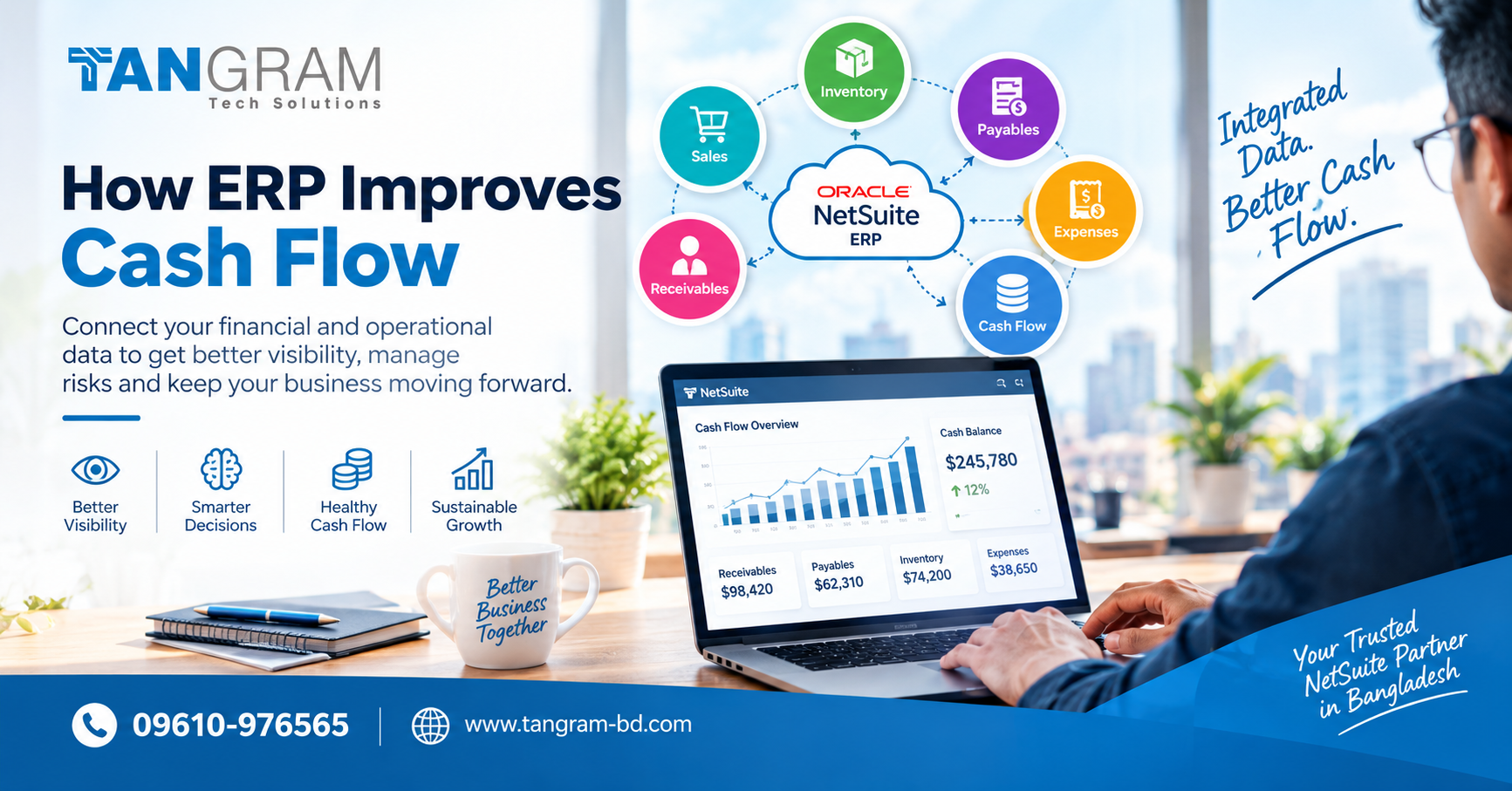
Modern cloud ERP solutions such as Oracle NetSuite take these advantages even further. By eliminating the need for expensive on-premise infrastructure, reducing software maintenance costs, and delivering real-time dashboards and analytics, cloud ERP enables businesses to operate more efficiently while lowering overall operational expenses. Employees spend less time on repetitive administrative work and more time on strategic activities that drive growth and innovation.
Whether you’re a small business looking to improve efficiency or a large enterprise managing multiple locations, ERP can significantly reduce costs while enhancing productivity, accuracy, and decision-making. In this article, we’ll explore the key ways ERP helps businesses reduce operational costs, improve financial performance, and build a stronger foundation for long-term success.