How to Choose the Right ERP Implementation Partner
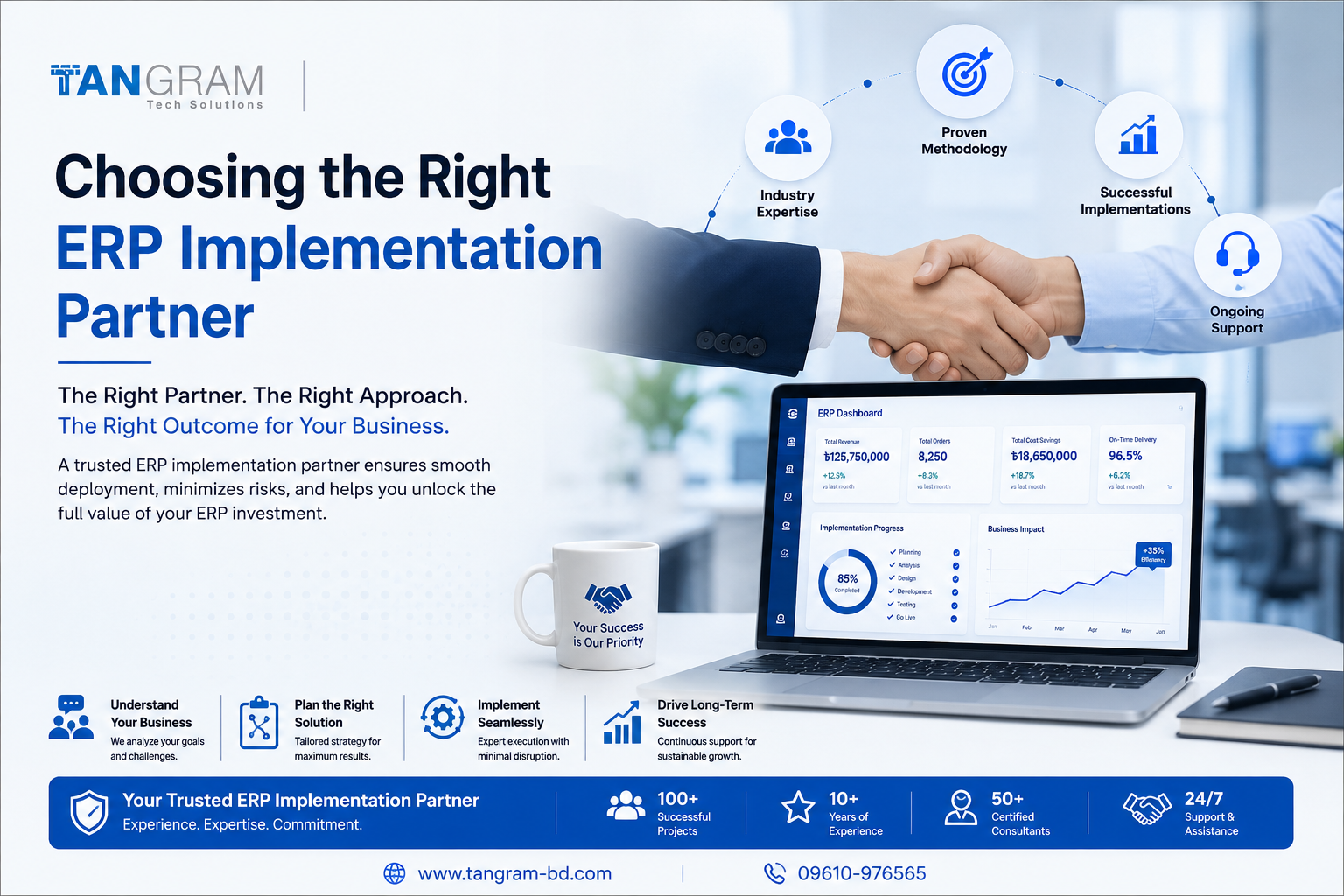
Choosing the right ERP implementation partner is just as important as choosing the ERP software itself. A powerful ERP system can bring major improvements to a business, but only when it is properly planned, configured, and introduced to the people who will use it every day.
ERP implementation is much more than installing software. It involves understanding how the business currently works, identifying areas that need improvement, setting up the system around those processes, moving existing data, training employees, and providing support after the system goes live.
Many businesses spend a lot of time comparing ERP software but give less attention to the company that will actually implement it. This can create problems later, including delays, unexpected costs, data migration issues, complicated workflows, and employees struggling to use the new system.
In many cases, the software itself is not the main problem. The real issue can be poor planning, limited implementation experience, or a lack of support after the system is launched.
An experienced ERP implementation partner can guide the business throughout the entire process. They can help review existing operations, identify business requirements, configure the ERP, migrate data, test processes, train employees, and provide support after implementation.
Why the ERP Implementation Partner Matters
Every business has its own way of working.
Two companies in the same industry may have completely different approval processes, reporting requirements, inventory structures, customer management systems, and financial workflows.
A good implementation partner takes the time to understand these differences before configuring the ERP system.
Instead of simply installing standard features, the partner should help determine how the ERP can support the actual needs of the business.
This approach can also help reduce unnecessary customization and make the system easier for employees to use.
Look for Real ERP Implementation Experience
Experience matters when choosing an implementation partner.
A company may have knowledge of ERP software, but that does not necessarily mean it has experience handling complex implementation projects.
Ask about previous projects, industries served, business sizes, integrations, data migration work, and the types of ERP environments the partner has handled.
For businesses considering NetSuite ERP, it is also useful to understand the partner’s experience with NetSuite implementation, customization, integration, and ongoing support.
Understand Their Implementation Process
A reliable partner should be able to clearly explain how the implementation will be managed.
The process may include business analysis, project planning, system configuration, data migration, integration, testing, employee training, go live preparation, and post implementation support.
You should know what happens at each stage and who will be responsible for important decisions.
Clear communication from the beginning can make the entire project easier to manage.
Check Data Migration Experience
Moving existing business data into a new ERP system is one of the most important parts of an implementation.
Companies may have years of customer records, supplier information, product data, financial records, inventory information, and transaction history.
Poorly prepared data can create problems after the new ERP goes live.
An experienced implementation partner should have a clear process for reviewing, cleaning, mapping, transferring, and testing data before the final migration.
Consider Employee Training and Support
Even a well configured ERP system will not provide much value if employees do not understand how to use it.
Training should therefore be part of the implementation plan.
Different teams may need different types of training depending on their responsibilities. Finance users, sales teams, warehouse employees, managers, and administrators may all interact with the ERP in different ways.
Support after go live is equally important. Employees may have questions or encounter situations that were not covered during initial training.
A partner that continues to provide assistance can help the business adjust to the new system more smoothly.
Evaluate Communication and Transparency
ERP projects involve many decisions, so communication between the business and implementation partner is extremely important.
Before signing an agreement, ask how project updates will be provided, who the main contact will be, how changes will be handled, and how potential problems will be communicated.
It is also important to understand the expected project timeline and costs.
A clear implementation plan can help businesses avoid surprises later.
Consider Industry Knowledge
An implementation partner with experience in your industry may already understand some of the challenges your business faces.
For example, a manufacturing company may have different ERP requirements from an eCommerce business or wholesale distributor.
Industry experience can help the implementation team understand important workflows more quickly and identify areas where the ERP can provide practical improvements.
However, industry experience should be considered alongside actual ERP implementation capability, technical knowledge, and support services.
ERP Implementation in Bangladesh
Businesses searching for an ERP implementation partner in Bangladesh should consider both technical expertise and an understanding of local business requirements.
Companies may have specific needs related to finance, inventory, sales, purchasing, reporting, employee workflows, integrations, and data management.
For businesses considering NetSuite in Bangladesh, working with a partner that understands the local business environment while also having experience with Oracle NetSuite can be valuable.
Tangram Tech Solutions provides Oracle NetSuite consulting, implementation, customization, integration, data migration, training, and ongoing support for businesses in Bangladesh.
Questions to Ask Before Choosing an ERP Partner
Before making a decision, businesses should ask practical questions about the partner’s experience and approach.
How many ERP projects have they completed?
Have they worked with businesses similar to yours?
Do they provide data migration and integration services?
How do they handle employee training?
What support is available after go live?
Who will manage the project?
How are additional costs or changes handled?
What is the expected implementation timeline?
The answers can give you a much clearer understanding of whether the partner is prepared to support your project.
Final Thoughts
Choosing an ERP system is only one part of a successful digital transformation project.
The ERP implementation partner plays an important role in turning the software into a system that actually works for the business.
A good partner should understand your processes, communicate clearly, manage implementation carefully, protect data quality, train employees, and remain available when support is needed.
For businesses exploring NetSuite ERP Bangladesh, NetSuite in Bangladesh, or other ERP solutions, taking the time to evaluate the implementation partner can make the overall project more organized and practical.
The goal should not simply be to get the ERP system running.
The goal should be to build a system that employees can use confidently, management can rely on, and the business can continue to grow with.