People are one of the most valuable assets of any business, but managing human resources efficiently becomes increasingly challenging as an organisation grows. From recruiting new employees and maintaining personnel records to tracking attendance, processing payroll, managing leave requests, and ensuring compliance with labour regulations, HR departments handle a wide range of responsibilities every day. When these tasks rely on spreadsheets, paper-based records, or disconnected software, they often become time-consuming, error-prone, and difficult to manage.
Manual HR processes can create unnecessary administrative burdens. Payroll calculations may take days to complete, attendance records can contain inaccuracies, and employee information is often scattered across multiple systems. HR teams also spend considerable time answering routine employee queries, updating records, preparing reports, and ensuring compliance with company policies and government regulations. As businesses expand, these challenges become more complex, reducing productivity and increasing the risk of costly errors.
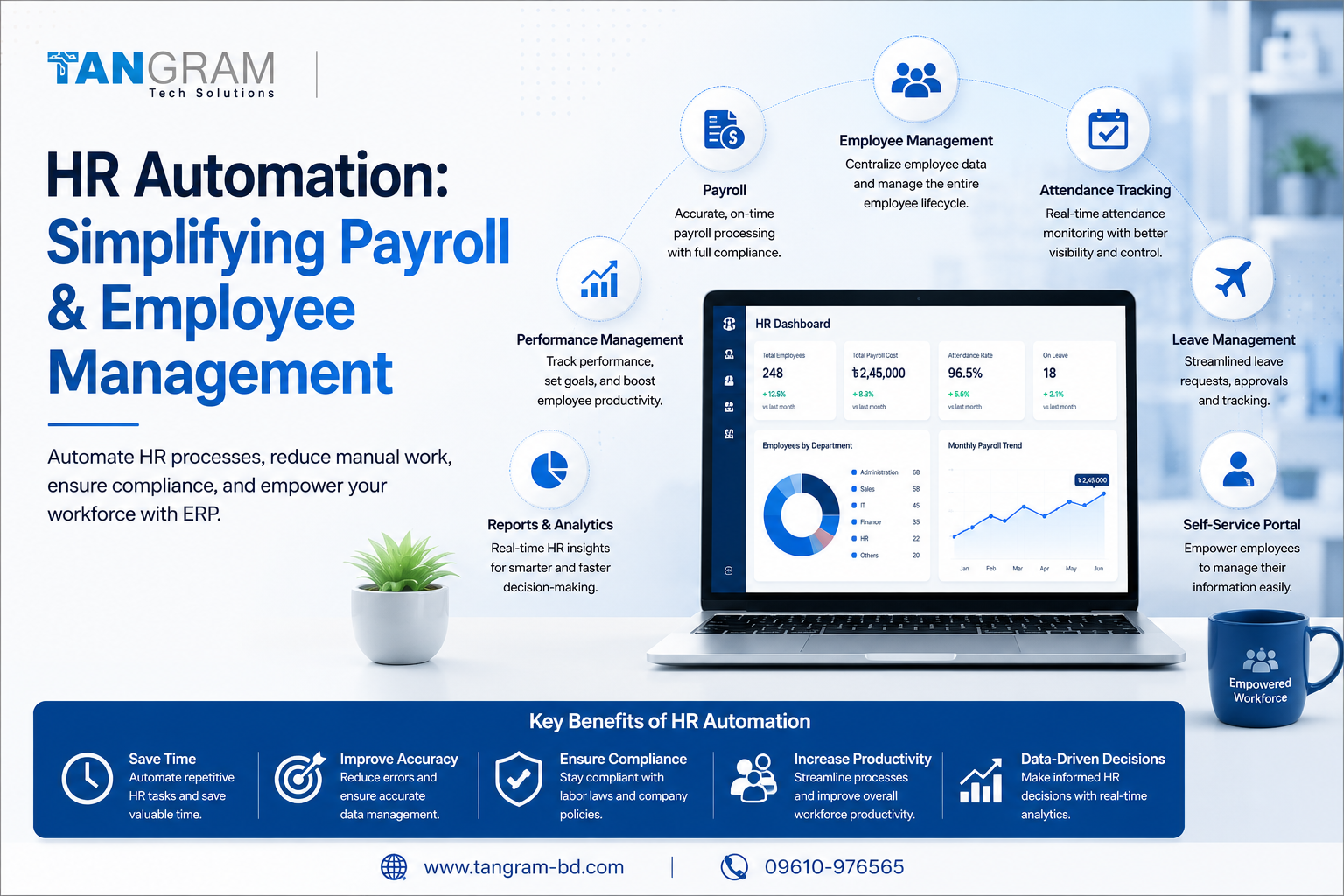
This is where HR automation through an Enterprise Resource Planning (ERP) system makes a significant difference. Modern ERP solutions integrate payroll, attendance, leave management, employee records, recruitment, performance tracking, and reporting into one secure, centralised platform. Instead of managing HR activities manually, organisations can automate repetitive tasks, improve data accuracy, strengthen collaboration, and provide employees with a better workplace experience.
Cloud-based ERP platforms such as Oracle NetSuite also enable HR teams and managers to access real-time workforce information from anywhere. Business leaders can monitor payroll expenses, workforce performance, employee attendance, and staffing needs through interactive dashboards, allowing them to make faster, data-driven decisions. Employees benefit as well through self-service features that allow them to view payslips, request leave, update personal information, and access HR documents without relying on manual processes.
Whether you’re a growing SME or a large enterprise, investing in HR automation helps reduce administrative work, improve compliance, increase operational efficiency, and support long-term business growth. In this article, we’ll explore how ERP-powered HR automation simplifies payroll and employee management, the key benefits it offers, and why modern businesses are increasingly adopting digital HR solutions to build a more productive and engaged workforce.