ERP Inventory Management: How to Reduce Stockouts and Overstock
Inventory can have a big impact on a company’s sales, cash flow, and customer satisfaction. Too little stock can mean missed sales and unhappy customers, while too much stock can tie up money and increase storage costs.
For a growing business, keeping the right balance is not always easy.
Many companies still manage inventory using spreadsheets, manual stock counts, or separate systems. This may work when the business is small, but as the number of products, orders, suppliers, and warehouse locations grows, keeping everything accurate becomes much more difficult.
This is where ERP inventory management can make a real difference.
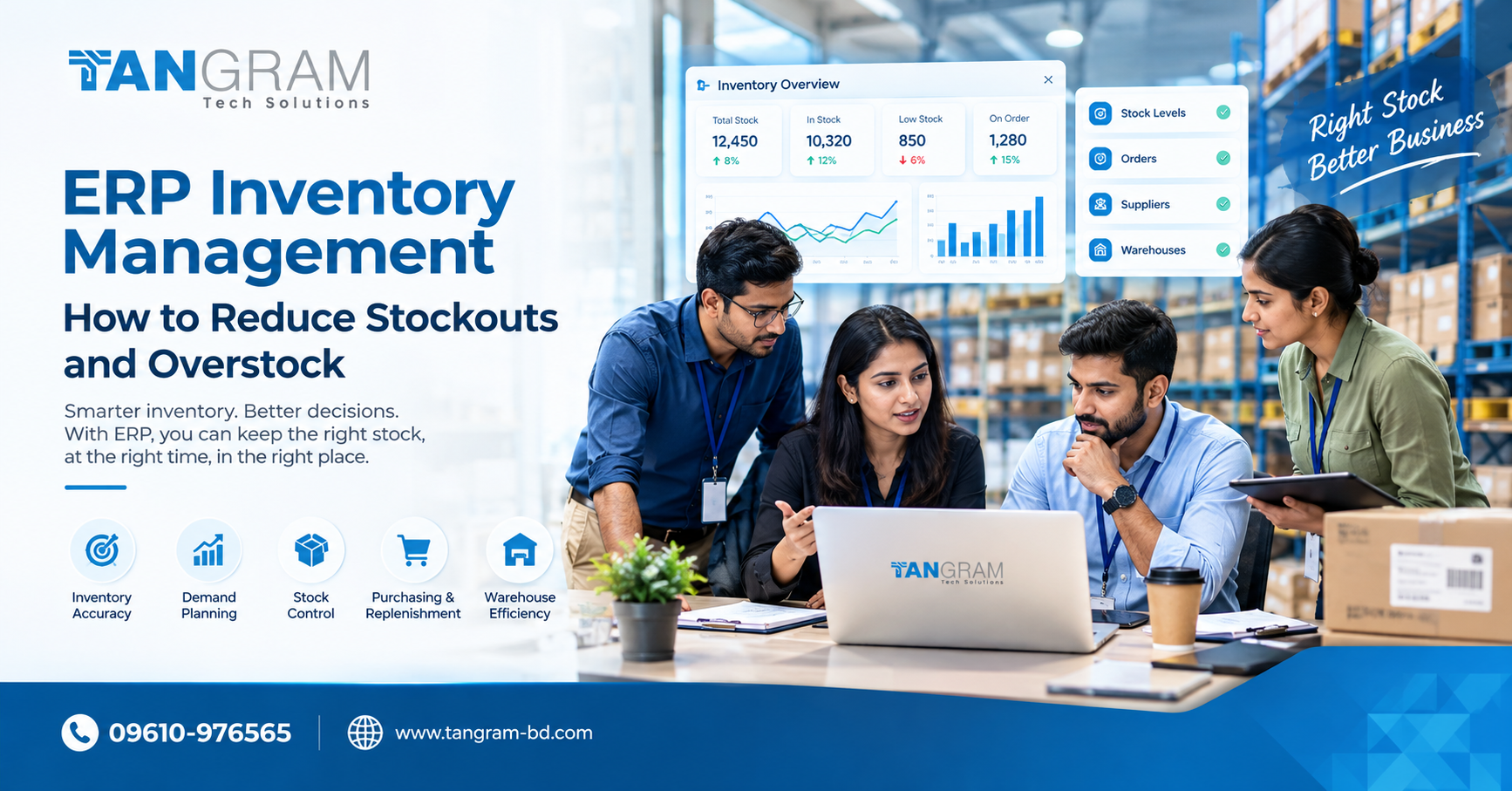
An ERP system brings inventory together with sales, purchasing, finance, and other business activities. Instead of working with disconnected information, teams can have a clearer picture of what is in stock and make better decisions about purchasing, replenishment, and warehouse operations.
What Is ERP Inventory Management?
ERP inventory management means using an ERP system to manage inventory and related activities from one connected platform.
Instead of keeping separate records for purchasing, sales, warehouse operations, and stock levels, businesses can manage these activities within the same system.
When products are purchased, received, sold, or transferred, the related inventory information can be updated as part of the business transaction.
This makes it easier for employees to see what is available, what has already been committed to customers, what is on the way, and when additional stock may be required.
1. Improve Inventory Accuracy
Accurate inventory information is one of the most important parts of effective stock management.
Imagine the system shows that 100 units are available, but only 70 are actually in the warehouse. The business could promise products to customers that it cannot deliver. The opposite can happen too. Poor inventory records may lead a company to purchase products that it already has.
An ERP system can connect inventory movements with sales, purchasing, receiving, and other transactions. This gives employees more reliable information when checking stock and making everyday decisions.
For example, Oracle NetSuite provides inventory information that can help businesses monitor quantities, inventory value, and stock levels.
2. Reduce Stockouts with Better Demand Planning
A stockout happens when a business does not have enough products available to meet customer demand.
The problem goes beyond losing one sale. If customers regularly find products unavailable, they may start looking for another supplier.
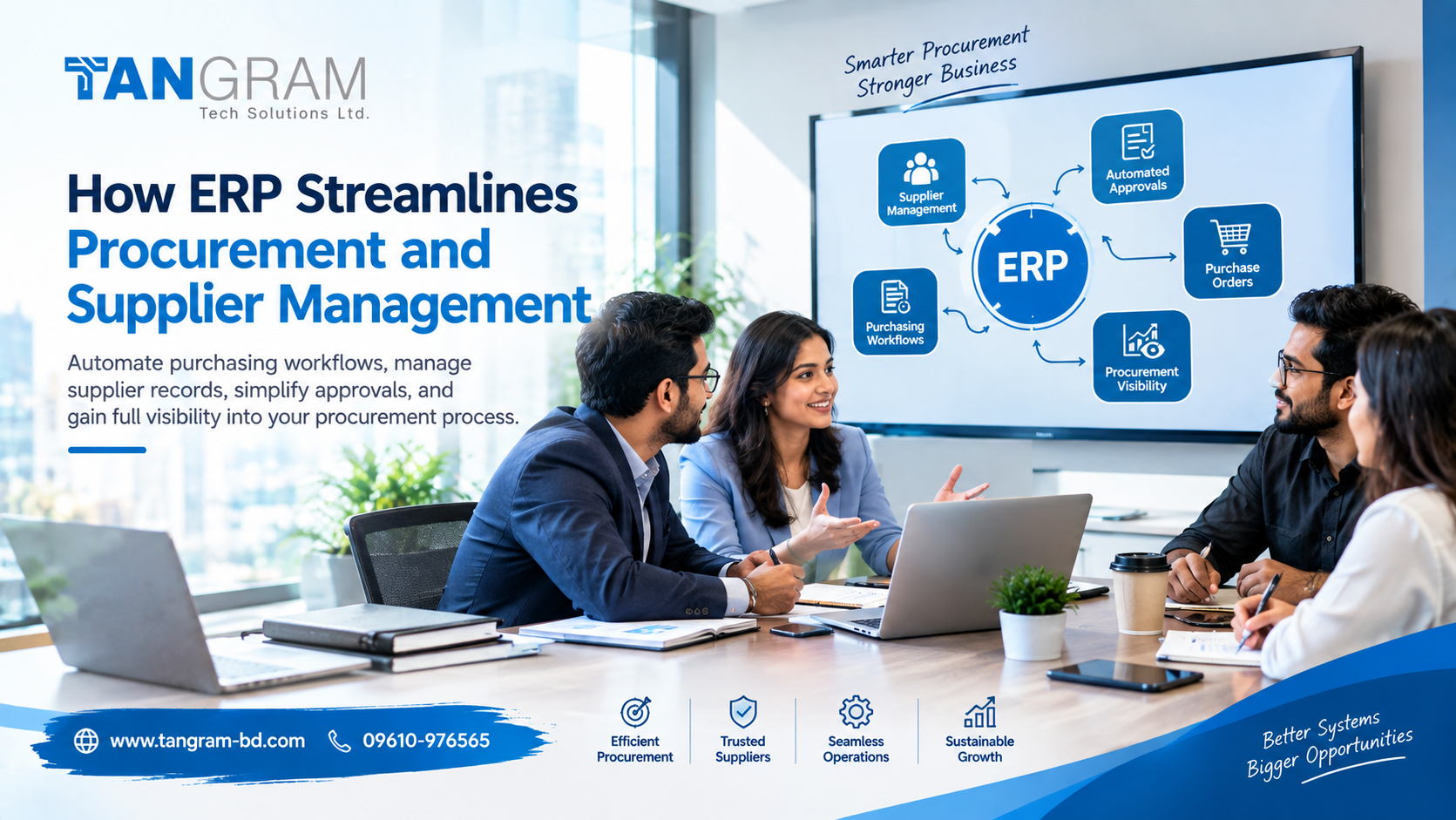
ERP inventory management can help businesses make better replenishment decisions by bringing together sales history, current demand, stock levels, and supplier lead times.
NetSuite Demand Planning can use historical and current demand information to forecast future requirements and create supply plans that suggest when and how much stock may need to be ordered.
Instead of relying only on guesswork, purchasing teams can use actual business information to plan ahead.
3. Avoid Overstock and Excess Inventory
Having too much inventory can create problems just as easily as having too little.
Excess stock takes up warehouse space and ties up working capital. Depending on the type of product, items may also become outdated, damaged, or harder to sell if they remain in storage for too long.
An ERP system can help businesses monitor stock levels and establish suitable inventory targets.
NetSuite inventory capabilities include features such as preferred stock levels, safety stock, and reorder points. These can help businesses maintain more appropriate inventory levels based on factors such as demand and lead time.
The goal is not to keep as much stock as possible. The goal is to have the right products, in the right quantities, at the right time.
4. Improve Purchasing and Replenishment
Inventory and purchasing are closely connected.
When purchasing teams do not have a clear view of current stock, open purchase orders, expected demand, and supplier lead times, it becomes easier to order too early, too late, or in the wrong quantity.
An ERP system brings these details together so purchasing teams can make more informed decisions.
NetSuite Advanced Inventory Management can support replenishment decisions using demand information, while Demand Planning can help create supply plans based on expected requirements.
This can make purchasing more organized and reduce the amount of manual calculation involved in deciding what needs to be ordered.
5. Make Warehouse Operations More Efficient
Inventory management is not simply about knowing how many products are available.
Businesses also need to know where products are located and how efficiently they are moving through the warehouse.
An ERP system can connect activities such as receiving, storage, picking, fulfillment, transfers, and other warehouse processes.
For businesses operating multiple warehouses or locations, connected inventory information can make it easier to understand where products are available and where additional stock may be required.
NetSuite also provides warehouse management capabilities that support activities from receiving through shipping.
ERP Inventory Management for Businesses in Bangladesh
Inventory challenges often become more noticeable as businesses in Bangladesh expand.
Manufacturers, distributors, retailers, ecommerce companies, and other growing businesses may have hundreds or even thousands of products, multiple suppliers, different warehouses, and several sales channels.
At this stage, managing everything through spreadsheets can become difficult. Employees may spend more time checking and updating information, while management may not have a clear view of current inventory.
Businesses searching for ERP in Bangladesh or ERP software in Bangladesh should look at how well an ERP system connects inventory with sales, purchasing, finance, and other important business processes.
A connected system can help different teams work with the same information instead of maintaining separate records.
How NetSuite Can Support Inventory Management
Oracle NetSuite provides inventory management capabilities that connect inventory information with wider business operations.
Its inventory features can support areas such as demand planning, replenishment, stock level management, multiple locations, and inventory reporting.
For businesses considering NetSuite in Bangladesh or NetSuite ERP Bangladesh, choosing the software is only one part of the process. The business also needs to consider product data, warehouse processes, purchasing rules, integrations, employee workflows, and how the system will be used in daily operations.
A NetSuite Business Solution Provider can support businesses with implementation, configuration, data migration, training, and ongoing support.
Conclusion
Good inventory management is about finding the right balance.
Too little stock can lead to stockouts, missed sales, and disappointed customers. Too much stock can increase storage costs and keep valuable working capital tied up in products.
With the right ERP system, businesses can improve inventory accuracy, understand demand more clearly, manage replenishment, control stock levels, and make warehouse operations more organized.
For businesses looking for ERP software, ERP in Bangladesh, NetSuite in Bangladesh, or NetSuite ERP Bangladesh, inventory management should be an important part of the ERP evaluation process.
Tangram Tech Solutions Ltd. helps businesses in Bangladesh with Oracle NetSuite implementation, customization, integration, data migration, training, and ongoing support.
Website: www.tangram-bd.com
Contact: 09610 976565