What Is ERP Software? A Complete Guide for Growing Businesses
Running a growing business can be exciting, but it also brings new challenges. More customers, employees, products, orders, suppliers, and financial transactions mean there is much more information to manage every day.
In the early stages, spreadsheets and separate software may be enough. But as the business grows, keeping everything organized across different systems can become time consuming and difficult.
This is where ERP software can make a real difference.
ERP stands for Enterprise Resource Planning. It is a business management system that brings important areas of a company together in one connected platform. Finance, sales, inventory, purchasing, customer information, and other operations can work with the same business data instead of being managed separately.
For growing businesses, this can make everyday work more organized and give management a clearer view of what is happening across the company.
What Is ERP Software?
ERP software helps businesses manage their core activities through one connected system.
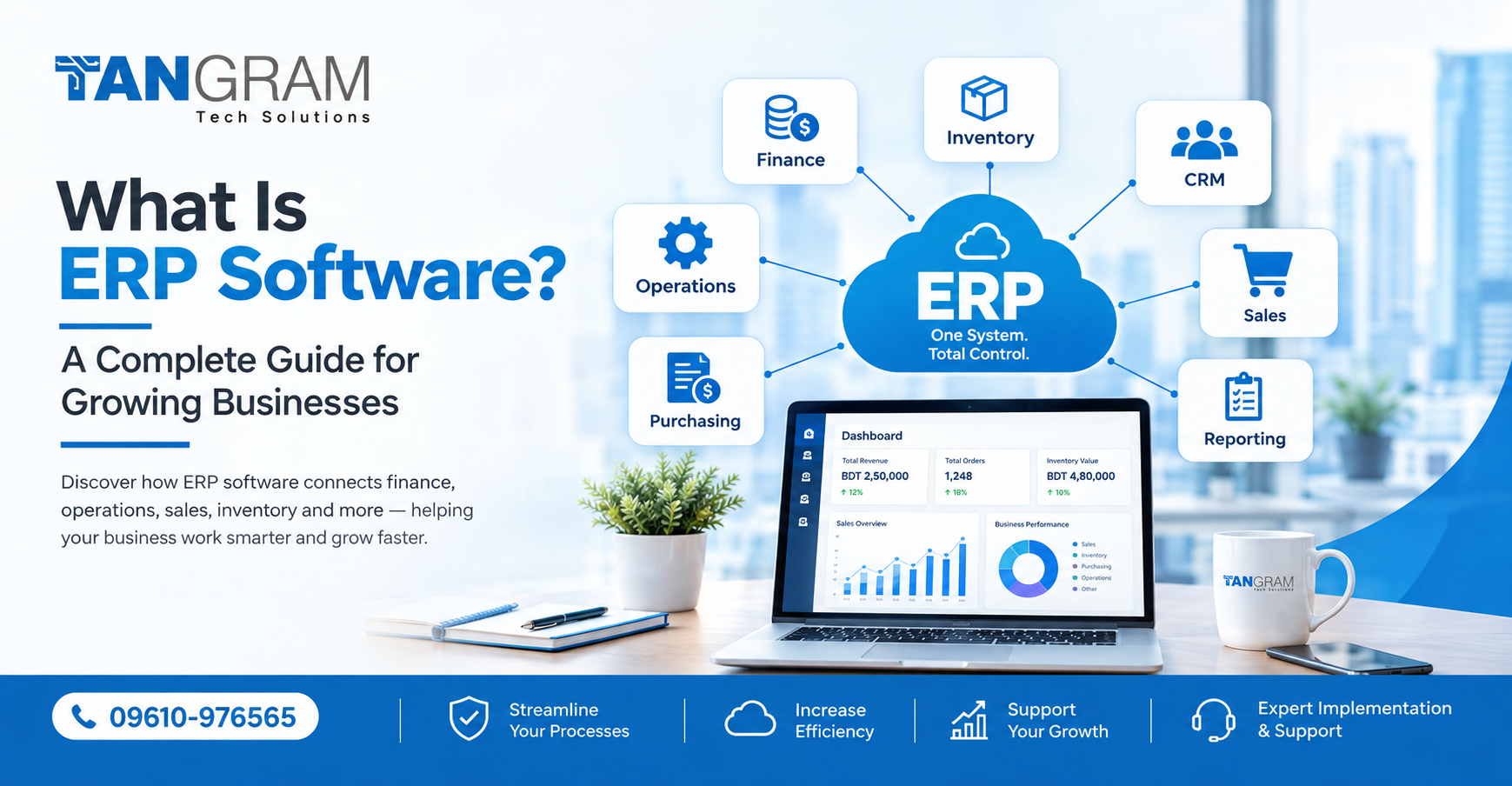
Depending on the solution, an ERP system can include accounting and financial management, inventory, purchasing, sales, customer management, order processing, reporting, and other business functions.
The idea is straightforward. Instead of every department keeping its own information, teams can work with connected data.
For example, when a customer places an order, the information can move from the sales process to inventory, fulfillment, and finance without employees having to enter the same information repeatedly.
This helps reduce unnecessary manual work and keeps important business information easier to access.
Why Do Businesses Need ERP?
A small business can often manage its daily activities with spreadsheets and individual applications. The situation can become very different when the business starts handling more customers, products, transactions, or locations.
Businesses may begin to experience problems such as duplicate data, incorrect information, slow reporting, limited inventory visibility, and too much time spent on manual tasks.
An ERP system brings these processes together so that employees can work with more consistent information.
For management, this also means having easier access to important business information without waiting for different departments to prepare separate reports.
How ERP Connects Business Operations
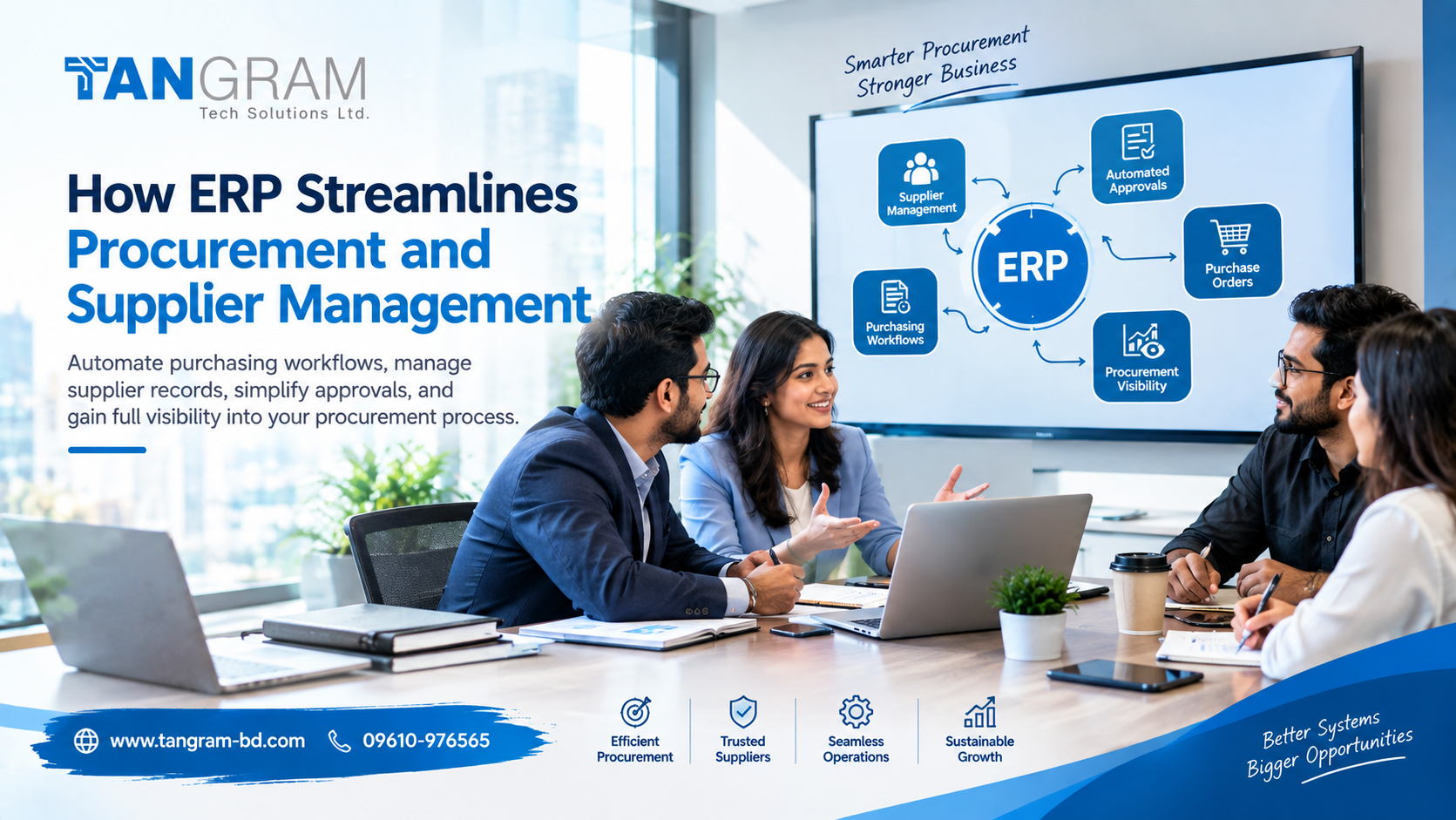
One of the main strengths of ERP is the way it connects different parts of a business.
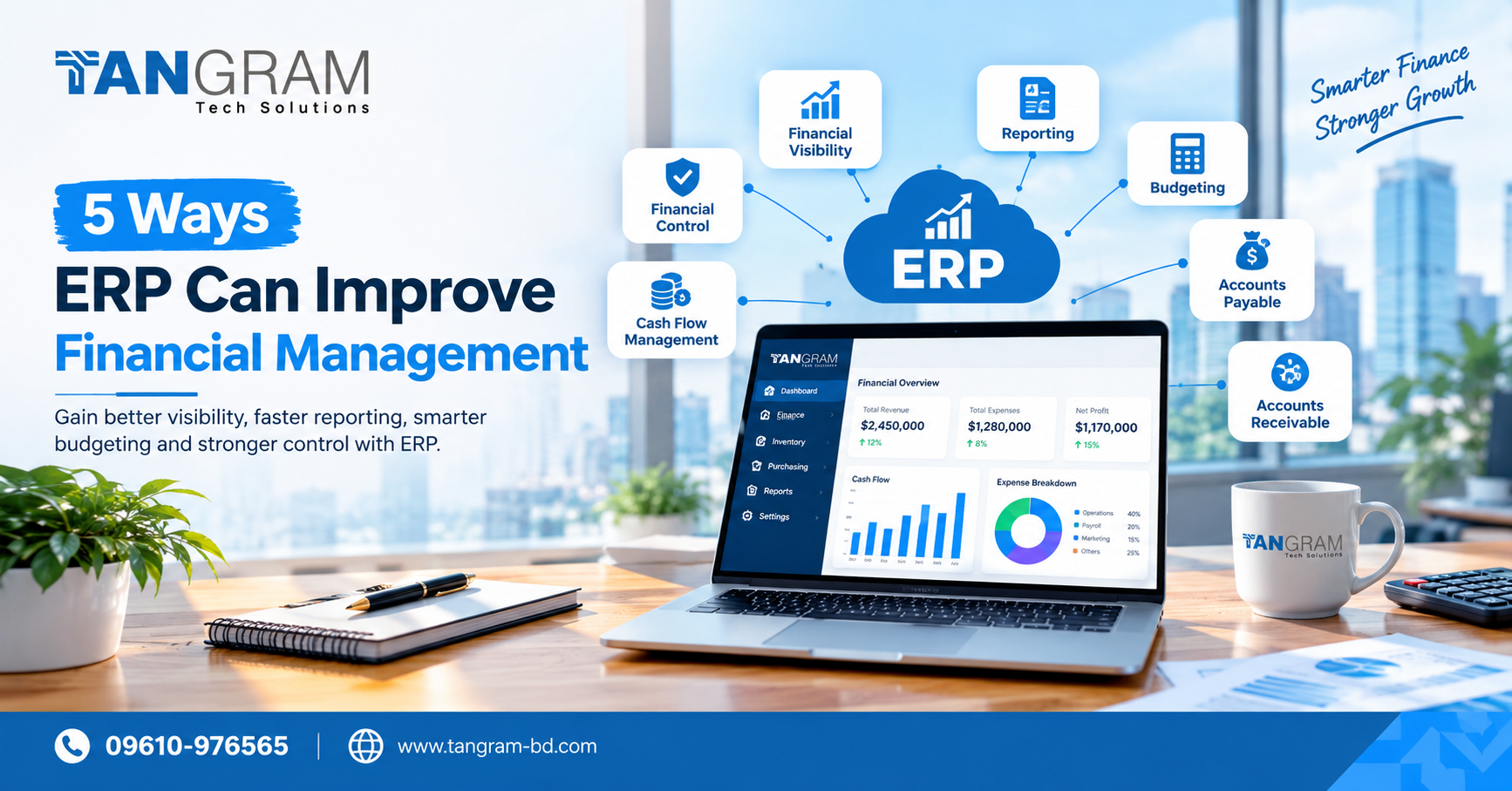
Finance
Financial transactions, accounts receivable, accounts payable, expenses, and financial reporting can be managed through a connected system.
Inventory
Businesses can monitor stock levels, purchasing activities, orders, and inventory movements across different locations.
Sales
Sales teams can manage customer orders while keeping sales information connected with inventory and financial processes.
Purchasing
Purchasing teams can use information about stock levels and demand to make more informed purchasing decisions.
Customer Management
Customer details, sales activities, and order history can be organized in one place. This gives teams a better understanding of customers and helps provide more consistent service.
Key Benefits of ERP Software
When properly selected and implemented, ERP software can offer several practical benefits.
Better business visibility: Management can get a clearer view of sales, finances, inventory, and overall performance.
Less manual work: Connected processes can reduce repetitive data entry and administrative tasks.
Improved data accuracy: Centralized information can help reduce duplicate and inconsistent records.
Faster reporting: Employees do not need to spend as much time collecting information from multiple sources.
Better decision making: Managers can make decisions using more current and organized business information.
Support for growth: A suitable ERP system can support the business as it adds customers, products, employees, branches, and new operations.
Cloud ERP vs Traditional ERP
Cloud ERP has become an important option for businesses looking for a more flexible way to manage their operations.
With a cloud ERP system, users can access the system through the internet without having to maintain their own ERP infrastructure. Depending on the solution, businesses can also benefit from regular updates, easier scalability, and reduced infrastructure requirements.
Solutions such as Oracle NetSuite follow a cloud based business management model and can be considered by organizations that want to manage different business functions through one connected platform.
ERP Software for Businesses in Bangladesh
Businesses in Bangladesh are looking for better ways to manage finance, inventory, sales, customers, purchasing, and everyday operations as they grow.
Manufacturers, distributors, retailers, service companies, and other growing organizations may find it increasingly difficult to depend on disconnected spreadsheets and applications.
For companies searching for ERP in Bangladesh, ERP software in Bangladesh, or NetSuite in Bangladesh, choosing the right solution requires more than simply comparing software features.
The ERP should match the company’s industry, existing processes, reporting needs, budget, and future growth plans.
Is ERP Right for Your Business?
ERP may be worth considering if your business is facing challenges such as:
• Managing different systems for different departments
• Relying heavily on spreadsheets
• Delayed financial or management reports
• Difficulty tracking inventory
• Duplicate or inconsistent information
• Increasing numbers of customers and transactions
• Managing multiple branches or locations
• Growing operational complexity
There is no single point when every business must implement ERP. The right time depends on the company’s size, processes, challenges, and plans for growth.
A proper business assessment can help identify where the current system is creating problems and which ERP capabilities would be most useful.
Why Growing Businesses Consider NetSuite
Oracle NetSuite provides a connected cloud platform covering areas such as financial management, inventory, sales, customer management, purchasing, and reporting.
For businesses planning to expand, having these functions within one environment can make it easier to manage information and maintain visibility as operations become more complex.
However, choosing an ERP is only the beginning. Successful implementation also depends on proper planning, data migration, system configuration, integration, employee training, and ongoing support.
Conclusion
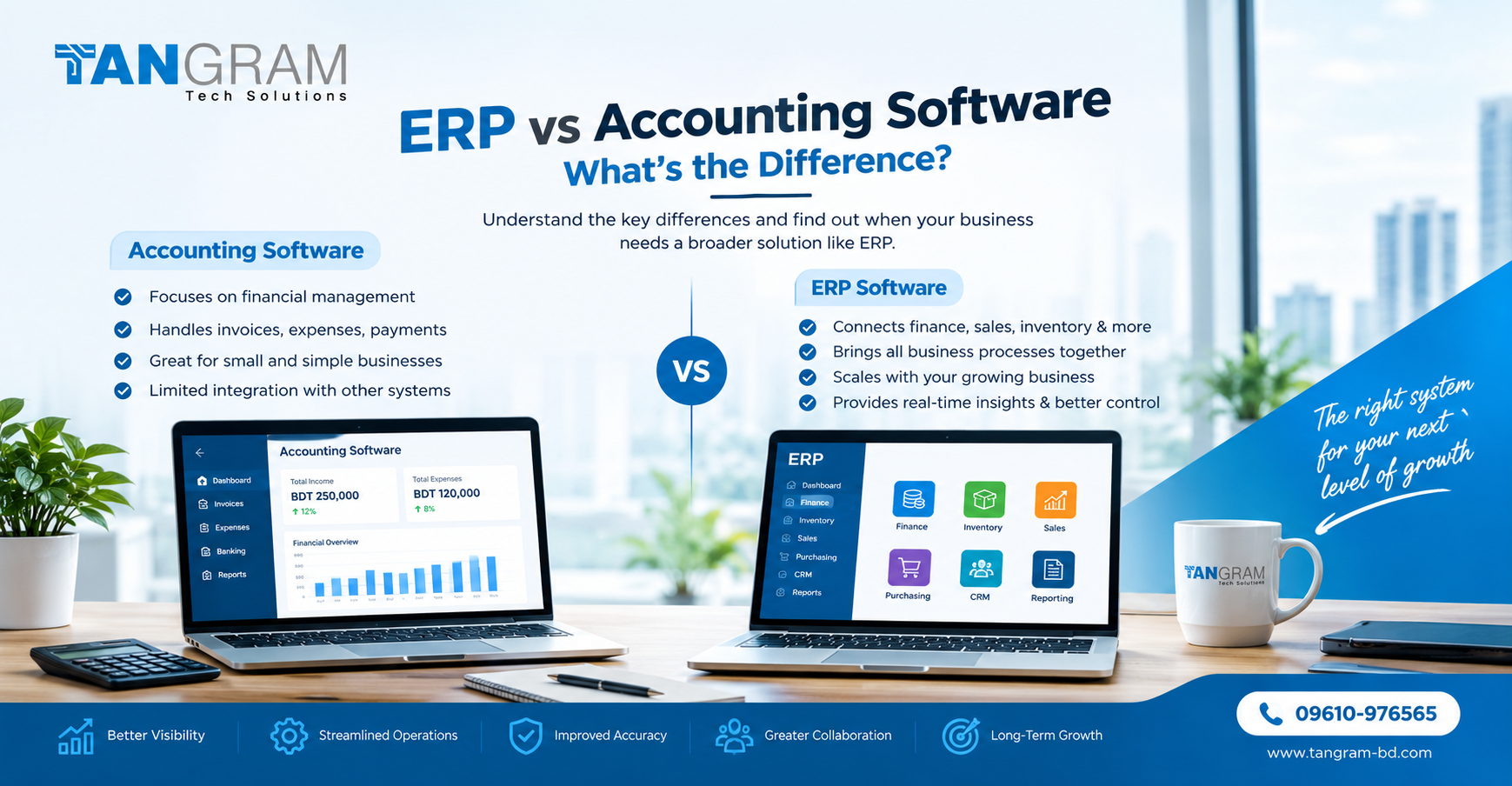
ERP software is much more than an accounting or reporting system. It can connect different parts of a business and give employees and management access to more organized and useful information.
For growing companies, the right ERP solution can reduce manual work, improve visibility, support better decision making, and create a stronger foundation for future growth.
Businesses searching for ERP in Bangladesh, NetSuite ERP Bangladesh, or NetSuite in Bangladesh should first understand their current challenges and future requirements before selecting a solution.
The demand for NetSuite in Bangladesh continues to grow as organizations embrace cloud ERP solutions to enhance efficiency and competitiveness. Tangram Tech Solutions Limited provides end-to-end Oracle NetSuite ERP services, including implementation, customization, integration, data migration, user training, and long-term support, helping businesses achieve a seamless digital transformation.