
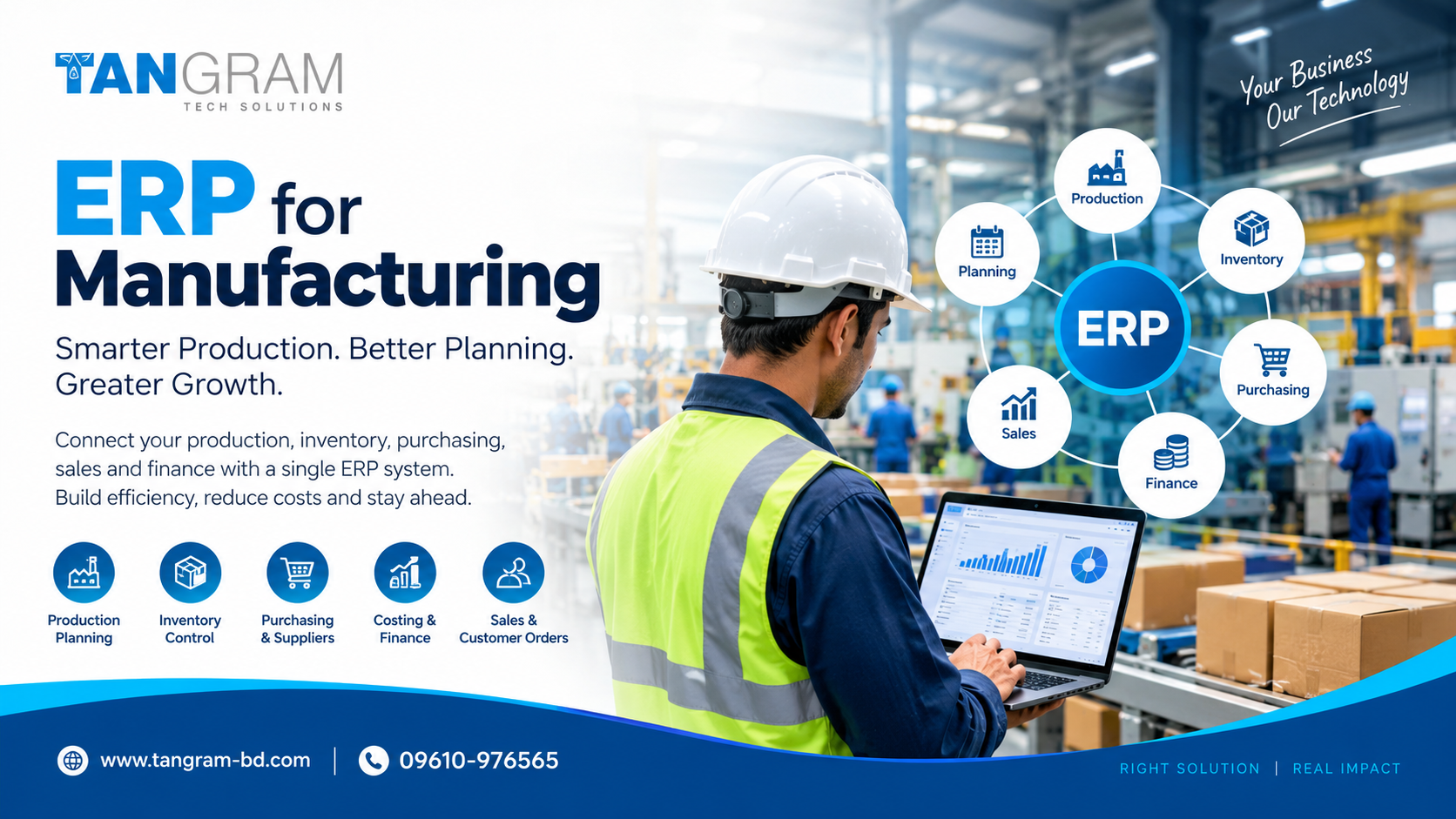
ERP for Manufacturing: How to Improve Production and Planning
Manufacturing involves many moving parts. A factory needs the right raw materials, a realistic production schedule, reliable suppliers and accurate cost information to keep orders moving. When these activities are managed through separate spreadsheets or disconnected systems, delays and mistakes can become difficult to avoid.
ERP for manufacturing helps bring these business activities together. By connecting production planning, inventory, purchasing, sales and finance, an ERP system gives managers a clearer view of daily operations and helps them make decisions based on more consistent information.
For manufacturers in Bangladesh, choosing the right ERP software can be an important step towards improving operational control and preparing for future growth.
1. Make Production Planning More Reliable
Production schedules need to reflect customer demand, available materials and the factory’s actual capacity. If these details are not up to date, a production plan can quickly fall behind.
A manufacturing ERP system connects order information with material availability and production requirements. Managers can use this information to plan jobs, review priorities and identify potential delays before they affect delivery dates.
Better planning helps teams use their available resources more effectively and reduces the disruption caused by last minute changes.
2. Manage Inventory Without Unnecessary Stock
Keeping too much inventory ties up money that could be used elsewhere in the business. Having too little can be just as costly when production stops because essential materials are unavailable.
ERP software connects inventory records with purchasing and production activities. Teams can check stock levels, track material movements and identify items that may need replenishment.
For example, before starting a new production run, a manager can review the required raw materials against available stock. Any shortage can then be addressed before it causes an avoidable delay.
3. Connect Purchasing with Production Requirements
Purchasing works best when decisions are based on actual business needs. Ordering materials too early can increase storage costs, while ordering too late can interrupt production.
When purchasing, inventory and production planning share information, businesses can identify upcoming requirements, monitor outstanding purchase orders and follow supplier deliveries more closely.
This also makes it easier for purchasing teams to respond when demand changes or a supplier misses a delivery date.
4. Understand the True Cost of Production
Manufacturers need to know more than how much a product sells for. They also need a realistic picture of what it costs to produce.
These costs may include raw materials, labour, machine time and manufacturing overhead. When information is scattered across different records, comparing planned costs with actual expenses becomes difficult.
An integrated ERP system can bring relevant production and financial information together, helping managers review cost differences, prepare budgets and make more informed pricing decisions.
With better cost visibility, businesses can investigate unexpected expenses and identify opportunities to improve efficiency.
5. Link Customer Orders with Finance
Customer orders influence almost every part of manufacturing, from material requirements and production schedules to delivery commitments and cash flow.
An ERP system connects order information with inventory, production and financial records. This helps teams check order status, review stock availability and coordinate production with customer requirements.
Finance teams can also use connected information to manage invoices, supplier payments, customer receivables and operating expenses. As a result, management gets a clearer picture of how day to day production affects the company’s financial position.
Why Manufacturing Businesses in Bangladesh Need to Consider ERP
As a manufacturing business expands, managing each department separately can create unnecessary complexity. Staff may enter the same information more than once, reports may take longer to prepare and managers may struggle to identify the cause of operational problems.
A suitable ERP system helps connect these processes and gives teams a more consistent source of business information. The actual benefits depend on the company’s requirements, the quality of implementation and how well employees adopt the system.
For businesses researching NetSuite ERP Bangladesh, Oracle NetSuite provides cloud based ERP capabilities that connect financial management with inventory, order management and other business processes. Its suitability for a manufacturing company depends on the production model, required functionality and plans for future growth.
Tangram Tech Solutions supports businesses with NetSuite implementation, customization, integration, data migration, training and ongoing support. Understanding your current processes and requirements is an important starting point when evaluating an ERP solution.
Conclusion
Improving manufacturing performance starts with understanding what is happening across the business. When production planning, inventory, purchasing, costing, customer orders and financial information are connected, managers can identify problems earlier and make better informed decisions.
Before choosing an ERP system, review your existing workflows, identify recurring delays and decide which information your team needs to manage production more effectively. A solution that fits your actual operations will be more valuable than one chosen on features alone.
Looking for ERP solutions for your manufacturing business in Bangladesh?
Visit www.tangram-bd.com to learn more about Tangram Tech Solutions and its ERP services.
Telephone: 09610-976565