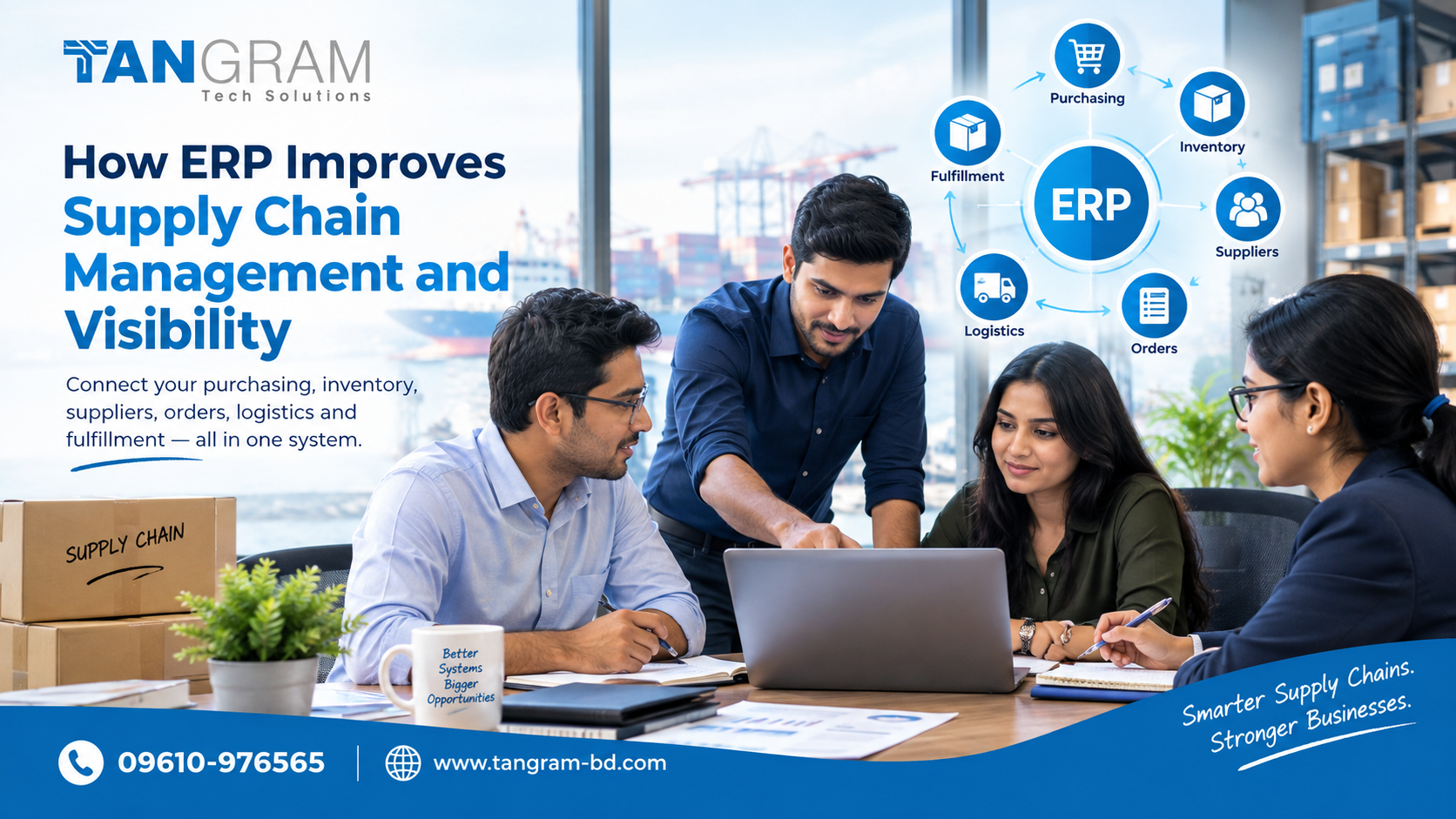
How ERP Improves Supply Chain Management and Visibility
Managing a supply chain becomes more challenging as a business grows. There are more suppliers to manage, more products to track, more customer orders to process, and more decisions to make about purchasing, inventory, and delivery.
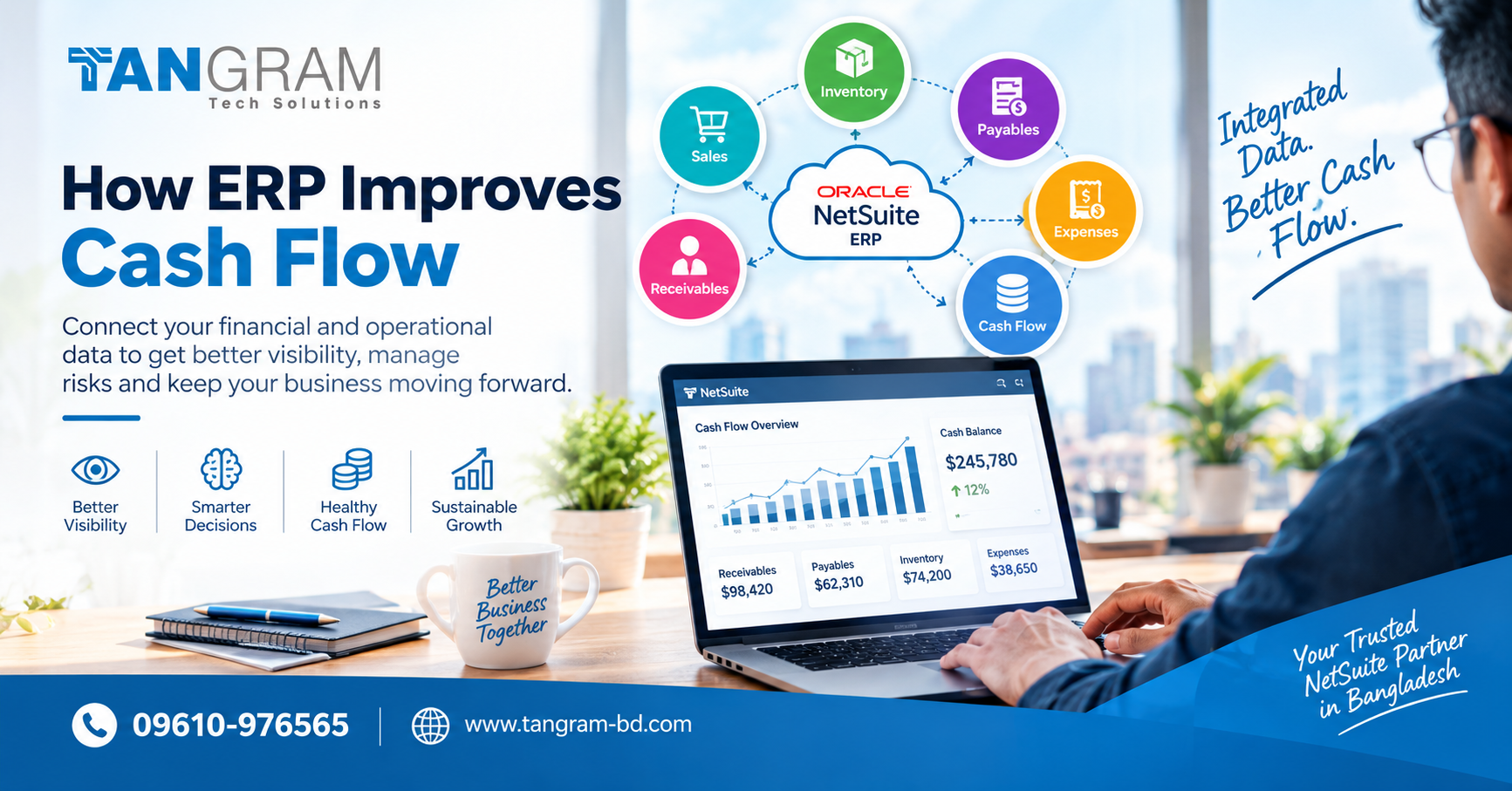
When this information is spread across spreadsheets and different software systems, it becomes harder to get a clear picture of what is happening. ERP brings these activities together, giving businesses better visibility across purchasing, inventory, suppliers, orders, and fulfillment.
For businesses in Bangladesh searching for ERP software, ERP in Bangladesh, NetSuite in Bangladesh, or NetSuite ERP Bangladesh, better supply chain visibility can make everyday operations easier to manage and improve decision making.
What Does Supply Chain Visibility Mean?
Supply chain visibility means knowing what is happening across the different stages of the supply chain, from purchasing and supplier management to inventory, customer orders, and delivery.
For example, a business should be able to see what has been ordered from suppliers, what is currently available in stock, what has already been sold, and which orders are still waiting to be fulfilled.
Without connected information, employees may need to check different systems or ask other departments for updates. An ERP system brings this information together, allowing teams to work with a more complete view of the business.
How ERP Improves Supply Chain Management
1. Better Purchasing Decisions
Purchasing teams need accurate information before placing new orders.
ERP connects purchasing with inventory, sales, and supplier information. This makes it easier to see what is already in stock, what has been ordered, and where additional products may be required.
With better information available, businesses can plan purchases more carefully and avoid unnecessary orders.
2. Improved Inventory Visibility
Inventory is a major part of supply chain management.
An ERP system allows businesses to track stock levels, product movements, incoming purchases, and outgoing orders in one place. This gives teams a clearer understanding of what is available and what may need attention.
It can also make it easier to identify products that are selling quickly and products that have remained in stock for a longer period.
3. Better Supplier Management
Managing several suppliers can become difficult as a company expands.
ERP keeps supplier information and purchasing activities connected. Teams can review supplier records, purchase orders, previous transactions, and other relevant information without depending on separate spreadsheets.
This gives purchasing teams a clearer picture when planning future purchases and working with suppliers.
4. Connected Sales and Customer Orders
A customer order can affect several parts of the business. It may involve inventory, purchasing, warehouse operations, and delivery.
When these activities are managed separately, information can become outdated or duplicated. ERP connects sales orders with inventory and fulfillment, allowing different teams to work with the same information.
This can make order processing smoother and reduce communication gaps between departments.
5. Better Logistics and Fulfillment
Once a customer places an order, the business needs to pick, pack, ship, and deliver it properly.
ERP provides a connected view of the order and its related inventory and fulfillment information. Teams can follow the progress of orders more easily and identify delays or issues that may affect delivery.
For businesses handling a large number of orders, having this information in one system can make daily operations much easier to manage.
ERP Gives Management a Clearer Picture
One of the main benefits of connecting supply chain activities is having better visibility across the business.
Management can look at purchasing, inventory, sales, suppliers, and fulfillment together instead of reviewing each area separately. This makes it easier to understand where problems are coming from and how one part of the supply chain affects another.
For example, a product shortage may not simply be an inventory issue. It could be related to a supplier delay, purchasing decisions, changing demand, or delivery problems. Connected ERP information makes these relationships easier to understand.
NetSuite ERP for Supply Chain Management
Businesses considering NetSuite in Bangladesh or NetSuite ERP Bangladesh can use ERP functionality to connect financial and operational activities across the business.
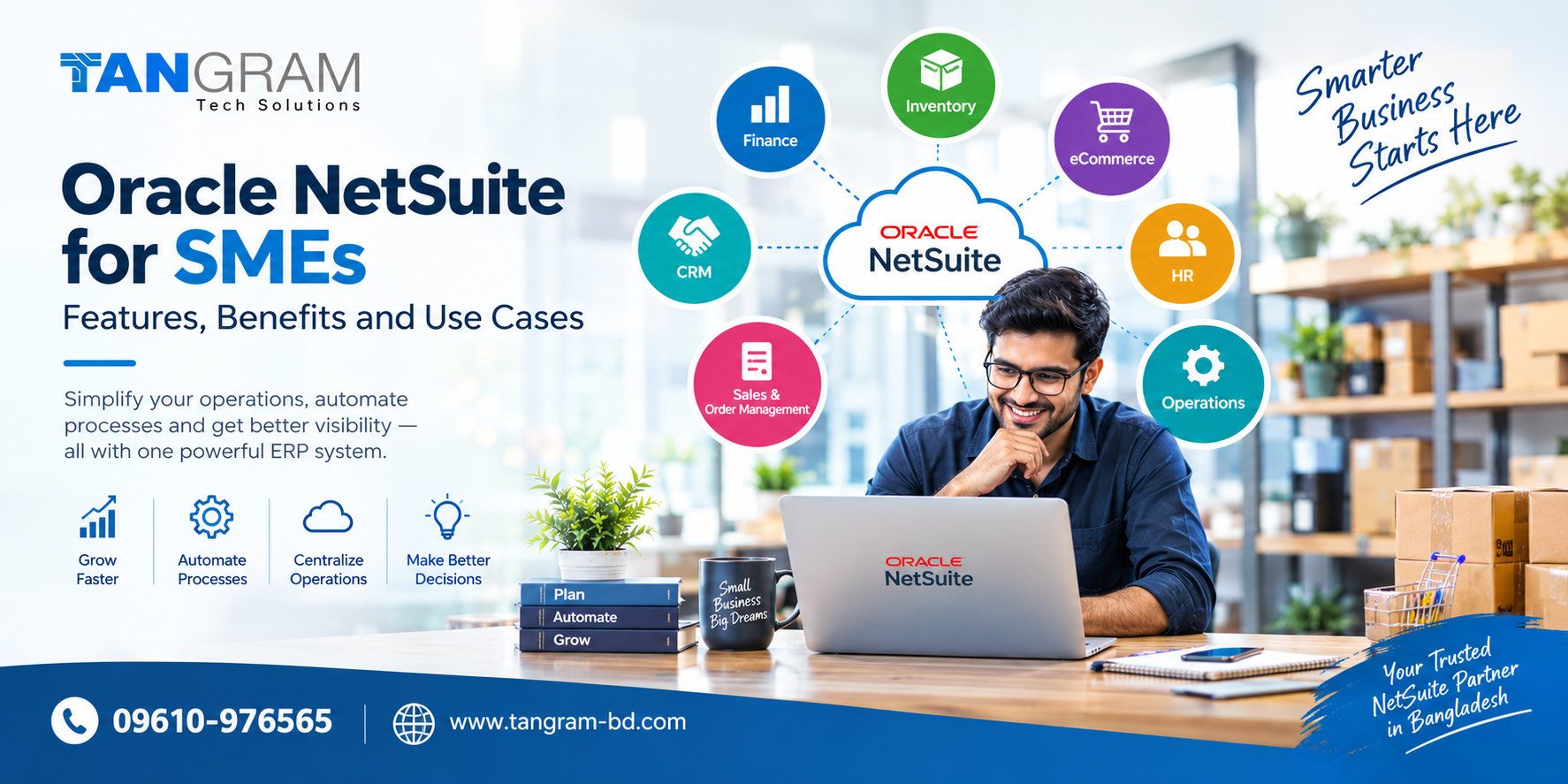
NetSuite supports areas such as inventory, purchasing, order management, demand planning, warehouse operations, and reporting. The exact features and configuration will depend on the individual business requirements.
For companies looking for a NetSuite Business Solution Provider, it is important to understand existing supply chain processes before configuring the ERP system. The goal should be to build a system that fits the way the business operates and can support future growth.
Conclusion
Supply chain management becomes harder when purchasing, suppliers, inventory, sales orders, and fulfillment are managed separately.
ERP connects these activities and gives businesses a clearer view of what is happening across the supply chain. With better information available to the right teams, businesses can plan purchases more carefully, manage inventory, monitor suppliers, and keep track of customer orders.
For growing businesses in Bangladesh, choosing the right ERP and implementing it around actual business processes can provide a stronger foundation for managing the supply chain as the company grows.
Website: https://www.tangram-bd.com/
Phone: 09610-976565