Top ERP Mistakes Businesses Should Avoid: A Guide for Companies in Bangladesh
Implementing an ERP system is a major decision for any growing business. The right system can bring finance, inventory, sales, procurement, customer information, and other important business operations into one connected platform.
However, not every ERP project delivers the results a company expects. In many cases, the problem is not the software itself. It comes from poor planning, unclear requirements, weak data preparation, or mistakes made during implementation.
For businesses exploring ERP in Bangladesh or considering solutions such as NetSuite ERP Bangladesh, understanding these common mistakes can help save time, reduce unnecessary costs, and make the entire implementation process much smoother.
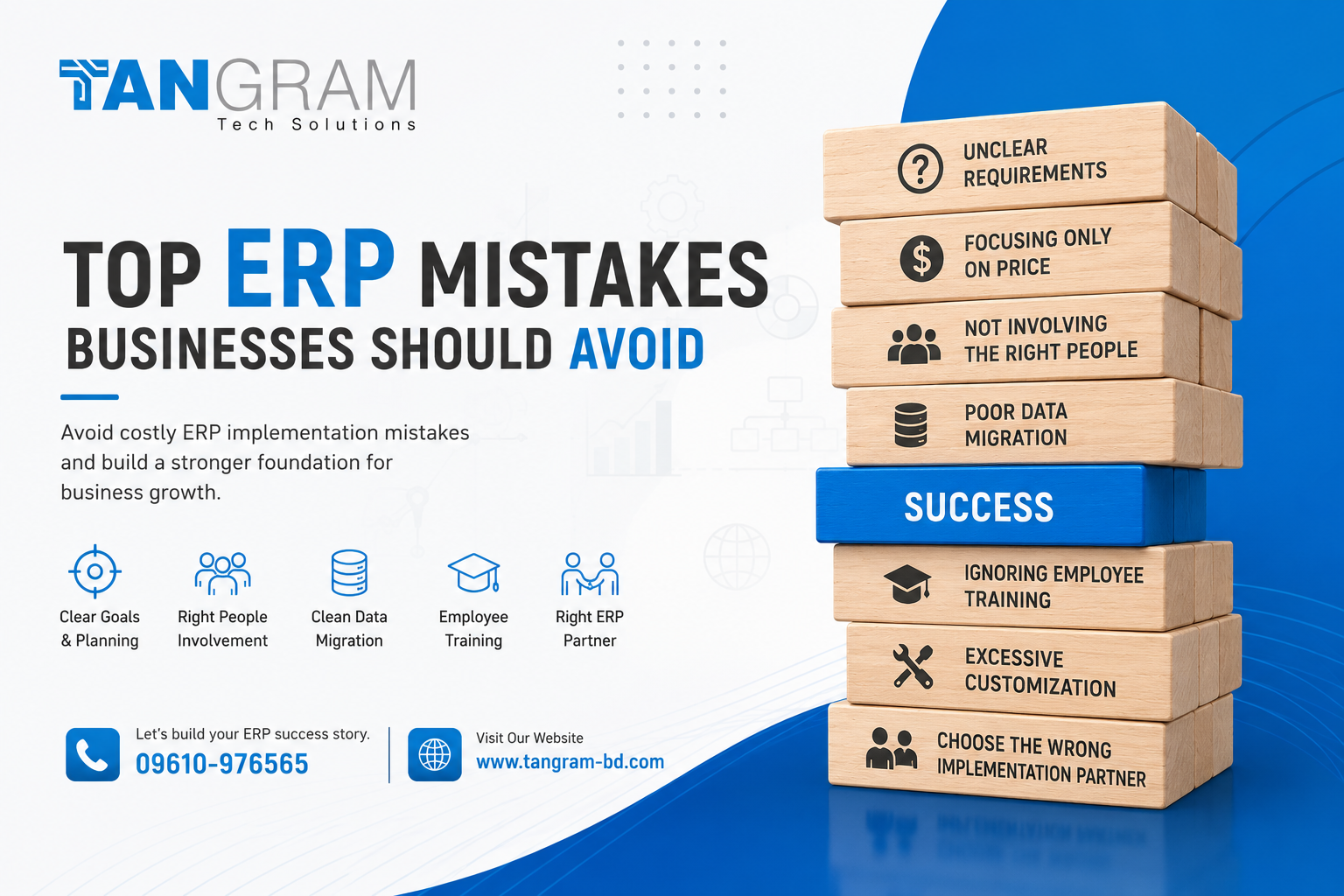
1. Choosing ERP Software Without Clear Business Goals
One of the most common mistakes is choosing an ERP system simply because it is popular or because another company is already using it.
Every business operates differently. Before selecting ERP software, it is important to understand the problems the business is actually trying to solve.
For example, are financial reports taking too long to prepare? Is inventory becoming difficult to manage? Are different departments working with separate spreadsheets and systems? Do managers struggle to access accurate information when they need it?
Answering these questions first makes it easier to choose the right solution. A good ERP system should support current business needs while giving the company enough flexibility to grow in the future.
2. Focusing Only on the ERP Price
Cost is naturally an important consideration, but choosing an ERP system based only on the lowest price can create problems later.
A cheaper solution may not have all the features a growing business needs. It may require additional customization, expensive upgrades, or even replacement when the company expands.
Instead of focusing only on the ERP price in Bangladesh, businesses should look at the overall value. This includes implementation, employee training, ongoing support, maintenance, scalability, and the system’s ability to support future growth.
For businesses that need flexibility and scalability, a cloud-based solution such as NetSuite can provide a more suitable long-term platform.
3. Not Involving the Right People
ERP implementation should not be treated as an IT project only.
The people working in finance, operations, sales, inventory, procurement, and other departments should be involved from the beginning. They understand the day-to-day challenges and can provide valuable input when business requirements are being defined.
When employees are included in the process, it also becomes easier to introduce the new system and reduce resistance to change.
4. Underestimating Data Migration
Data migration is one of the most important parts of any ERP implementation, but it is often underestimated.
Businesses may have years of information stored across spreadsheets, old software, and separate databases. Moving this data into a new ERP system without reviewing it can create serious problems.
Duplicate records, outdated customer information, incorrect inventory data, and incomplete financial records can affect the performance of the new system.
Before migration, businesses should review and clean their data. Taking the time to prepare accurate information can prevent many problems after the system goes live.
5. Ignoring Employee Training
Even the best ERP software will not deliver the expected results if employees are not comfortable using it.
Training should be practical and relevant to each person’s role. The finance team will use the system differently from warehouse staff, sales teams, or senior management.
Training should also continue after the ERP system goes live. Employees often have new questions once they start using the software in real business situations. Ongoing support helps teams gain confidence and use the system more effectively.
6. Trying to Customize Everything
Many businesses want their new ERP system to work exactly like their old processes. This often leads to unnecessary customization.
Too much customization can increase implementation costs, make the system harder to maintain, and create challenges when upgrades are needed.
Before requesting customization, it is worth reviewing the existing business process. Sometimes the process itself needs improvement. Modern ERP systems are designed around established business practices, and adapting some internal processes may provide better long-term results than trying to change every part of the software.
7. Choosing the Wrong Implementation Partner
Selecting the right ERP software is important, but choosing the right implementation partner can be equally important.
A good implementation partner should understand both the technology and the way businesses operate. They should be able to support the project from the early planning stage through implementation, data migration, employee training, and ongoing support.
For companies looking for NetSuite in Bangladesh, working with an experienced NetSuite Business Solution Provider can make the implementation process more structured and manageable.
The right partner will take the time to understand the business instead of offering the same solution to every company.
8. Expecting Immediate Results
ERP implementation is not something that ends the moment the system goes live.
After implementation, businesses still need to monitor how the system is performing, support employees, improve processes, and make adjustments as requirements change.
The most successful ERP projects are treated as an ongoing business improvement journey rather than simply a software installation.
Final Thoughts
An ERP system can become an important foundation for business growth, but successful implementation requires more than choosing the right software.
Clear planning, realistic expectations, clean data, employee involvement, proper training, and the right implementation partner can all make a significant difference.
For businesses exploring ERP software in Bangladesh or looking for NetSuite ERP Bangladesh solutions, taking the time to plan properly can help avoid costly mistakes and create a smoother path toward digital transformation.
Tangram helps businesses evaluate, implement, and optimize ERP solutions based on their operational requirements. Whether you are considering a new ERP system or planning a NetSuite implementation, the right guidance from the beginning can help you make better decisions and achieve stronger results.
To discuss your ERP and NetSuite requirements, contact Tangram Tech Solutions at 09610-976565.