In today’s highly competitive and fast-changing business environment, supply chain efficiency is no longer just a competitive advantage it’s a necessity. Customers expect faster deliveries, accurate order fulfillment, consistent product availability, and real-time order updates. At the same time, businesses must manage rising operational costs, supplier relationships, inventory levels, warehouse operations, and transportation challenges. Relying on spreadsheets or disconnected software often results in delayed procurement, inaccurate inventory records, poor visibility across the supply chain, and costly operational inefficiencies that directly impact customer satisfaction and profitability.
As organizations grow, supply chain operations become increasingly complex. Managing purchasing, inventory, production, warehousing, logistics, finance, and supplier communications across multiple locations requires seamless coordination and accurate, real-time information. When departments operate using separate systems or manual processes, businesses often face duplicate data entry, communication gaps, delayed approvals, stock shortages, overstocking, and slower decision-making. These challenges not only reduce productivity but also make it difficult to respond quickly to changing customer demands and market conditions.
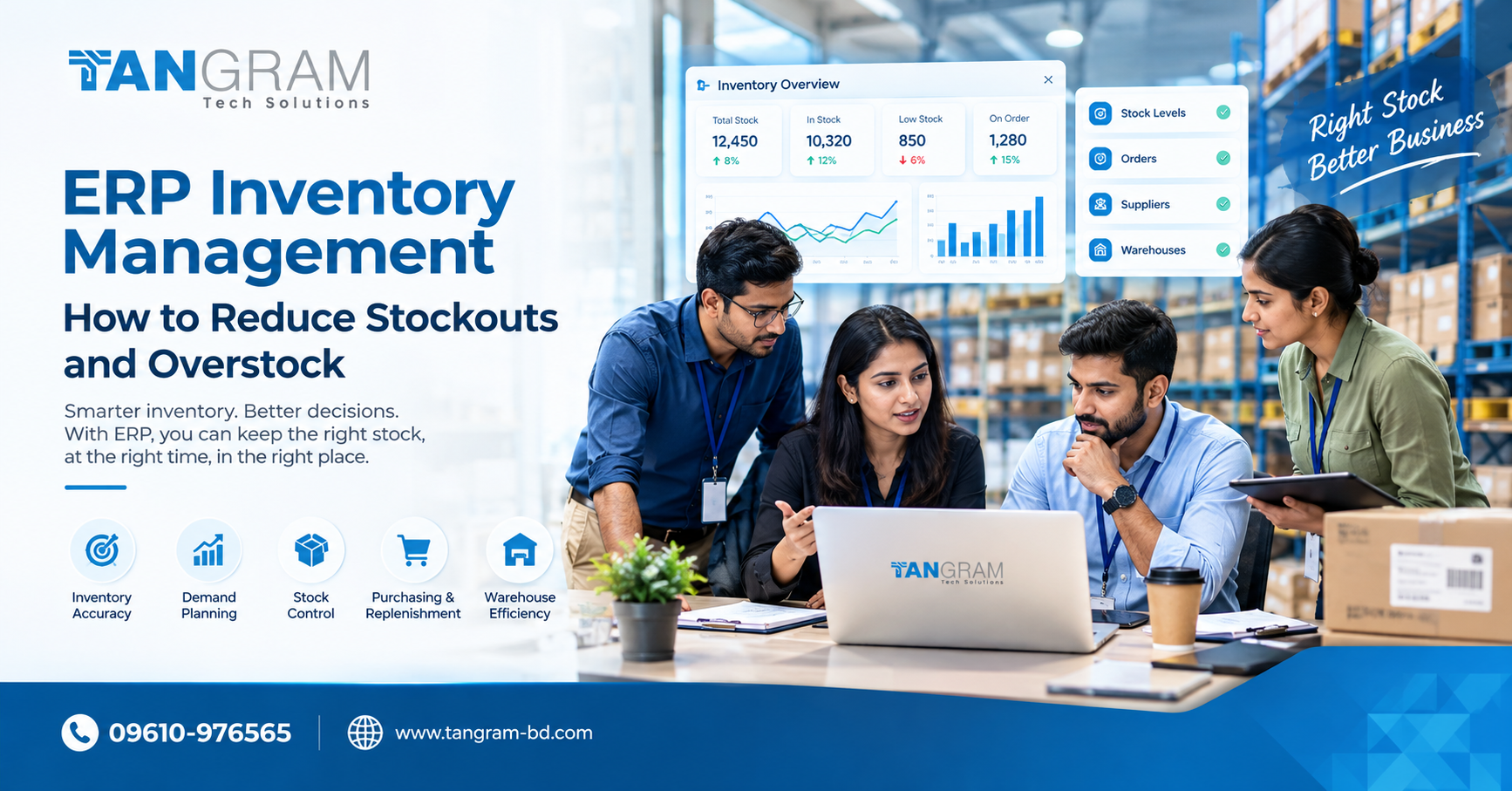
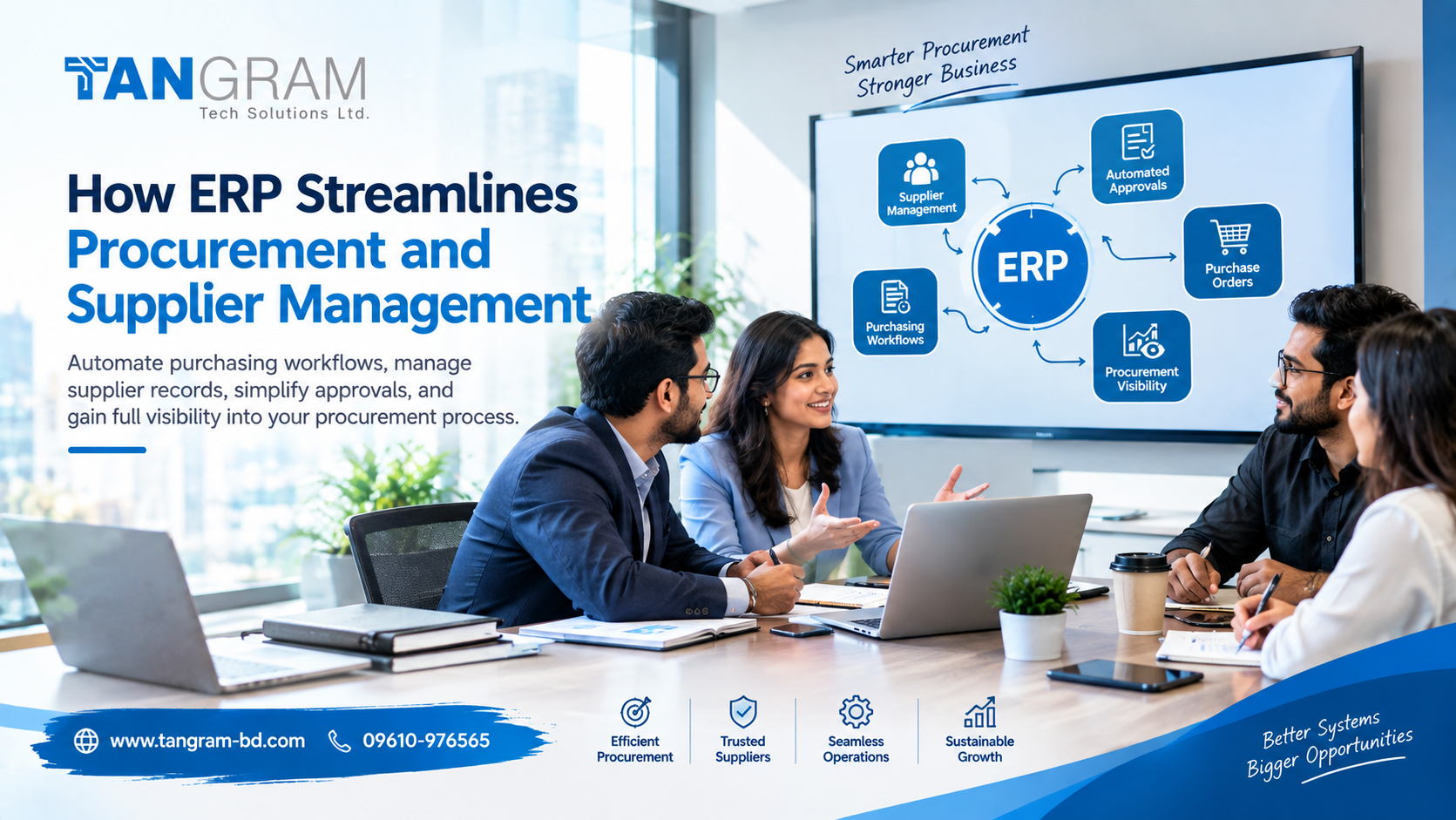
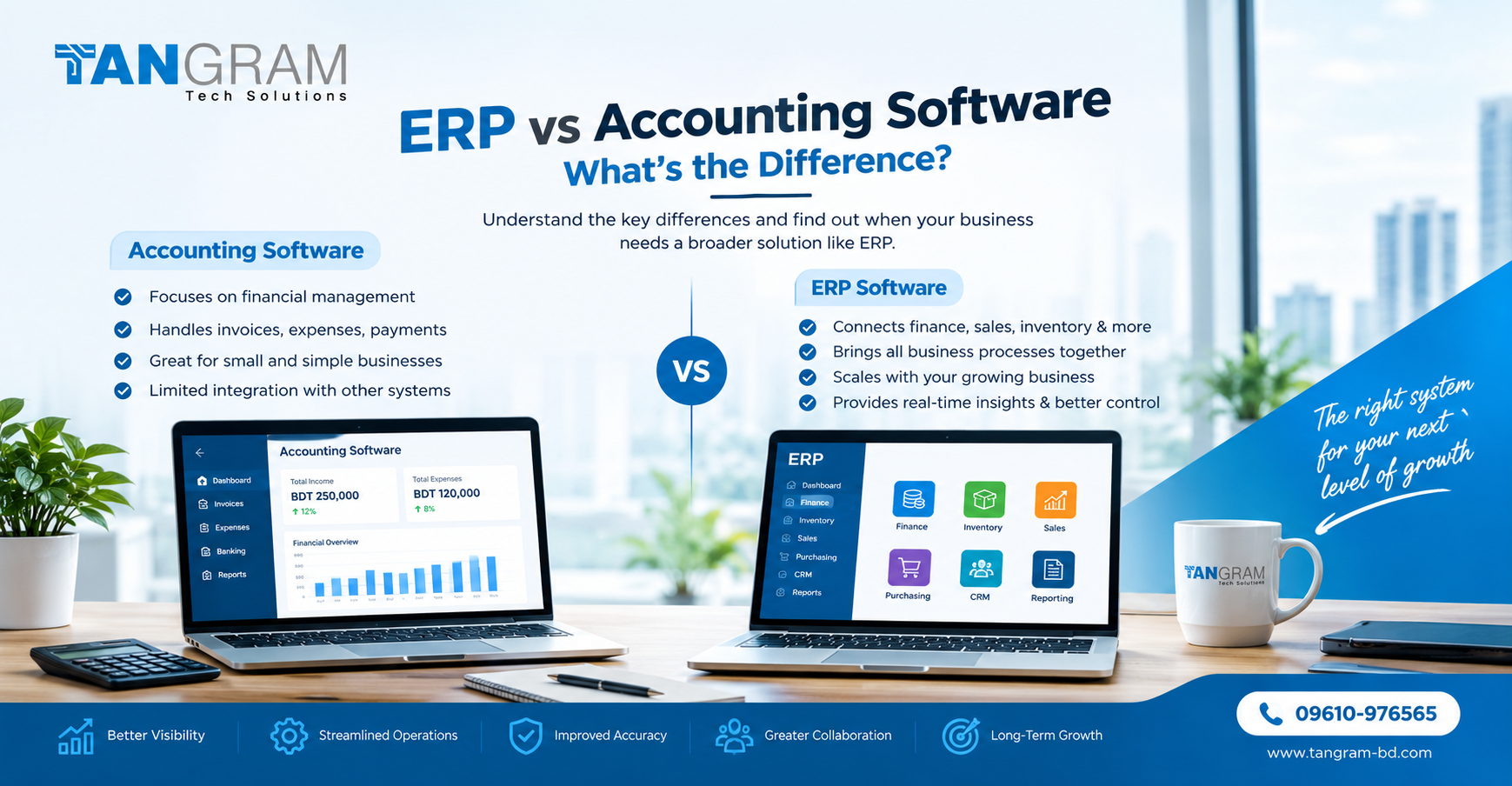
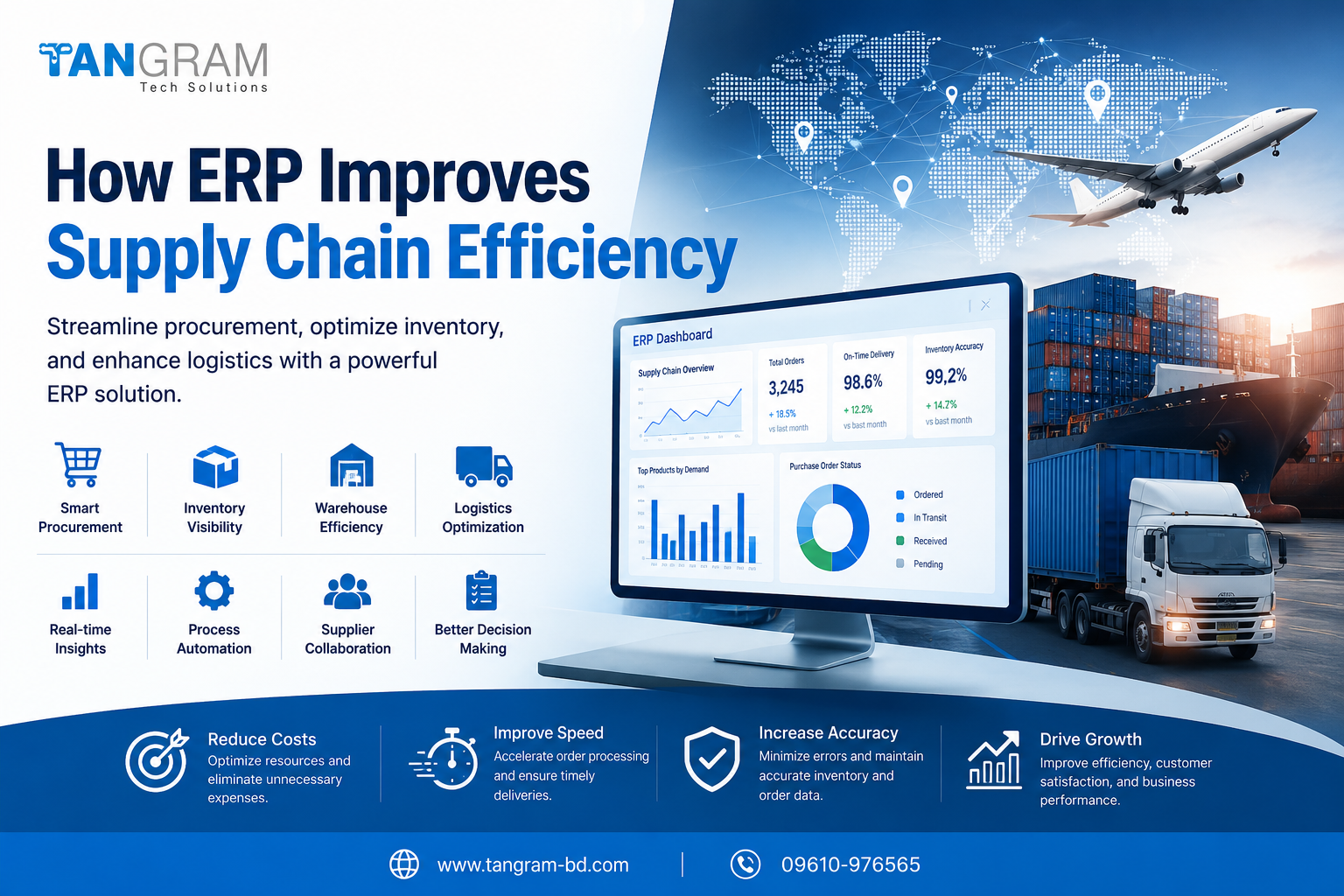
This is where an Enterprise Resource Planning (ERP) system becomes a strategic business solution. ERP integrates every stage of the supply chain into a single, centralized platform, connecting procurement, inventory management, warehouse operations, logistics, finance, sales, and production. Instead of working with disconnected systems, employees gain access to real-time data that improves collaboration, streamlines workflows, and supports faster, data-driven decisions. By automating routine processes such as purchase orders, inventory updates, supplier management, and reporting, ERP helps businesses reduce manual work, minimize errors, improve operational efficiency, and maintain greater control over the entire supply chain.
Whether you’re a manufacturer, distributor, wholesaler, retailer, or import-export business, implementing a modern Cloud ERP solution can transform the way your organization manages procurement, inventory, warehousing, and logistics. With better visibility, automated workflows, and real-time analytics, businesses can reduce operational costs, improve supplier collaboration, optimize inventory levels, and deliver products to customers more efficiently. In this article, we’ll explore how ERP improves supply chain efficiency, strengthens procurement and logistics processes, and helps modern businesses build a smarter, more agile, and resilient supply chain for sustainable growth.