In today’s competitive business environment, effective inventory management is more important than ever. Whether you’re a manufacturer, distributor, retailer, wholesaler, or eCommerce business, inventory directly impacts customer satisfaction, operational efficiency, profitability, and cash flow. As customer expectations continue to rise and supply chains become more complex, businesses can no longer rely on manual inventory tracking or outdated spreadsheet-based systems.
Poor inventory management often leads to stock shortages, overstocking, delayed deliveries, inaccurate inventory records, and unnecessary storage costs. These challenges not only reduce profitability but also affect customer trust and business growth. As organizations expand, managing inventory across multiple warehouses, branches, and sales channels becomes increasingly difficult without a centralized system.
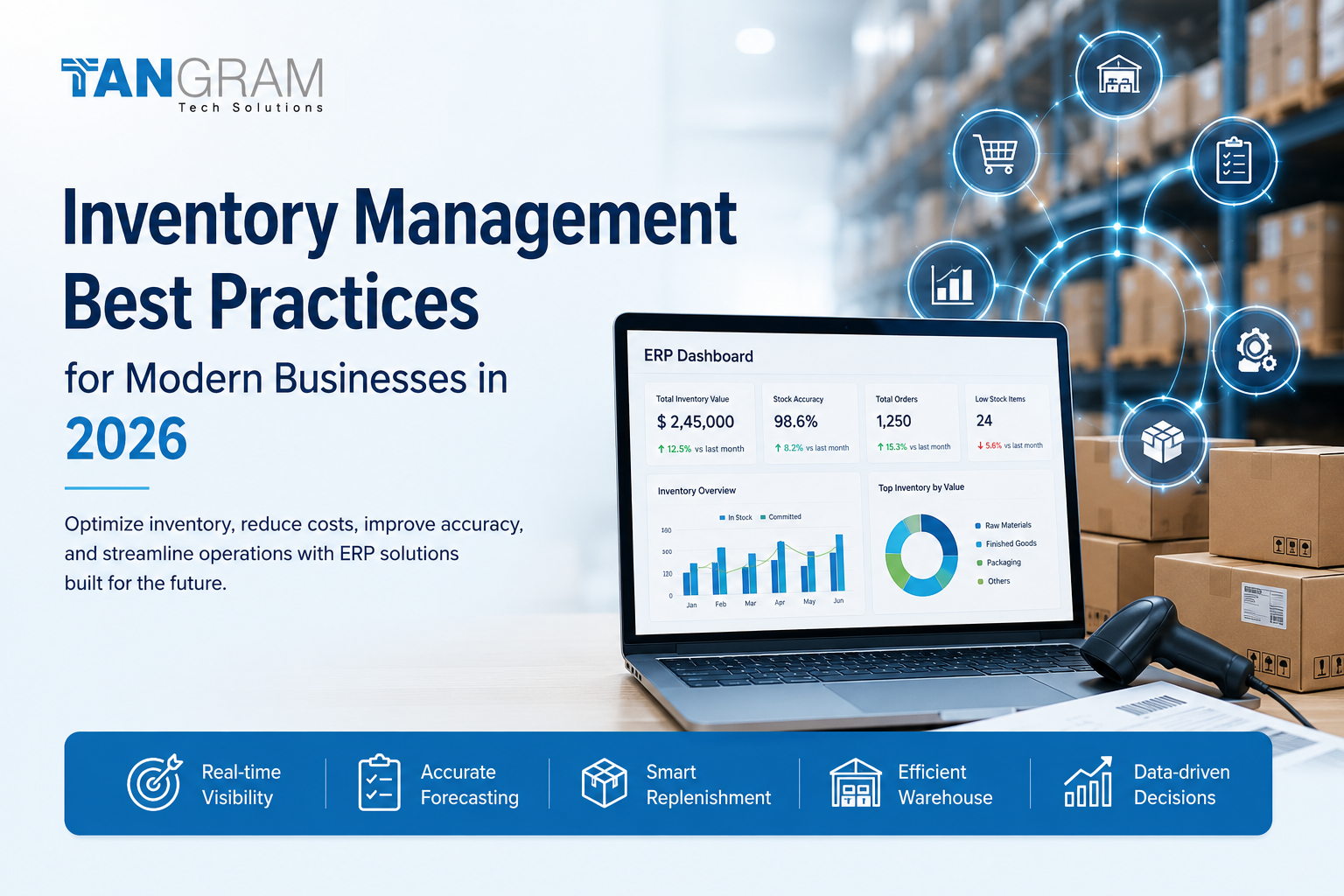
Modern businesses need more than basic stock control. They require accurate, real-time visibility into inventory levels, automated replenishment, demand forecasting, and seamless integration with finance, procurement, sales, and warehouse operations. This is where Enterprise Resource Planning (ERP) transforms inventory management.
An ERP system centralizes inventory data, automates routine tasks, and provides real-time insights that help businesses make faster, smarter decisions. Instead of reacting to inventory problems after they occur, organizations can proactively manage stock levels, reduce operational costs, improve order fulfillment, and maintain a healthier cash flow.
As businesses continue embracing digital transformation in 2026, adopting proven inventory management best practices supported by ERP is no longer optional it’s a strategic advantage. In this guide, we’ll explore practical strategies that help businesses optimize inventory, improve efficiency, and build a more resilient supply chain.